
If you’ve been asking yourself, “Why is my mucus brown?” it’s natural to feel concerned. Brown or brownish-yellow mucus is a noticeable change from your normal clear nasal discharge or phlegm, and it may appear after coughing or blowing your nose.
Mucus color changes can result from minor irritants, infections, or more serious conditions. At our emergency room in Kingwood, pulmonologists and medical experts see patients with brown mucus for a variety of reasons, some harmless, some requiring urgent care. Understanding the possible causes helps you make informed decisions about your health.
What Does Brown Mucus Mean?
Brown mucus or brown phlegm usually indicates minor bleeding, inflammation, or trapped particles in the respiratory tract. While color alone isn’t diagnostic, darker sputum often signals infection. A study of over 4,000 sputum samples found that 39% of rust- or brown-colored sputum tested positive for bacteria, compared with 18% of clear samples.
Symptoms of Brown Mucus
- Persistent cough producing brown mucus spit.
- Brown mucus in throat or chest congestion.
- Brown mucus from the nose mixed with discharge.
- Phlegm with brown flecks or darker knots in mucus.
- Mucus is brownish yellow and thicker than usual.
Also Read: Why Is My Mucus Black
Reasons Why Your Mucus Is Brown
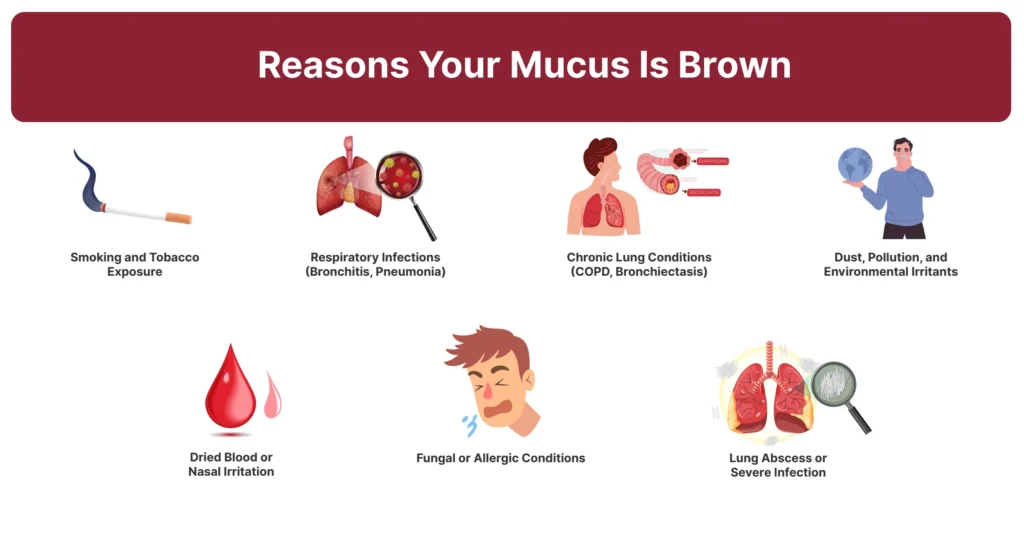
Mucus color changes when your body’s natural secretions trap particles, old blood, or inflammatory debris. Causes range from infections and irritants to chronic lung disease. Knowing the underlying reason is crucial for proper treatment. Early recognition helps prevent complications and promotes faster relief.
Smoking and Tobacco Exposure
Long-term smoking or exposure to secondhand smoke can leave tar and chemicals in the respiratory system, turning mucus brown. This discoloration signals airway irritation and early lung stress. Continued smoking thickens mucus, making it harder to clear. Quitting or reducing exposure can significantly improve mucus color and lung health.
Symptoms
- Persistent smoker’s cough with morning congestion.
- Wheezing or shortness of breath with activity.
- Thick rubbery mucus from throat or chest.
- Repeated episodes of brown mucus after coughing.
Respiratory Infections (Bronchitis, Pneumonia)
Viral or bacterial infections inflame the airways, causing thicker, discolored mucus. Minor bleeding during coughing can give mucus a brown tint. Left untreated, infections, including upper respiratory infections, may worsen and increase mucus production. Prompt medical attention helps reduce severity and prevent chronic complications.
Symptoms
- Fever and chills.
- Chest tightness or pain with coughing.
- Fatigue and general malaise.
- Brown mucus and cough that worsen over time.
Chronic Lung Conditions (COPD, Bronchiectasis)
Chronic inflammatory lung diseases often lead to persistent mucus production with blood or debris, turning it brown. Airway damage makes mucus thicker and harder to expel. Flare-ups may worsen the discoloration and coughing frequency. Proper management reduces mucus accumulation and improves respiratory function.
Symptoms
- Chronic productive cough.
- Difficulty breathing or wheezing.
- Frequent infections or flare-ups.
- Increased mucus production over months or years.
Dust, Pollution, and Environmental Irritants
Exposure to dust, air pollution, or workplace particles can stain mucus brown. The body produces mucus to trap and expel these irritants. Prolonged exposure worsens airway irritation and increases brown phlegm production. Reducing exposure can improve respiratory comfort and mucus appearance.
Symptoms
- Recent exposure to heavy dust or pollution.
- Brown mucus discharge after cleaning or outdoor activity.
- Irritated eyes or throat.
- Symptom relief when away from exposure.
Dried Blood or Nasal Irritation
Minor nasal trauma, vigorous blowing, or dryness can cause small amounts of blood in mucus. When oxidized, this blood gives mucus a brown appearance. Repeated irritation may lead to streaks in mucus. Gentle nasal care and moisturizing help prevent recurrence.
Symptoms
- Blood and mucus streaks from the throat or nose.
- Mild irritation or dryness.
- No fever or respiratory distress.
- Brown-tinged mucus that resolves on its own.
Fungal or Allergic Conditions
Allergic bronchopulmonary reactions or fungal infections can produce brown-flecked mucus. People with asthma or weakened immunity are more susceptible. Continuous irritation or immune response may cause repeated episodes. Allergy or infection management reduces mucus discoloration.
Symptoms
- Wheezing and coughing with brown specks.
- Fever or allergic symptoms.
- History of asthma or immune issues.
- Recurrent infections.
Lung Abscess or Severe Infection
Lung abscesses are pockets of infection that produce foul-smelling, brown mucus. Pus and tissue breakdown mix with mucus to create darker coloration. Severe infections can cause systemic symptoms and require urgent medical care. Early diagnosis and treatment prevent complications and promote recovery.
Symptoms
- Foul odor with phlegm.
- Fever and night sweats.
- Chest pain.
- Persistent productive cough.
How Brown Mucus Forms and Where It Appears
Mucus is produced to trap foreign particles, microorganisms, and debris. When mixed with blood, tar, pollutants, or infection debris, it turns brown. Consistency ranges from phlegm with brown flecks to thick rubbery mucus from the throat. Medical evaluation helps identify the source and appropriate care.
Where Brown Mucus Can Appear
- Nasal Passages and Sinuses: Brown mucus discharge from nose after irritation.
- Throat and Upper Airway: Brown mucus in throat, especially after coughing.
- Lower Respiratory Tract (Lungs/Bronchi): Brown phlegm from deep coughing, often with infection.
When to See a Doctor?
While brown mucus isn’t always serious, consult a healthcare professional if it persists, worsens, or comes with concerning symptoms. Pulmonologists and ER specialists recommend evaluation for persistent or severe cases.
Seek Care If You Notice
- Fever or chills don’t improve after a few days.
- Shortness of breath or chest pain persists.
- Blood in mucus from the throat or heavy bleeding doesn’t stop.
- Symptoms last more than 2–3 weeks without improvement.
If you’re concerned about brown mucus spit, contact the Neighbors Emergency Center for prompt evaluation.
Treatments for Brown Mucus
Treatment focuses on the underlying cause, whether infection, inflammation, irritant exposure, or chronic lung disease. Management includes medical therapies, natural remedies, and lifestyle adjustments. Early intervention improves outcomes and helps clear mucus more effectively.
H3: Medical Treatment
- Antibiotics: Used when bacterial infection is confirmed.
- Steroids Or Anti-Inflammatory Drugs: Reduce airway inflammation.
- Inhaled Bronchodilators: Open airways and help expel mucus.
- Mucolytic Agents: Thin mucus for easier clearance.
- Oxygen Therapy: Supports patients with chronic lung disease.
How to Clear Mucus from Throat Naturally
- Stay Well-Hydrated: Fluids thin secretions for easier clearance.
- Warm Steam Inhalation: Moist air loosens thick mucus.
- Saltwater Gargles: Soothe irritation and clear throat mucus.
- Honey and Warm Liquids: Ease coughing and support mucus clearance.
How to Remove Mucus from Lungs Naturally
- Controlled Coughing Exercises: Move mucus from lower airways.
- Chest Physiotherapy or Percussion: Loosen lung mucus manually.
- Use a Humidifier: Improve air moisture and ease lung congestion.
- Breathing Exercises: Techniques like pursed-lip breathing help mobilize mucus.
Care for Brown Mucus at Neighbors Emergency Center
Are you asking, “Why is my mucus brown?” and noticing persistent or thick brown mucus? While sometimes harmless, it can also indicate infection, irritation, or chronic lung issues. Early evaluation ensures proper diagnosis and prevents complications.
At Neighbors Emergency Center, our skilled team provides fast, expert emergency care for anyone experiencing unusual or concerning mucus changes. We assess symptoms, recommend appropriate medical treatments, and guide patients on how to manage and relieve brown mucus effectively, protecting respiratory health for the long term.