
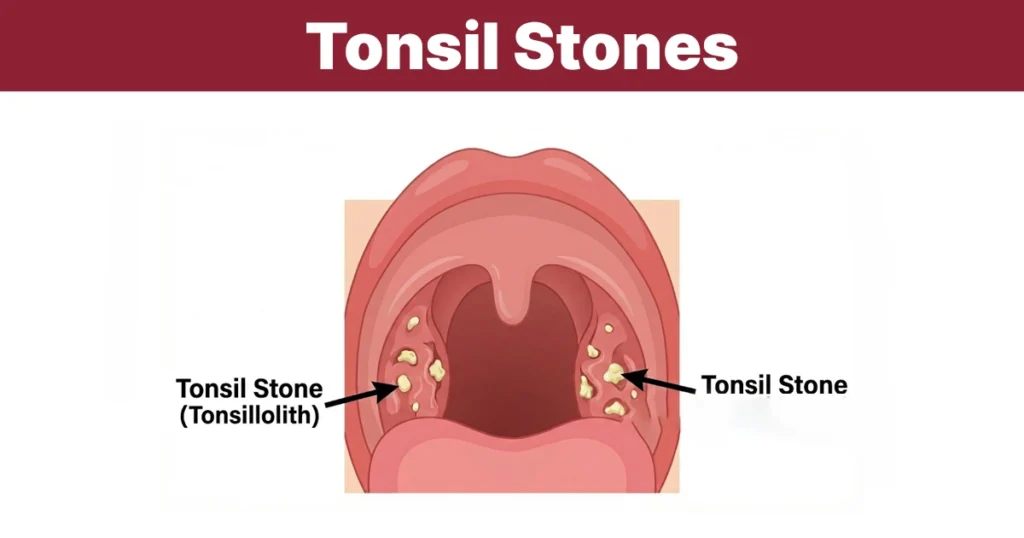
Tonsil stones, or tonsilloliths, are hard, calcified deposits that develop in the palatine tonsils. They can cause discomfort, persistent bad breath, and the sensation of something stuck in your throat. Understanding what causes tonsil stones helps in preventing them and managing existing stones effectively.
Some people notice a white pimple inside the throat or persistent white spots on tonsils, which can be concerning. Severe symptoms, such as trouble swallowing, chronic bad breath, or frequent throat irritation, may require immediate care at a Pearland emergency room or a consultation with an ENT specialist.
Why Do Tonsil Stones Form?
Tonsil stones form when debris, including food particles, dead cells, and bacteria, gets trapped in the crypts of palatine tonsils and calcifies. A CT-based study of 2,873 patients found palatine tonsilloliths in 39.9% of cases, highlighting their prevalence. The likelihood increases with age and deeper tonsil crypts. This shows how both anatomy and accumulated debris contribute to stone formation.
How Do You Know If You Have Tonsil Stones?
- Persistent bad breath or tonsil stone smell.
- Feeling like something is stuck in your throat.
- Visible white nodules on the throat or white spots on the throat.
- Sore throat or irritation.
- Difficulty swallowing.
- Throat inflammation or mild swelling around the tonsils.
Tonsil Stone Causes
Tonsil stones often develop silently, but their underlying causes can trigger discomfort, bad breath, and inflammation. While generally not dangerous, they may lead to tonsillar exudate or infection if untreated. Understanding these causes helps in prevention and long-term management.
Poor Oral Hygiene
Neglecting dental care allows bacteria, plaque, and leftover food particles to accumulate in cryptic tonsils, increasing the likelihood of stone. Poor oral hygiene also promotes tonsil stones smell and bacterial growth, which can worsen inflammation. Regular brushing, flossing, and antimicrobial rinses are effective ways to reduce risk.
Enlarged Tonsils with Deep Crypts
Enlarged tonsils naturally have deeper crevices that trap food, mucus, and bacteria. These pockets make it easier for huge tonsil stones to develop and recur. Enlarged tonsils can also retain moisture, providing an ideal environment for bacteria to thrive. People with naturally large tonsils may require periodic ENT checkups to monitor stone formation.
Chronic or Recurrent Tonsillitis
Repeated infections or poorly managed getting rid of tonsillitis can scar tonsils and deepen crypts. This leads to more debris buildup, causing white places on tonsils, cysts on tonsils, or chronic bad breath. Chronic tonsillitis may also increase the risk of secondary infections, making stone removal more painful. Timely antibiotic treatment and maintaining oral hygiene can significantly reduce recurrence.
Dry Mouth and Dehydration
Saliva flushes bacteria and debris from the mouth, but dry mouth, caused by dehydration, mouth breathing, or medications, allows bacteria to accumulate. This increases the risk of popping hidden tonsil stones and contributes to the tonsil stones smell. Drinking water, chewing sugar-free gum, and using lozenges help keep the mouth moist and reduce stone formation.
Learn More About: Symptoms of Dehydration
Post-Nasal Drip and Sinus Issues
Excess mucus from allergies, sinusitis, or post-nasal drip carries bacteria and dead cells to the tonsils, providing material that may calcify in holes in tonsils. Chronic sinus problems can lead to persistent inflammation, increasing debris buildup. Managing allergies, sinus infections, and using saline nasal sprays can reduce the risk of new stone formation.
Also Read: When To Go to the ER for Sinus Infection
Diet and Lifestyle Factors
Sticky, dairy-rich, or sugary foods can leave residue on tonsils, promoting bacterial growth and tonsillar exudate. Smoking, alcohol, and poor hydration further increase risk. A balanced diet, limiting processed foods, and avoiding smoking reduce white nodules on the throat and the characteristic tonsil stones smell.
Do Tonsil Stones Hurt
Yes. While small stones may be painless, huge tonsil stones can irritate the throat and cause soreness, discomfort while swallowing, ear pain, or swelling. Improper removal at home can lead to bleeding tonsils, so medical guidance or careful at-home techniques are recommended.
How to Get Rid of Tonsil Stones
Tonsil stones can often be managed at home, but large or recurring stones may require professional care. Key steps include improving oral hygiene, reducing bacterial buildup, and flushing debris from cryptic tonsils. Persistent stones should be evaluated by an ENT specialist for tonsil stones.
- Oral Rinses and Mouthwash for Tonsil Stones: Saltwater gargles or mouthwash for tonsil stones flush debris, reduce bacteria, and soothe irritated tonsils.
- Gentle Manual Removal: Cotton swabs or water irrigators can help remove visible stones. Avoid sharp objects to prevent bleeding tonsils.
- Antibiotics for Infection: Used if stones are linked to infection or tonsillar exudate, reducing bacterial buildup and inflammation.
- Coblation Cryptolysis: A minimally invasive ENT procedure that smooths tonsil crypts to prevent debris accumulation and future stones.
- Tonsillectomy (Surgical Removal): Recommended for severe or recurring cases to eliminate holes in tonsils where stones form.
- Hydration & Oral Care: Drinking water, brushing and flossing, and antimicrobial rinses reduce tonsil stone smell and white nodules on the throat.
Tonsil Stone Care at Neighbors Emergency Center
If you’re concerned about what causes tonsil stones, understanding the root factors is important to prevent discomfort, bad breath, or recurring infections. While many stones are harmless, some may require professional attention to avoid complications.
At Neighbors Emergency Center, we provide prompt emergency care for patients with tonsil issues. Our medical team evaluates your symptoms, guides safe methods for removing tonsil stones, and recommends treatments to improve throat and oral health.