
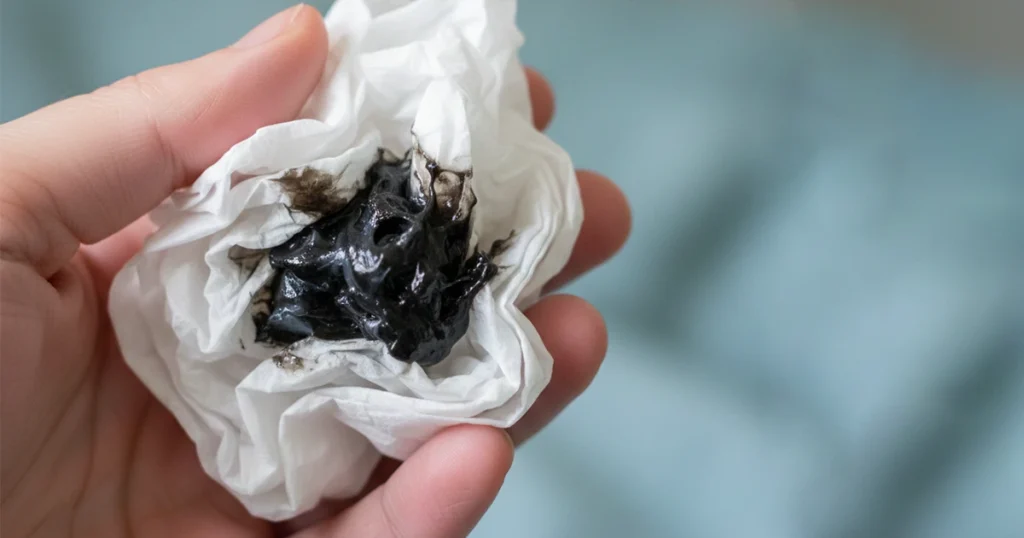
Seeing black mucus can be unsettling, especially when it appears suddenly or persists for several days. Why Is My Mucus Black is a common question among patients who experience dark, sooty, or charcoal-colored phlegm, and understanding this change can help you determine whether it’s caused by something mild (like pollution exposure) or something more serious.
Although black or dark mucus isn’t typical, it is your body’s way of signaling irritation, inflammation, or particle buildup inside the airways. In this guide, we provide medically accurate information to help you understand what’s normal, what’s concerning, and when to visit our Crosby emergency room for fast evaluation and care.
What Is Black Mucus?
Black mucus is airway or nasal discharge that appears dark, charcoal-colored, or contains black specks from inhaled pollutants, dried blood, or underlying lung conditions. It develops when your respiratory system traps and expels particles such as soot, smoke, or dust. A clinical report published by the NIH documented cases of melanoptysis, black-pigmented sputum caused by carbon-filled macrophages in coal dust, exposed in patients.
Symptoms of Black Mucus
- Black phlegm or black snot.
- Sputum with black spots or black specks in phlegm.
- Thick mucus in throat or chest.
- Shortness of breath or wheezing.
- Mucus in stool (rare but possible if swallowed).
Reasons Why Your Mucus Is Black
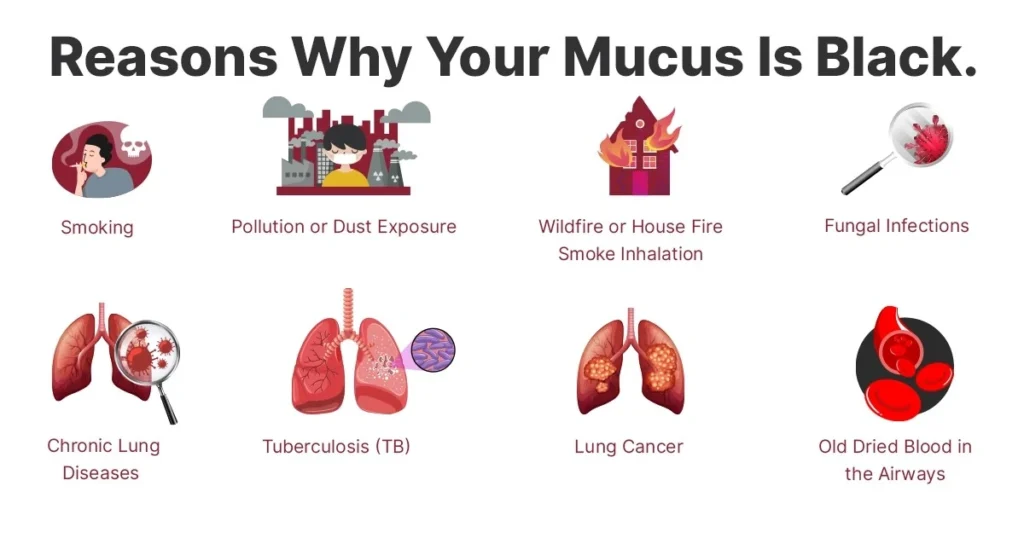
Black mucus can stem from irritants, infections, or deeper respiratory issues. It appears when the body traps harmful particles, reacts to inflammation, or expels debris from damaged lung tissue. Below are the most common medically recognized causes of black mucus, black secretion, and black-colored phlegm.
Smoking
Smoking introduces tar, soot, and carbon particles into the lungs, which can become trapped in mucus and appear as black phlegm or sputum with black spots. Over time, smoke damages the airway lining, causing thicker secretions and more frequent coughing up brown mucus. This buildup commonly leads to black-colored mucus or persistent mucus in the throat.
Pollution or Dust Exposure
Inhaling heavy dust, soot, chemicals, or industrial pollutants forces your airways to trap these particles, producing black mucus or black specks in phlegm. Workers in construction, mining, or manufacturing often experience this due to continuous exposure. The respiratory system reacts by creating extra mucus to expel these contaminants.
Wildfire or House Fire Smoke Inhalation
Soot and ash from fires contain ultrafine particles that can settle deeply in the airway passages. Your body traps and expels these particles, resulting in black snot or dark, grainy sputum. Even short-term exposure may produce temporary black phlegm or sputum with black spots.
Fungal Infections
Certain fungi produce dark pigments that turn mucus black when they infect the airway or lung tissues. These infections are rare but serious and often cause thick black secretion or persistent black phlegm. People with weakened immune systems are at higher risk of developing these pigment-producing infections.
Also Read: When To Go to the ER for Sinus Infection
Chronic Lung Diseases
Long-term inhalation of coal dust or carbon materials can cause lung scarring and tissue breakdown. When this damaged tissue drains into the airways, it may appear as black mucus or phlegm with brown flecks. This condition is common in professions with years of dust exposure.
Tuberculosis (TB)
TB can damage lung tissue and cause old blood or necrotic material to mix with mucus, creating dark or black-colored phlegm. Patients may also notice coughing up brown mucus as the infection irritates and inflames the airways. Persistent fever, night sweats, or weight loss often accompany these changes.
Lung Cancer
Certain cancers produce pigmented cells that can discolor mucus as they shed into the respiratory tract. When these pigments reach the airways, they may appear as black secretion or dark sputum. This is rare but requires immediate medical evaluation due to its severity.
Old Dried Blood in the Airways
When bleeding occurs in the nasal passages or lungs, the blood may dry and oxidize into a dark brown or nearly black color. As this dried blood mixes with mucus, it can resemble black phlegm or spitting brown mucus. Even small bleeds can make mucus appear unusually dark.
When Black Mucus Is an Emergency
While black mucus can result from mild irritants, it may also signal a serious or life-threatening condition, especially when paired with other symptoms. Seek immediate evaluation if you experience it. Warning signs include:
- Severe or persistent shortness of breath.
- Chest pain or pressure.
- Coughing up blood.
- Fever, chills, or night sweats.
- Unexplained weight loss.
- Sudden worsening of cough.
- Difficulty breathing.
If these symptoms appear alongside black mucus, contact the Neighbors Emergency Center right away for rapid assessment and treatment.
Treatments for Black Mucus
The right treatment depends on the underlying cause, whether it’s an irritant, infection, or chronic lung condition. Typically, the first step involves evaluation through physical exam, imaging, and sputum testing. Once identified, treatment aims to clear airways, reduce inflammation, and prevent further damage.
Medical Treatment
- Antibiotics or Antifungal Medications: Prescribed when bacterial or fungal infections are identified as the source of black mucus or black specks in phlegm.
- Bronchodilators or Steroids: Help reduce airway inflammation and open the lungs, especially in chronic respiratory illnesses.
- Bronchoscopy for Airway Cleaning: A specialist may remove hardened mucus or carbon debris from the lungs in severe cases.
- Pulmonary Rehabilitation & Oxygen Therapy: Helps restore breathing capacity in patients with chronic lung disease.
How to Clear Mucus From the Throat
- Warm Hydration: Drinking warm fluids thins thick mucus in the throat and helps loosen stubborn black-colored mucus or brown mucus.
- Steam Inhalation or Humidifiers: Moist air helps soften mucus buildup, making it easier to cough out.
- Saline Gargles or Nasal Rinses: Help flush out irritants contributing to black snot or dark discharge.
- Controlled Coughing Techniques: Helps bring deeper mucus upward to clear the airways efficiently.
How to Remove Mucus From Lungs Naturally
- Deep Breathing Exercises: Promotes lung expansion, helps lift mucus upward, and supports airway clearance.
- Regular Physical Activity: Movement helps mobilize trapped mucus and improves overall lung circulation.
- Avoid Smoking and Polluted Environments: Reduces further buildup of soot, smoke, and black secretion in the lungs.
- Warm Showers or Steam Therapy: Loosens phlegm with brown flecks or black specks in phlegm for easier expectoration.
Expert Respiratory Care at Neighbors Emergency Center
Are you wondering, “Why Is My Mucus Black?” noticing dark, sooty, or black phlegm can be alarming. Understanding the potential causes early can help determine whether it’s due to minor irritants like pollution or something more serious, such as infection or lung disease.
At Neighbors Emergency Center, our experienced team provides fast, expert emergency care for sudden or severe respiratory symptoms. We assess your condition, recommend medically appropriate treatments, and guide you toward effective management to relieve symptoms, protect your lungs, and support long-term airway health.