

Yellow mucus can be surprising, especially when it’s thick, sticky, or comes with sinus pressure or a sore throat. Many people ask, why Is My Mucus Yellow? Typically, yellow mucus indicates your immune system is actively fighting irritation or infection. It’s often not dangerous, though it can signal viral or bacterial conditions that require care.
Thick yellow mucus from the nose or yellow mucus from the throat can feel alarming. Most routine cases can be managed with hydration, rest, and supportive care. If symptoms worsen or persist, visiting a Pasadena emergency room or consulting a healthcare provider is important.
What Does Yellow Mucus Mean?
Yellow mucus usually reflects your body’s immune response to infection or irritation. A PubMed study found that over 80% of patients with darker yellow or greenish sputum had bacterial presence, compared with only 6% in lighter-colored mucus. This indicates that mucus color can provide clues about your health, but it is not a definitive diagnostic tool. Even thick yellow mucus can result from viral infections or minor irritation.
What Does Yellow Mucus Indicate?
Yellow mucus, whether thick yellow mucus, yellow nasal phlegm, or yellow liquid from the nose, shows your respiratory system is clearing germs and irritants. The color comes from dead immune cells in the mucus. This does not always indicate a bacterial infection; viruses or allergies can produce similar discoloration. Persistent or worsening yellow mucus warrants monitoring.
Also Read: Why Is My Mucus Black
What Causes Yellow Mucus?
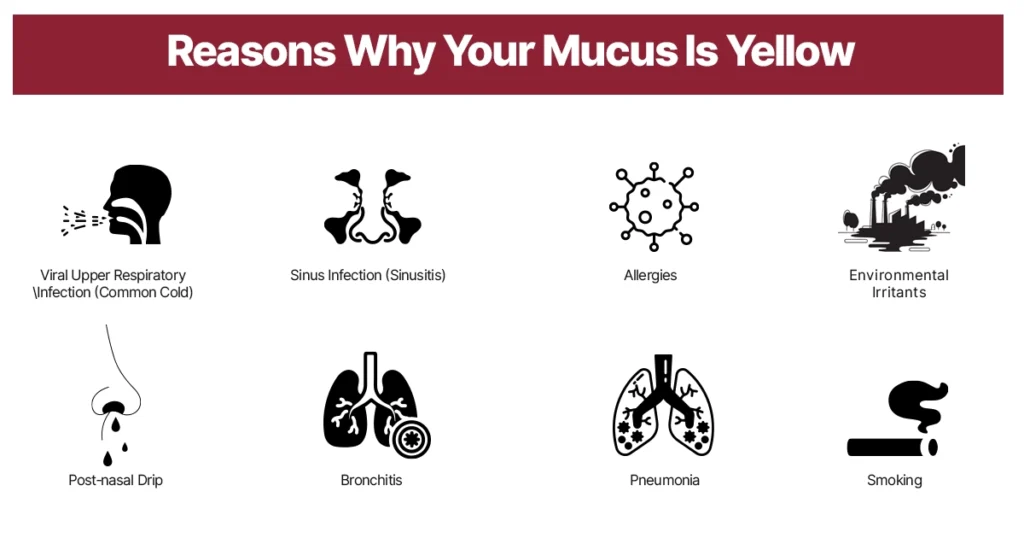
Your body produces mucus to trap dust, allergens, and microbes. When your immune system reacts, mucus thickens and can turn yellow. Yellow mucus, whether bright fluorescent yellow snot, dark yellow mucus, or yellow phlegm in color, indicates immune activity. Color alone isn’t a diagnostic tool; it must be interpreted alongside symptoms.
Viral Upper Respiratory Infection (Common Cold)
Viral infections often start with clear mucus, turning into yellow nasal phlegm as the immune system responds. The yellow color comes from dead white blood cells and cellular debris. Thick yellow mucus may appear in the nose and throat. Symptoms usually include sneezing, mild fever, and congestion, resolving in 7–10 days.
Also Read: Is an Upper Respiratory Infection Contagious
Sinus Infection (Sinusitis)
Sinus infections cause thick yellow mucus from the nose, or sinus infection mucus color changes in the throat. Inflammation and fluid buildup in the sinuses trigger the immune response. Symptoms include facial pressure, nasal congestion, headache, and sometimes fever. Bacterial sinusitis may require medical evaluation if symptoms persist.
Also Read: When to Go to the ER for Sinus Infection
Allergies
Allergic reactions can cause yellow mucus from the throat or nose when inflammation or secondary irritation occurs. Symptoms include sneezing, itchy eyes, watery discharge, and mild nasal congestion. Allergies rarely cause fever but may prolong mucus production. Managing exposure to allergens reduces yellow mucus.
Environmental Irritants
Smoke, pollution, or chemical fumes can irritate nasal passages, producing thick yellow mucus. Mucus thickens as the body traps and removes particles. Symptoms often include coughing, throat irritation, and nasal congestion. Avoiding triggers helps normalize mucus color.
Post‑nasal Drip
When mucus drains from the sinuses into the throat, it may appear as yellow mucus from the throat. This is common after infections, allergies, or irritant exposure. The yellow color reflects immune cells and debris in the mucus. Symptoms include throat clearing, mild coughing, and scratchiness.
Bronchitis
Acute bronchitis inflames the bronchial tubes, causing yellow phlegm color when coughing. The mucus thickens as immune cells fight infection. Symptoms include persistent cough, chest discomfort, and fatigue. Most cases resolve with supportive care; bacterial bronchitis may require antibiotics.
Pneumonia
Pneumonia can produce thick yellow or green and yellow snot as the lungs fight infection. The yellow phlegm color signals white blood cells combating bacteria or viruses. Symptoms include fever, chills, shortness of breath, and chest pain. Prompt medical care is critical.
Smoking
Smoking irritates the respiratory tract, producing dark yellow mucus and damaging cilia. Chronic smokers often experience persistent cough, phlegm buildup, and nasal congestion. Quitting smoking can help restore normal mucus color and improve lung function.
When to See a Doctor
While most causes of yellow mucus are benign and self‑limited, certain signs suggest you should seek medical care. If you have persistent symptoms, more severe signs, or suspicion of serious infection, professional evaluation is important.
- High fever or chills.
- Severe facial pain or pressure lasting more than 10 days.
- Shortness of breath or wheezing.
- Blood in your mucus or nasal blood mucus.
- Confusion or extreme fatigue.
If you notice these symptoms or your yellow mucus from your throat or nose isn’t improving, contact Neighbors Emergency Center or your local healthcare provider for evaluation and timely treatment.
Treatment for Yellow Mucus
Treating yellow mucus focuses on addressing the underlying cause and aiding your body’s ability to clear mucus. Supportive care, hydration, and symptom relief often help, especially with viral infections. Medical treatments may be necessary for bacterial infections, allergies, or complications.
- Nasal Saline Irrigation: Saline rinses help flush out thick yellow mucus from the nose and reduce congestion. They ease breathing and remove irritants from the nasal passages.
- Decongestants: Over-the-counter decongestants reduce swelling in nasal passages, improving airflow and clearing yellow nasal phlegm.
- Antihistamines: For allergies, antihistamines reduce inflammation, easing yellow mucus from the throat and other allergic symptoms.
- Expectorants (e.g., Guaifenesin): Expectorants have a thin yellow phlegm color, making it easier to expel mucus from the throat or chest.
- Antibiotics (If Bacterial Infection Confirmed): Antibiotics may be used only if bacterial infection is confirmed, not based on mucus color alone. They help resolve thick yellow mucus caused by bacterial conditions.
Care for Yellow Mucus at Neighbors Emergency Center
If you’re experiencing persistent yellow mucus and asking yourself, Why is my mucus yellow?, it’s important to monitor your symptoms closely. While yellow mucus is often a sign your body is fighting irritation or infection, it can sometimes indicate bacterial infections that require timely attention. Early evaluation ensures proper diagnosis and treatment.
At Neighbors Emergency Center, our skilled medical team provides prompt emergency care for anyone experiencing mucus changes. We assess your symptoms, guide patients on managing thick yellow mucus, and recommend treatments to help clear nasal phlegm or yellow mucus from the throat, supporting respiratory health.