
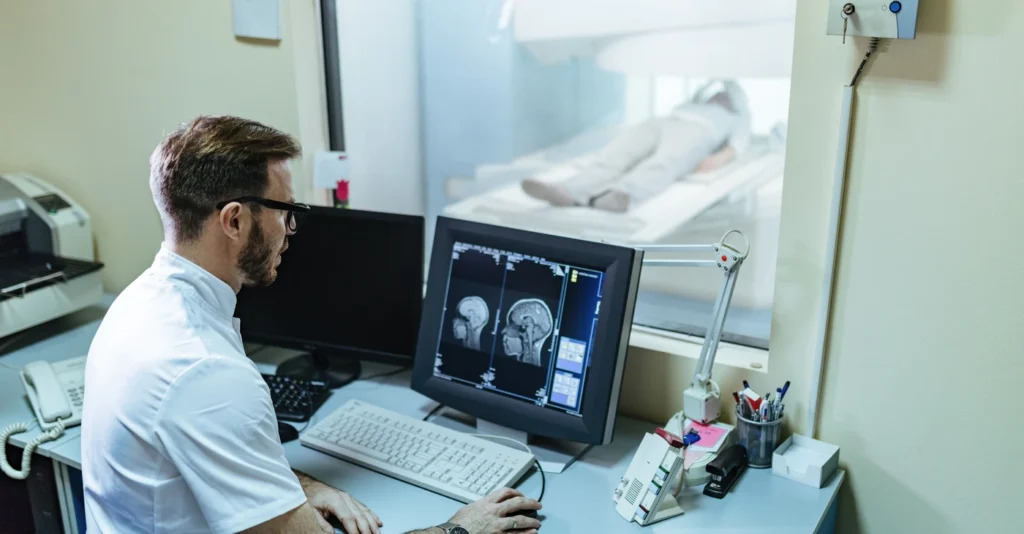
When your doctor recommends a CT scan, it’s often because they need a more comprehensive view than what a standard X-ray can provide. This advanced imaging test allows physicians to see deep inside the body with incredible clarity, capturing structures like soft tissue, organs, and blood vessels in high detail.
At the Lubbock emergency room, CT scans play a critical role in supporting quick, informed medical decisions. Whether it’s evaluating internal trauma, sudden chest pain, or unexplained headaches, these scans provide essential insights within minutes. Modern CT scanners have transformed emergency care by reducing scan times and radiation exposure while improving image precision. This means patients receive faster, safer, and more accurate diagnoses, all without unnecessary delays in treatment.
What is a CT Scan?
A CT scan (computed tomography scan) is a type of medical imaging that uses rotating X-rays and advanced computer technology to create layered, high-resolution images of the body. Unlike regular X-rays, which produce a flat image, a CT scan generates multiple thin slices that can be combined into a three-dimensional view.
CT scans are especially valuable for visualizing areas that are difficult to assess with other imaging methods. They can reveal the fine details of organs, detect subtle tissue differences, and even measure internal density, helping doctors pinpoint the exact location and extent of a problem. In healthcare today, CT imaging is used not only for emergencies but also for preventive and follow-up care. It helps track the progress of treatment, evaluate post-surgical healing, and identify conditions before symptoms become severe.
What Does a CT Scan Show?
A CT scan provides clear, cross-sectional images of your body’s internal structures. Unlike a standard X-ray that produces a single flat image, CT imaging creates multiple slices that can be viewed individually or combined into 3D visuals.
CT scans can reveal:
- Organs: Detailed images of the brain, heart, lungs, liver, kidneys, and other organs.
- Blood vessels: Detects blockages, aneurysms, or internal bleeding.
- Bones and joints: Shows fractures, joint problems, or bone loss.
- Abnormal growths: Identifies tumors, cysts, or masses that may not appear on standard X-rays.
CT images help doctors visualize both structure and density, distinguishing between soft tissue, fluid, and bone, information essential for accurate diagnosis.
How Does a CT Scan Work?
CT imaging captures multiple X-ray images from different angles. A computer then combines these into detailed cross-sectional or 3D views of the body.
During a CT scan:
- Patient positioning: You lie on a motorized table that moves into the scanner.
- Image capture: The scanner rotates around your body, taking multiple images.
- Contrast use (if required): Dye may be administered orally or intravenously to highlight organs or blood vessels.
- Image processing: The computer assembles the images for radiologists to review.
This process allows doctors to detect subtle abnormalities, fractures, or internal bleeding that other imaging tests might miss.
What Is a CT Scan Used For?
Doctors use CT scans to diagnose, monitor, and plan treatments for a wide range of health conditions. While “What a CT scan shows” focuses on what’s visible, this section explains why and when it’s used.
Common uses include:
- Diagnosing internal injuries after accidents, falls, or trauma.
- Detecting and tracking tumors or cancers in the lungs, liver, pancreas, or brain.
- Guiding surgical or biopsy procedures by providing precise internal mapping.
- Monitoring chronic diseases such as heart disease, lung conditions, or vascular disorders.
- Identifying infections or inflammation deep within organs and tissues.
CT technology’s diagnostic accuracy makes it one of the most trusted imaging tools. For instance, contrast-enhanced CT scans for abdominal pain in emergency settings show an overall accuracy of 89.7%, with 76.9% sensitivity and 96.2% specificity, numbers that highlight its reliability in real-time decision-making.
How Do You Prepare for a CT Scan?
Preparation for a CT scan depends on the part of your body being examined and whether contrast dye will be used. Proper preparation ensures clear images and accurate results.
Before Your Scan
- Follow fasting instructions: You may be asked not to eat or drink for several hours if contrast dye is used.
- Disclose medications: Tell your doctor about any prescriptions, allergies, or supplements.
- Inform about medical conditions: Notify your provider if you have diabetes, kidney issues, or are pregnant.
- Remove metal items: Jewelry, eyeglasses, or piercings can interfere with imaging.
During the Scan
- Stay still as movement can blur the images.
- You may hear whirring sounds from the scanner, this is normal.
- If you feel anxious in enclosed spaces, let the technician know; mild sedation may help.
Key Points
- Most CT scans are quick, painless, and safe.
- Mild side effects from contrast dye, such as a warm sensation, are temporary.
- Follow your doctor’s post-scan instructions for hydration and recovery.
The Science Behind CT Imaging and Technology
CT scans combine advanced X-ray technology with computer algorithms to produce highly detailed images of the body. Unlike traditional X-rays that show a single flat image, CT scanners rotate around the patient, capturing multiple cross-sectional slices that a computer assembles into 3D visuals. This allows doctors to see bones, soft tissues, and blood vessels clearly and accurately.
Key technical highlights:
- Rotating X-ray tube and detectors: The scanner rotates 360° around the body, collecting multiple images from various angles.
- Image reconstruction: Specialized software processes these images into thin slices, which can be viewed individually or in 3D.
- Hounsfield units (HU): CT images measure tissue density using HU values, helping radiologists distinguish between air, fluid, bone, and soft tissue.
- Slice thickness and resolution: Adjustable slice settings allow for highly precise imaging, critical in detecting subtle abnormalities.
- Dose optimization: Modern CT machines use automated exposure control to minimize radiation while preserving image quality.
This blend of physics, engineering, and computing power makes CT technology one of the most reliable diagnostic tools in modern medicine.
How Long Does a CT Scan Take?
Most CT scans are completed in 10 to 30 minutes, depending on the area scanned and whether contrast dye is used.
Typical steps:
- Preparation: Remove jewelry or wear a gown; contrast may be given orally or via IV.
- Scanning: Lie flat on the table as the scanner rotates around you.
- Completion: Most patients can resume normal activities immediately.
Results are usually available within 30–60 minutes in emergencies and within a few hours to 24 hours for outpatient scans.
Are there Risks or side Effects?
Although CT scans are considered safe for most people, it’s important to understand the potential risks, especially with repeated exposure. Doctors carefully weigh these risks against the benefits before recommending a scan.
Potential risks include:
- Radiation exposure: Higher than standard X-rays, but generally low risk for most adults.
- Allergic reactions: Rare, usually mild, and mostly related to contrast dye.
- Kidney strain: Possible in patients with preexisting kidney conditions if contrast is used.
- Pregnancy considerations: CT scans are generally avoided in pregnant women unless absolutely necessary.
Protect Your Health with a CT Scan
Your health deserves proactive attention. Early imaging can detect issues before they become serious, helping doctors diagnose and treat conditions promptly. A CT scan provides clear, detailed insights that support accurate decisions and faster recovery when every moment counts.
At Neighbors Emergency Center, our on-site imaging delivers fast, precise results interpreted by experienced radiology professionals. Whether you’re experiencing sudden pain, injury, or require ongoing monitoring, our team provides timely, expert care, giving you confidence and peace of mind when it matters most.