
Heat rash usually lasts one to three days, but in some cases it can take up to a week to fully clear, depending on heat exposure, sweating, and individual skin sensitivity. It often appears suddenly after time spent in hot or humid environments and may cause itching, redness, and uncomfortable skin irritation that interferes with daily activities.
Although heat rash is generally mild and self-limiting, lingering or worsening symptoms can be concerning. Persistent discomfort, spreading rashes, or signs of infection should be evaluated promptly, and our emergency room in Porter is equipped to assess skin conditions, rule out complications, and provide appropriate treatment when home care is not enough.
What Is Heat Rash
Heat rash, also known as miliaria, is a skin condition that occurs when sweat ducts become blocked and trap perspiration beneath the skin. This leads to inflammation, redness, and small bumps or heat rash blisters. It commonly develops during hot weather or intense physical activity and can affect adults and children alike. Areas prone to friction and sweating—such as the chest, back, armpits, and skin folds, are most commonly involved.
According to StatPearls on the NCBI Bookshelf (an NIH resource), the most common form of heat rash (miliaria rubra) can affect up to 30% of adults living in hot, humid conditions, showing how prevalent it is in warm climates.
Heat Rash Symptoms
- Small red or skin-colored heat bumps on the skin.
- Itching or prickling sensation that worsens with sweating.
- Heat rash blisters filled with clear fluid in moderate cases.
- Redness and localized skin irritation.
- Rash in armpit, chest, back, or skin folds.
How Long Does Heat Rash Take To Go Away
Heat rash typically goes away on its own, but the recovery time depends on severity and continued heat exposure. Mild sweat rash often resolves within 24 to 72 hours once the skin is cooled and kept dry. More persistent cases, especially heat rash in adults, may take up to 7 days to fully heal if friction or sweating continues. Prompt cooling, breathable clothing, and avoiding further heat exposure significantly speed recovery and reduce recurrence.
What Do Heat Rashes Look Like
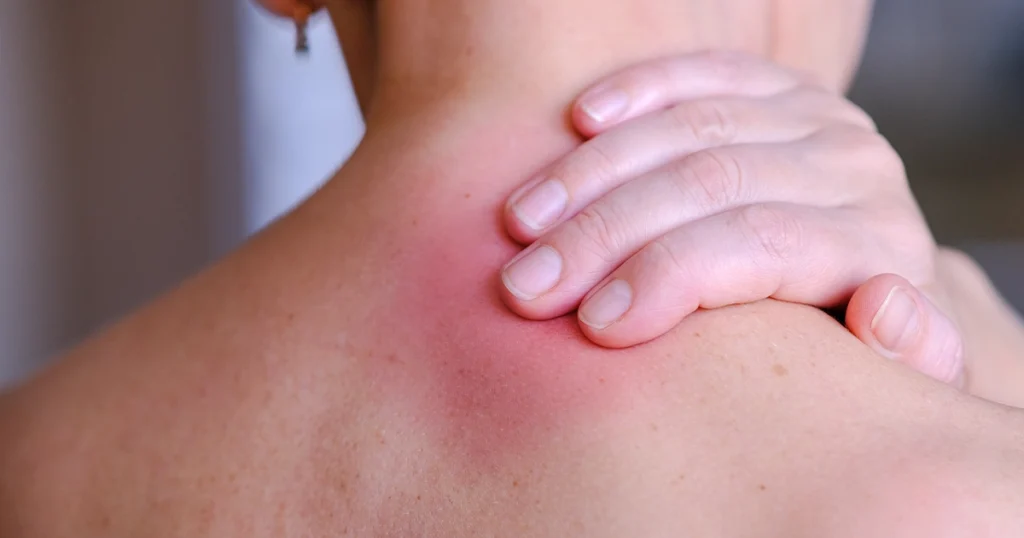
Heat rashes usually appear as clusters of tiny red bumps, clear blisters, or raised patches that may resemble heat hives or hives from heat. Some people experience heat bumps on the face, while others develop heat rash on arms, legs, chest, or back. The affected skin may look inflamed and feel rough or prickly. In some cases, the rash may resemble heat rash and an allergic reaction, which is why proper evaluation is sometimes necessary.
What Causes Heat Rash
Heat rash develops when the body produces more sweat than the skin can release, but this process can be frustrating and uncomfortable. Hot weather, humidity, and skin friction all contribute to blocked sweat ducts. Understanding why heat rash forms helps reduce flare-ups and protect sensitive skin during warm conditions.
- Excessive Sweating: Heavy perspiration blocks sweat ducts, leading to a sweat rash and inflammation under the skin.
- Hot And Humid Environments: High humidity prevents sweat from evaporating properly, increasing perspiration skin rash risk.
- Tight Or Non-Breathable Clothing: Traps heat and moisture against the skin, commonly causing heat rash on the chest, back, and legs.
- Friction And Skin Folds: Areas like the armpits or under the breasts are more vulnerable due to rubbing and moisture buildup.
Can Heat Rash Spread
No, heat rash does not spread from person to person, but it can appear to worsen if sweating continues. New heat bumps may develop in nearby areas, such as heat rash on the back, arms, or legs, when heat exposure persists. Cooling the skin and reducing perspiration helps prevent the rash from affecting additional areas.
Does Heat Rash Itch
Yes, heat rash often itches, but the intensity can range from mild tingling to significant discomfort. Heat hives and inflamed sweat ducts may cause a prickly or burning sensation that worsens with sweating. Scratching can aggravate skin irritation and increase the risk of infection, so soothing care is recommended.
Can Heat Rash Be Prevented
Yes, heat rash can often be prevented, but it requires reducing excessive sweating and keeping the skin cool and dry. Wearing loose, breathable clothing allows sweat to evaporate properly and helps prevent blocked sweat ducts. Taking cooling breaks, showering after heavy perspiration, and avoiding thick or occlusive skin products during hot weather significantly lowers the risk.
When To Seek Emergency?
Most cases of heat rash resolve with basic home care, but some situations require urgent medical attention. Worsening symptoms or signs of infection should be evaluated promptly to prevent complications and prolonged discomfort. Seek emergency care if you notice:
- Fever along with a worsening rash.
- Severe pain, swelling, or warmth around the affected area.
- Pus, crusting, or open sores suggesting infection.
- A rash that does not improve after several days of care.
If these symptoms occur, contact the Neighbors Emergency Center for prompt evaluation and appropriate treatment.
Heat Rash Treatments
Managing heat rash focuses on cooling the skin and minimizing sweating, but ongoing or severe symptoms may require medical intervention. Early treatment helps reduce discomfort and prevent complications such as infection or prolonged skin irritation. With proper care, most people recover quickly and comfortably. Effective treatment options include:
- Cooling Measures: Rest in air-conditioned environments and apply cool compresses to calm inflamed skin.
- Loose, Breathable Clothing: Cotton fabrics reduce friction and moisture, helping prevent heat rash on arms, legs, chest, and back.
- Over-The-Counter Hydrocortisone Cream: Short-term use can relieve itching and inflammation.
- Calamine Lotion: Helps soothe itching and dry mild heat rash blisters.
- Antihistamines: Useful for heat hives or significant itching caused by hives from heat.
- Gentle Skin Care: Mild cleansing and keeping the skin dry reduces perspiration and skin rash risk.
- Medical Evaluation: Persistent or recurrent heat rash in adults may require prescription treatments or infection screening.
Heat Rash Care at Neighbors Emergency Center
Heat rash can become increasingly uncomfortable if symptoms persist or worsen, especially when itching, redness, or heat rash blisters interfere with daily activities. Many people searching How Long Does Heat Rash Last are concerned because the rash is not improving as expected or keeps returning. Early medical evaluation helps rule out infection, allergic reactions, or other skin conditions that may require treatment.
At Neighbors Emergency Center, our experienced medical team provides prompt evaluation and comprehensive emergency care for heat rash and related skin irritation. We focus on relieving discomfort, preventing complications, and identifying factors that may be prolonging symptoms, so patients can heal safely and return to comfort as quickly as possible.