
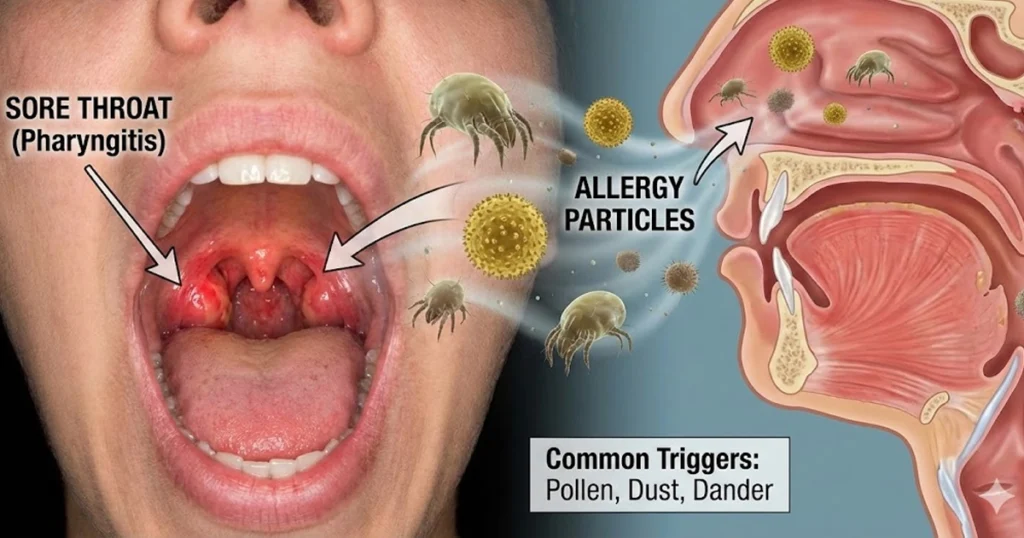
Yes, allergies can cause a sore throat, but the way and reason they do it might surprise you, and it isn’t always obvious to everyone suffering from throat irritation. Many people assume a sore throat always means an infection, yet allergy‑related throat symptoms can feel just as uncomfortable and persistent, especially if allergy triggers are constant in your environment.
If you’ve ever wondered, “Can allergies cause sore throat?”, you’re not alone. Allergic reactions from pollen, dust mites, pet dander, or mold can irritate your throat. Itchy or scratchy throat from allergies can be frustrating. Getting the right care, whether from your doctor or our emergency room in Amarillo, helps you find relief quickly.
What Are Allergies?
Allergies occur when your immune system mistakenly identifies harmless substances (allergens) as threats and mounts a defensive response. This response releases chemicals like histamine, which cause inflammation and irritation in tissues such as the nose, eyes, and throat. Allergic conditions like allergic rhinitis affect a significant portion of the population.
An estimated 15 % to 30 % of patients in the United States have allergic rhinitis, a condition that affects productivity and the quality of life in children and adults.
Symptoms of Allergy
Allergy symptoms vary depending on the allergen and the person’s immune response, but often include:
- Sneezing and nasal congestion.
- Runny nose or post‑nasal drip.
- Itchy throat or itching inside throat.
- Itchy, watery eyes.
- Cough or itchy throat and cough.
- Scratchy throat, allergies, and throat feels scratchy.
Do Allergies Cause Sore Throat?
Yes, allergies can cause sore throat, especially through mechanisms that involve irritation from mucus and inflammation. Rather than a viral or bacterial infection, allergy‑related sore throats stem from immune reactions and environmental exposures.
Allergic inflammation often triggers excess mucus production, which drains down the back of your throat (post‑nasal drip). This drainage can lead to irritation that feels like a sore, dry, scratchy throat, different from the raw sensation of infection‑based sore throats but just as uncomfortable.
How Allergies Cause Sore Throat
Allergies don’t “infect” the throat, but they irritate it in several ways. Allergic reactions set off immune responses that inflame tissues and increase mucus production. When this mucus travels downward, it continuously contacts the sensitive throat lining, resulting in soreness, itchiness, and discomfort.
- Post‑nasal Drip: Excess mucus from the nose or sinuses flows into the throat, irritating the tissues and causing soreness, itching in the throat, and frequent throat clearing.
- Histamine‑Mediated Inflammation: When histamine is released during an allergic reaction, mucous membranes swell and become irritated, which can contribute to a scratchy and sore throat sensation.
- Environmental Drying: Allergens often cause nasal congestion, forcing mouth breathing that dries the throat’s lining, leading to a dry, scratchy throat.
- Cough Reflex Triggering: Irritation from mucus can trigger coughing, which further strains the throat and worsens the soreness.
Common Allergens That May Cause a Sore Throat
Allergens vary by season and environment, but several common triggers are known to provoke sore throat allergies:
- Pollen: Seasonal pollen from trees, grasses, and weeds is a major trigger of seasonal allergies, often leading to itchy or sore throat symptoms when levels are high.
- Dust Mites: These microscopic creatures live in bedding and carpets. Their waste can trigger year‑round allergic symptoms, including an itchy throat and post‑nasal drip.
- Pet Dander: Proteins found in animal skin flakes and saliva can cause strong allergic responses, triggering inflammation and a sore throat due to continual exposure.
- Mold Spores: Both indoor and outdoor molds can release spores that irritate nasal passages and throat tissues, especially in damp environments.
- Smoke and Irritants: Although not classic allergens, smoke and pollution can aggravate allergic reactions and make the throat feel scratchy and sore.
How Long Does a Sore Throat From Allergies Last?
A sore throat due to allergies can last as long as you’re exposed to the offending allergens. Unlike viral infections that often resolve in days, allergy symptoms can persist for weeks or months during high‑exposure seasons or without effective control measures.
When Is It an Emergency?
Most allergy‑related sore throats are uncomfortable but not emergencies. However, seek immediate medical help if throat symptoms rapidly worsen, make swallowing difficult, or are paired with severe allergic signs. Possible emergency signs include:
- Trouble breathing or wheezing.
- Swelling that affects swallowing or speaking.
- High fever or stiff neck.
- Red welts in throat or tongue swelling.
If you or someone experiences severe symptoms like difficulty breathing, a swollen throat, or rapidly progressing discomfort, contact the Neighbors Emergency Center or your local emergency services right away.
How Do You Get Rid of an Itchy Throat From Allergies?
An itchy, scratchy throat due to allergies can be very bothersome, but understanding why it occurs and how treatments work helps you manage it effectively. Rather than thinking of it as a virus, treating the allergic inflammation, reducing mucus, and soothing the throat lining are key parts of relief.
- Antihistamines: Antihistamines help block the immune response that causes itchiness and inflammation, reducing symptoms like itching inside the throat and scratchy throat allergies.
- Nasal Corticosteroid Sprays: These prescription or OTC sprays reduce inflammation and decrease post‑nasal drip, which helps prevent sore throat due to allergies.
- Saline Nasal Rinse: Flushing the nasal passages with saline can help remove allergens and reduce mucus flow into the throat.
- Hydration and Humidification: Keeping your throat moist with fluids and using a humidifier can soothe dry, itchy throat symptoms.
- Avoiding Triggers: Reducing exposure to known allergens, such as staying indoors on high pollen days, using air filters, and keeping pets out of bedrooms, can significantly reduce throat symptoms.
Allergy Sore Throat Care at Neighbors Emergency Center
Managing a sore throat from allergies starts with understanding its cause and taking steps to reduce irritation. Simple measures like staying hydrated, using a humidifier, and avoiding known allergens can help, but persistent or severe symptoms may require emergency care. If your throat discomfort worsens, visiting Neighbors Emergency Center ensures you receive a timely evaluation and relief.
Can allergies cause sore throat? They can, and when symptoms like itchy throat, scratchy throat, or difficulty swallowing persist, prompt medical attention is important. Our team at Neighbors Emergency Center provides expert guidance and treatment to help you feel better quickly, prevent complications, and get back to your daily routine comfortably.