

Ear infections aren’t limited to ear discomfort; they can trigger sharp, throbbing pain radiating to the jaw. Swelling along the jawline, pressure behind the ear, difficulty chewing, stiffness, and fever often accompany severe ear infections. Many wonder, “Can an ear infection make my jaw hurt?” The answer is yes. Inflammation from an ear infection can irritate nerves and tissues shared with the jaw, sometimes signaling that the infection is spreading. Rapidly worsening jaw pain, swelling, or fever may indicate serious complications that require immediate medical attention.
Recognizing the urgency of these symptoms is critical. Jaw pain that worsens with chewing or talking, limited jaw movement, ear drainage, sudden hearing changes, or neurological signs should never be ignored. Prompt evaluation by medical professionals, such as at an ER for earache, can prevent complications like abscess formation, mastoiditis, or temporomandibular joint (TMJ) involvement. This guide explains why ear infections affect the jaw, how to identify red-flag symptoms, safe home care for mild cases, and when to seek emergency treatment.
What Is an Ear Infection?
An ear infection, medically known as otitis, occurs when bacteria, viruses, or fungi invade the ear. Infections can affect different areas:
- Outer Ear (Otitis Externa): Often called swimmer’s ear, the ear canal becomes inflamed and painful.
- Middle Ear (Otitis Media): Common after colds or sinus infections; fluid accumulates behind the eardrum, causing pressure and discomfort.
- Inner Ear (Otitis Interna/Labyrinthitis): Less common but may affect balance and hearing.
Ear infections lead to inflammation, fluid buildup, and pressure. Because of the close anatomical relationship between the ear and jaw, pain can radiate outward, creating jaw discomfort that sometimes mimics dental or TMJ issues. For severe or persistent symptoms, it’s important to seek care at an emergency room to ensure prompt evaluation and treatment.
Why Ear Infections Cause Jaw Pain
Ear infections can cause jaw pain because the ear and jaw share nerves and are anatomically close. Inflammation, fluid buildup, or infection spread can irritate these structures, leading to discomfort that may worsen with chewing, talking, or jaw movement.
1. Shared Nerves
The trigeminal nerve communicates sensations from both the ear and jaw. When inflamed, this nerve can carry pain from the ear to the jaw, creating referred discomfort that feels like a jaw problem.
2. Nearby Jaw Joints
The TMJ is located just in front of the ear. Swelling or pressure from an ear infection can irritate surrounding tissues, resulting in stiffness, soreness, and pain during chewing or talking. Sometimes this pain mimics TMJ disorders, making diagnosis tricky without medical evaluation at a Hospital in Amarillo, Texas.
3. Ear Pressure
Fluid buildup behind the eardrum increases pressure inside the ear. This pressure can radiate to jaw muscles and nearby nerves, causing pain that intensifies with jaw movement, chewing, or talking.
4. Infection Spread
Severe ear infections may extend beyond the ear, affecting tissues around the jaw. This can cause redness, swelling, and sharp pain and may indicate complications such as mastoiditis or abscess formation. Prompt medical attention is critical in such cases.
Symptoms of Jaw Pain from an Ear Infection
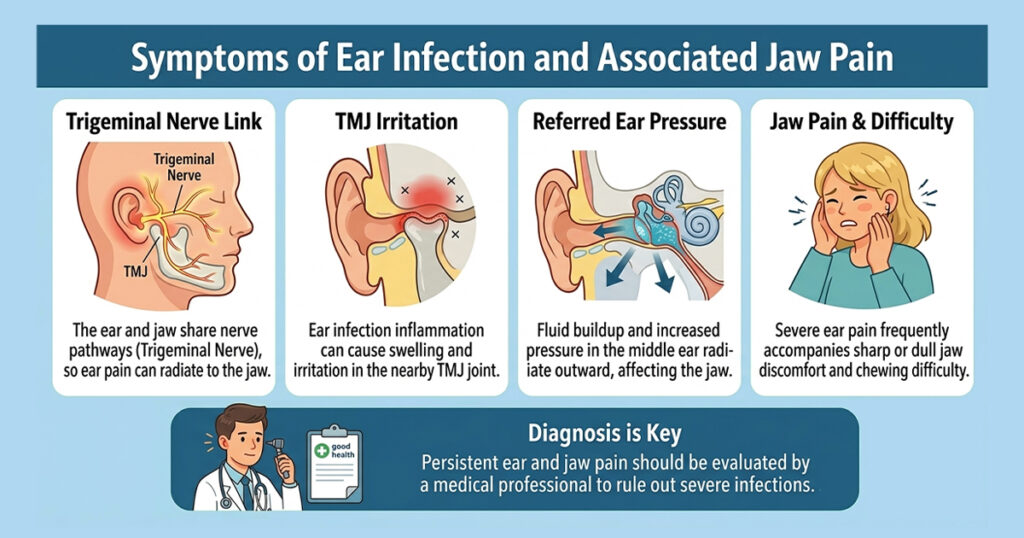
Jaw pain related to an ear infection usually appears alongside other warning signs:
- Pain on the same side as the infected ear
- Pressure or fullness in the ear and jaw
- Swelling along the jawline
- Discomfort worsening with chewing, talking, or yawning
- Ear symptoms: drainage, muffled hearing, or ringing
- Stiff jaw or trouble opening the mouth
If multiple symptoms occur together, the jaw pain is likely ear-related and should be monitored carefully. For children experiencing severe or persistent symptoms, visiting an emergency room for pediatrics can ensure prompt evaluation and treatment.
How to Tell If Jaw Pain Is Ear-Related
Jaw pain can result from dental problems, TMJ disorders, sinus infections, or even heart-related issues. You should suspect an ear infection if the pain is on the same side as an earache, started after ear pressure or congestion, and worsens with jaw movement. Additional ear symptoms like muffled hearing, drainage, or fever can further indicate an ear-related cause. Jaw pain can stem from dental issues, TMJ disorders, sinus infections, or even heart problems.
Suspect an ear infection if:
- Pain occurs on the same side as ear discomfort
- Jaw pain started after ear pressure or congestion
- Pain worsens with jaw movement
- Ear symptoms like muffled hearing, drainage, or fever are present
Recognizing these patterns ensures the problem is addressed promptly and prevents serious complications. For severe or persistent symptoms, seeking care at Neighbors Emergency Center can provide rapid evaluation and treatment.
Home Care for Ear Infection Jaw Pain
For mild jaw pain caused by an ear infection, these measures can help:
- Pain Relief: Acetaminophen or ibuprofen to reduce discomfort.
- Warm Compresses: Apply to the jaw or ear for soothing relief.
- Rest: Allow the body to fight infection naturally.
- Hydration: Fluids help thin mucus and reduce eardrum pressure.
- Jaw Relaxation: Avoid tough foods and gently massage jaw muscles.
- Steam or Humidifier: Eases ear pressure and reduces irritation.
Note: These strategies help mild symptoms, but severe, persistent, or worsening jaw pain requires prompt medical evaluation.
When Jaw Pain from an Ear Infection Becomes Serious
Urgent care is needed if you notice:
- Rapidly worsening jaw pain
- High fever (above 103°F / 39.4°C)
- Difficulty opening your mouth fully
- Sudden hearing loss
- Ear drainage with foul odor
- Facial weakness, drooping, or numbness
- Swelling or redness spreading around the face or neck
These signs may indicate complications like:
- Mastoiditis: Infection of the bone behind the ear
- Abscesses: Bacterial pockets around the jaw or ear
- TMJ Involvement: Inflamed joint tissues
- Spread to Facial Tissues: Risk of severe infection
Early intervention prevents permanent damage and ensures timely treatment with antibiotics, drainage, or other medical interventions.
When to Go to the ER
Seek emergency care immediately if you experience:
- Jaw and ear pain are worsening quickly
- High, persistent fever
- Trouble opening your mouth or chewing
- Sudden hearing loss
- Neurological changes: confusion, dizziness, or fainting
- Rapidly spreading facial swelling or redness
- Inability to eat or drink due to pain
These symptoms indicate a complicated or spreading infection. Medical teams at emergency centers are prepared 24/7 to evaluate and manage serious ear infections and associated jaw pain.
Expert Care at Neighbors Emergency Center
At Exceptional Emergency Center, patients with severe ear and jaw pain receive immediate, expert care. Our 24/7 emergency teams provide:
- Rapid Evaluation: Quick assessment of ear pain, jaw discomfort, fever, or neurological symptoms.
- Advanced Diagnostics: Imaging, lab tests, and ear examinations to pinpoint infection severity.
- Targeted Treatment: Antibiotics, drainage procedures, pain management, or IV therapy as needed.
- Follow-Up Care: ENT or infectious disease coordination to prevent recurrence and complications.
Timely medical attention ensures infections are contained, prevents permanent damage, and supports fast recovery.
Key Takeaways
- Ear infections can cause jaw pain due to nerve irritation and nearby tissue inflammation.
- Pain may worsen with chewing, talking, or jaw movement, often alongside ear-related symptoms.
- Mild cases can improve with home care, but worsening pain, high fever, or neurological signs need urgent evaluation.
- Severe complications like mastoiditis, abscesses, or TMJ infection require prompt medical intervention.
- Early evaluation at an emergency center ensures proper treatment and prevents long-term damage.
FAQs
Can an ear infection cause jaw pain?
Yes. Inflammation, fluid buildup, and the shared nerves between the ear and jaw can transmit pain, often causing discomfort that worsens with chewing, talking, or jaw movement. This pain can sometimes radiate to surrounding areas, making the jaw feel sore even if the ear is the primary source of infection.
Can home remedies relieve jaw pain from an ear infection?
Mild jaw pain may improve with acetaminophen, warm compresses, hydration, steam inhalation, and gentle jaw relaxation. These measures help ease discomfort, but persistent or worsening pain should be evaluated by a healthcare professional.
What complications can occur from untreated ear infections?
Untreated ear infections can lead to serious complications such as mastoiditis, abscess formation around the jaw or ear, TMJ infections, or the spread of infection to deeper facial tissues, potentially causing permanent damage if not addressed promptly.