

Have you ever wondered what does the color of your mucus mean? Mucus isn’t just an annoyance; it helps protect your respiratory system by trapping dust, bacteria, and other particles. The color of your mucus can provide important clues about your health and alert you to infections, allergies, or other respiratory issues.
Changes in mucus color can indicate minor irritation or a condition that needs prompt medical attention. At our Crosby emergency room, experienced healthcare professionals can quickly assess unusual symptoms and provide guidance. Recognizing these changes early helps prevent complications and ensures you receive timely care.
What Do The Different Snot Colors Mean?
Mucus color reflects how your body responds to irritants, infections, or inflammation. Clear mucus is usually normal, while white, yellow, green, brown, red, or black variations can indicate viral infections, bacterial infections, allergies, or environmental exposures. Paying attention to these changes helps you determine if home care is sufficient or if you need a medical evaluation.
| Mucus Color | Possible Cause | Notes |
| Clear | Normal, hydration, mild irritation | Healthy baseline; common in allergies or mild colds |
| White | Nasal congestion, early infection | Indicates slowed mucus flow or mild inflammation |
| Yellow | Viral infection, immune response | Presence of white blood cells; often short-term |
| Green | Bacterial infection or prolonged viral infection | Shows immune activity; monitor other symptoms |
| Red/Pink | Blood from irritation, injury | Minor trauma or more serious conditions |
| Brown | Dried blood, inhaled pollutants | Minor trauma or more serious conditions |
| Black | Dried blood, inhaled pollutants | Rare; usually requires medical evaluation |
Different Mucus Colors And Their Causes
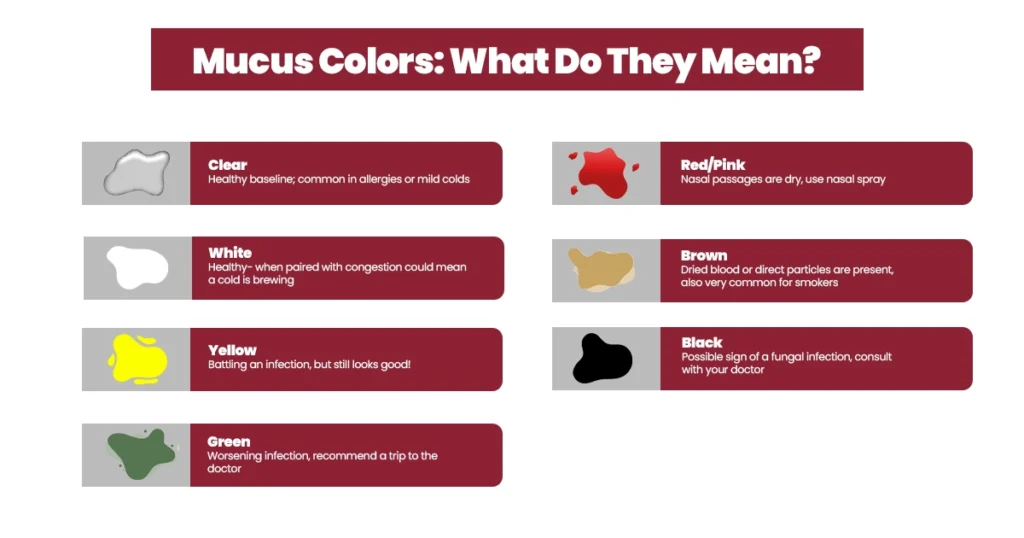
Mucus changes color due to the presence of white blood cells, pathogens, environmental particles, or inflammation. Each color indicates how your body is responding, whether flushing irritants, fighting infections, or signaling chronic conditions. Recognizing these causes can guide appropriate care, from home remedies to seeking professional evaluation.
What Does Clear Mucus Mean
Clear mucus is a sign of healthy respiratory function. Composed mainly of water, salts, and proteins, it traps dust, bacteria, and allergens effectively. Clear mucus is common during normal breathing, mild allergies, or the early stages of a cold, showing that your body is protecting your airways efficiently, and it can also indicate that your body is effectively flushing out minor irritants from the nasal passages.
What Does White Mucus Mean
White mucus typically appears when nasal passages are swollen or congested, slowing the flow of mucus. It can signal the early stage of a viral infection, a mild cold, or an allergic reaction. Though thicker than clear mucus, it is usually not serious and resolves as inflammation decreases, and this thicker appearance often reflects a buildup of white blood cells responding to irritation or infection in the nasal lining.
What Does Yellow Mucus Mean
Yellow mucus indicates that your immune system is actively fighting an infection. White blood cells give mucus a yellow tint as they combat pathogens. This is common during viral infections like colds and generally resolves on its own unless symptoms worsen. In a study of 241 patients with acute cough, 12% of those with yellow or green sputum were found to have a bacterial infection.
What Does Yellow Mucus Indicate
- Viral Infection: Yellow mucus often signals a viral response, such as a cold, with white blood cells combating pathogens.
- Immune System Activation: Shows that your body is actively defending against infection or irritation.
- Mild Inflammation: Swelling of the nasal passages can slow mucus drainage, creating a yellowish appearance.
What Does Green Mucus Mean
Green mucus usually develops when your immune system has been fighting an infection for several days. The green color comes from enzymes produced by white blood cells. While often associated with prolonged viral or bacterial infections, green mucus alone does not always indicate a serious condition, but should be monitored if persistent.
Does Green Mucus Mean Infection?
Not always. Green mucus can reflect your body’s immune activity against pathogens. However, prolonged green mucus accompanied by fever, facial pain, or discomfort may suggest a bacterial infection that requires medical attention. Most viral infections can cause temporary green mucus without the need for antibiotics.
What Does Red Mucus Mean
Red or pink mucus usually signals the presence of blood. Causes include nasal irritation, minor trauma, dry air, or vigorous nose blowing. Occasional red mucus is often harmless, but frequent or heavy bleeding should be evaluated by a healthcare professional, and even small streaks of red mucus show that tiny blood vessels in the nasal passages have been affected by pressure or irritation.
What Does Brown Mucus Mean
Brown mucus can result from dried blood, inhaled dust, smoke, or other environmental pollutants. Chronic sinus conditions or smoking may also contribute. While often harmless, persistent brown mucus should be assessed to rule out infection or underlying health issues, and its color often reflects accumulated particles or old blood that have remained in the nasal passages over time.
What Does Brown Mucus Indicate
- Old Blood: Suggests previous minor bleeding in the nasal passages or sinuses.
- Environmental Exposure: Dust, smoke, or pollutants can darken mucus.
- Chronic Sinus Issues: Persistent brown mucus may be linked to long-term sinus inflammation.
What Does Black Mucus Mean
Black mucus is rare and may indicate fungal infections, heavy pollution exposure, or inhalation of foreign particles. Individuals with weakened immune systems or chronic respiratory conditions should seek prompt evaluation. Black mucus should not be ignored due to its potential severity.
When To Seek Emergency Care For Mucus
Seek urgent medical care if mucus changes are accompanied by severe or persistent symptoms. Early evaluation ensures timely treatment and prevents complications.
- Severe difficulty breathing.
- High fever lasting more than 3 days.
- Large amounts of blood in mucus.
- Chest pain or pressure.
- Persistent green or black mucus with worsening symptoms.
If you notice any of these signs, contact the Neighbors Emergency Center immediately for professional assessment and treatment.
Expert Mucus Evaluation at Neighbors Emergency Center
Noticing unusual changes in your mucus can be concerning. Understanding “what does the color of your mucus mean?” helps identify when professional care may be necessary. Even subtle color changes can signal underlying irritation or infection that should not be ignored. Timely evaluation supports healthy respiratory function.
At Neighbors Emergency Center, our skilled medical team provides thorough assessments and accurate evaluations. Persistent yellow, green, or bloody mucus can indicate conditions that need attention. Our staff offers clear guidance and attentive care to help you understand your symptoms and maintain respiratory health.