
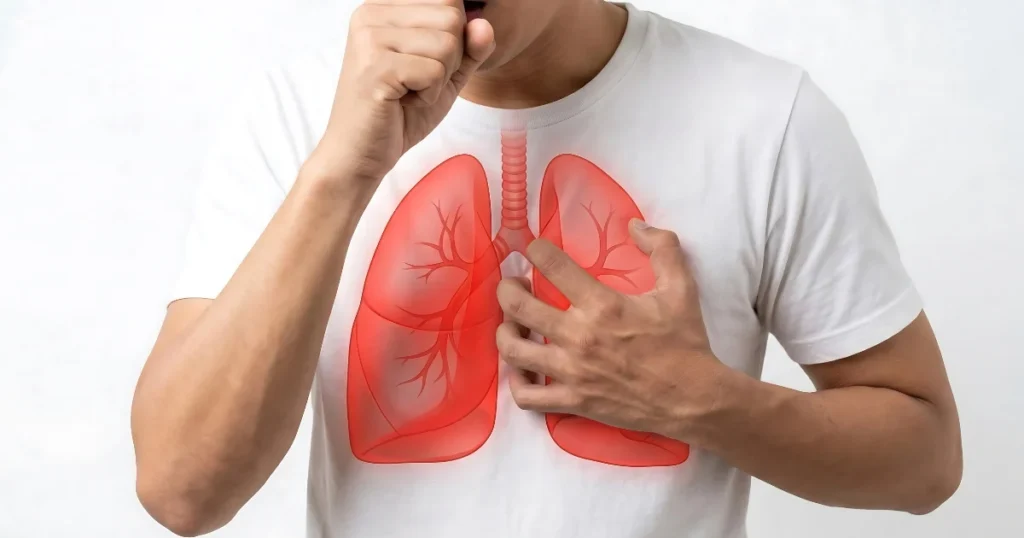
A sharp, stabbing pain that gets worse every time you take a breath is not something to ignore, and it is often the first sign of a condition called pleurisy. Because chest pain can point to so many different things, from a pulled muscle to a heart attack, pleurisy is one of those conditions that genuinely needs a medical evaluation rather than a guess based on symptoms alone.
Pleurisy itself is not usually life-threatening, but the conditions that cause it sometimes are, which is exactly why understanding what it is, what causes it, and when the pain crosses into emergency territory matters. If you experience severe or worsening chest pain, visit our Amarillo emergency room for prompt evaluation and care.
Why Does Pleurisy Cause Sharp Chest Pain?
Pleurisy causes sharp chest pain because the pleura, the thin membrane lining the lungs and chest cavity, becomes inflamed and the two layers rub against each other with every breath instead of gliding smoothly. This friction is what produces the sudden, stabbing pain that intensifies when you inhale, cough, or sneeze.
What Is Pleurisy?
Pleurisy, also called pleuritis, is inflammation of the pleura, the membrane that lines the lungs and the inside of the chest wall. Between the two layers of the pleura is a small space that normally contains a thin layer of fluid, allowing them to slide against each other smoothly during breathing. When the pleura becomes inflamed, that smooth movement is disrupted, and the resulting friction produces the characteristic sharp chest pain.
What Causes Pleurisy?
Several different conditions can lead to pleurisy, and identifying the underlying cause is what actually guides treatment.
- Viral infections: The most common cause of pleurisy, often linked to respiratory viruses like influenza
- Bacterial infections: Pneumonia is a frequent cause, and bacterial pleurisy typically requires antibiotic treatment rather than resolving on its own
- Pulmonary embolism: A blood clot in the lung can cause sudden pleuritic chest pain along with rapid breathing and shortness of breath, and this cause always requires emergency evaluation
- Autoimmune conditions: Diseases like lupus and rheumatoid arthritis can cause chronic or recurring inflammation of the pleura
- Other causes: Rib fractures, chest muscle strain, tuberculosis, and in rarer cases certain cancers can also lead to pleuritic chest pain
What Are the Symptoms of Pleurisy?
The hallmark symptom of pleurisy is chest pain, but the way that pain behaves and what accompanies it can help point toward the underlying cause.
- Sharp or stabbing chest pain that typically starts suddenly and worsens with breathing, coughing, or sneezing
- Pain that may spread to the shoulder or back and is often limited to one side of the chest
- Shallow breathing, since taking a full breath tends to worsen the pain
- A dry, persistent cough in some cases
- Fever, which may or may not be present depending on the underlying cause
- Shortness of breath, particularly if fluid begins to build up in the pleural space, a condition called pleural effusion
If these symptoms are severe, sudden, or worsening, seek prompt medical evaluation at an ER near me, especially when chest pain is accompanied by significant shortness of breath or other concerning symptoms.
Pleurisy vs Other Causes of Chest Pain
Because pleuritic pain can resemble more dangerous conditions, distinguishing it from other causes of chest pain matters, though this distinction should always be confirmed by a medical evaluation rather than assumed at home.
- Pleurisy: Sharp pain that clearly worsens with breathing, coughing, or specific movements, and often eases somewhat when holding the breath
- Heart attack: Pain is often described as pressure or tightness rather than sharp, and typically does not change significantly with breathing, though presentation varies and some heart conditions can still involve breath-related changes
- Muscle strain: Pain is usually reproducible by pressing on the chest wall and tends to worsen with specific movements rather than breathing alone
- Pulmonary embolism: Can present very similarly to pleurisy with sudden sharp pain and breathing difficulty, which is exactly why any new, unexplained chest pain needs prompt evaluation to rule this out
How Is Pleurisy Diagnosed?
Diagnosing pleurisy involves identifying both the inflammation itself and the underlying cause driving it.
- A physical exam where a doctor listens for a “pleural friction rub,” a distinctive sound caused by the inflamed pleura rubbing together
- Chest X-ray to check for pneumonia, fluid buildup, or other visible lung abnormalities
- Blood tests to look for signs of infection or markers of autoimmune conditions
- CT scan for more detailed imaging when the cause is not clear from an X-ray alone
- Thoracentesis, a procedure to remove and test fluid from the pleural space if a pleural effusion is present
How Is Pleurisy Treated?
Treatment for pleurisy depends entirely on what is causing the inflammation, since there is no single treatment that resolves every case.
- Viral pleurisy often improves on its own within a few days to two weeks as the underlying viral infection resolves
- Bacterial pleurisy requires antibiotics prescribed by a doctor to treat the underlying infection
- Pain relief with over-the-counter options like ibuprofen or acetaminophen can help manage discomfort while the underlying cause is treated, though a doctor should confirm which option is appropriate for your specific situation
- Autoimmune-related pleurisy is managed by treating the underlying autoimmune condition itself, often under the guidance of a specialist
- Pleural effusion, if present, may require drainage through thoracentesis to relieve pressure and improve breathing
Pleurisy Symptoms That Should Never Be Ignored
Because pleuritic chest pain can overlap with far more dangerous conditions, certain symptoms should always prompt immediate emergency evaluation rather than a wait-and-see approach.
- Sudden, severe chest pain, especially if it came on abruptly rather than gradually
- Chest pain accompanied by shortness of breath, rapid heartbeat, or a feeling of impending doom, which can point to a pulmonary embolism
- Bluish tint to the lips or fingertips, signaling low oxygen levels
- High fever, confusion, or chills alongside chest pain, which may indicate a more serious infection
- Chest pain that spreads to the jaw, arm, or back, which always warrants ruling out a cardiac cause
When to Go to the ER?
Do not assume unexplained chest pain is pleurisy without medical evaluation. Visit the ER near me immediately if you experience:
- Sudden, severe, or worsening chest pain, especially with no clear cause
- Chest pain along with shortness of breath, rapid heart rate, or dizziness
- Bluish lips or fingertips
- High fever, confusion, or chills accompanying chest pain
- Chest pain radiating to the jaw, arm, neck, or back
Chest pain can have serious causes other than pleurisy, and Neighbors Emergency Center provides 24/7 emergency room care, with on-site imaging and lab testing to quickly identify what is actually causing your symptoms.
Pleurisy Care at Neighbors Emergency Center
Sharp chest pain that worsens with breathing deserves a fast and thorough evaluation, not guesswork. At Neighbors Emergency Center, our team can quickly assess chest pain with on-site imaging and lab work to rule out serious causes like pneumonia or a blood clot before confirming pleurisy as the diagnosis. If your chest pain is sudden, severe, or accompanied by shortness of breath, our team is available around the clock to provide the prompt care you need.
Key Takeaways
- Pleurisy is inflammation of the pleura, the membrane lining the lungs and chest cavity, and it is a symptom of an underlying condition rather than a disease on its own
- Common causes include viral and bacterial infections, pulmonary embolism, autoimmune diseases, and chest injuries
- The hallmark symptom is sharp chest pain that worsens with breathing, coughing, or sneezing
- Treatment depends entirely on the underlying cause, ranging from rest for viral cases to antibiotics for bacterial infections
- Chest pain with shortness of breath, bluish lips, high fever, or pain spreading to the arm or jaw requires immediate emergency evaluation
- Because pleuritic pain can resemble more dangerous conditions like a heart attack or pulmonary embolism, any new or unexplained chest pain should be medically evaluated