

If you or someone you love has been told they may have sickle cell disease, you may be wondering whether it can affect white people. Yes, white people can get sickle cell disease, although it is more common in certain ethnic groups.
Sickle cell disease is an inherited genetic condition, meaning anyone can inherit the genes responsible for it depending on their family history. Knowing your genetic risk and getting appropriate medical guidance can help you take the right next steps. Our Pearland ER provides 24/7 emergency care when urgent medical needs arise.
How Common Is Sickle Cell Anemia in White People?
Sickle cell anemia is less common among white people, but it can still occur. Nationwide data specifically showing how often white people have sickle cell anemia are limited, and rates may differ from one state to another.
A 2019 study examining births in Michigan over 17 years found that approximately 2.5% of newborns diagnosed with sickle cell anemia were white. The same research showed that sickle cell trait was considerably more common than sickle cell anemia among white newborns.
CDC data on sickle cell trait also show differences in occurrence across racial and ethnic groups:
| Race or Ethnicity | Sickle Cell Trait Cases per 1,000 Births |
| Black | 73.1 |
| Hispanic | 6.9 |
| White | 3.0 |
| Asian or Pacific Islander | 2.2 |
Why Is Sickle Cell More Common In Some Populations?
It can be confusing to learn that sickle cell disease is more common in certain populations. These differences are mainly connected to inherited genes, ancestry, and historical factors that influenced how the sickle cell gene became more common in particular regions.
- Genetic Inheritance: Sickle cell disease is inherited from parents. A person’s chance of carrying or developing the condition depends on the genes passed down through their family.
- Ancestral Background: The sickle cell gene is more common among people with ancestry from sub-Saharan and Northeast Africa, Spanish-speaking regions of the Americas, the Caribbean, the Eastern Mediterranean, the Middle East, and South Asia.
- Historical Link to Malaria: The sickle cell gene became more common in some regions because carrying one copy may provide protection against severe malaria.
Can White People Carry The Sickle Cell Gene?
Yes, white people can carry the sickle cell gene, even if they do not have sickle cell disease themselves. A person with one copy of the gene has sickle cell trait, while inheriting certain sickle cell genes from both parents can lead to sickle cell disease. Genetic testing can identify whether someone carries the gene and help families better understand the chance of passing it to their children.
What Causes Sickle Cell Disease?
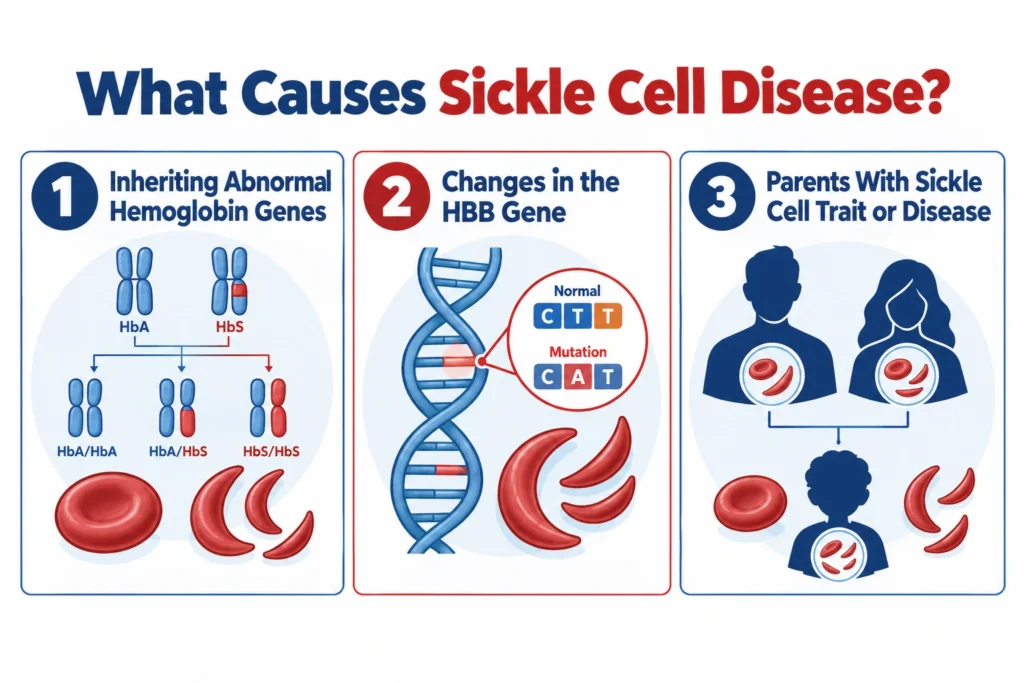
Learning that sickle cell disease is inherited can raise important questions about what causes it. The condition develops because of inherited genetic changes that affect hemoglobin in red blood cells. These changes are present from birth and are passed down through families.
Inheriting Abnormal Hemoglobin Genes
Sickle cell disease occurs when a person inherits abnormal hemoglobin genes from their parents. The specific combination of genes inherited determines whether a person develops sickle cell disease and which type they may have. These genes affect how hemoglobin functions inside red blood cells.
Changes in the HBB Gene
Changes in the HBB gene cause the body to produce an abnormal form of hemoglobin called hemoglobin S. This can affect the shape and function of red blood cells. The changes are inherited and remain present throughout a person’s life.
Parents With Sickle Cell Trait or Disease
Parents with sickle cell trait or sickle cell disease can pass the sickle cell gene to their children. A person’s risk depends on the hemoglobin genes inherited from both parents. Genetic testing can help identify whether someone carries the sickle cell gene.
Deadly Sickle Cell Disease Symptoms
Sickle cell disease can cause serious complications when sickled red blood cells block blood flow or reduce oxygen delivery to tissues. Some symptoms may signal a life-threatening emergency and should never be ignored. Recognizing these warning signs and seeking immediate medical attention can be critical.
- Severe Chest Pain or Trouble Breathing.
- Sudden Weakness, Numbness, or Difficulty Speaking.
- Severe Headache or Sudden Confusion.
- High Fever or Signs of Serious Infection.
- Sudden Vision Changes.
- Extreme Paleness, Weakness, or Fainting.
- Severe or Persistent Pain That Does Not Improve.
If you experience any of these symptoms, go to the nearest emergency room or call 911 for immediate medical care.
How Is Sickle Cell Disease Diagnosed?
Sickle cell disease is diagnosed through blood tests that check for abnormal hemoglobin and identify the specific type present. Newborn screening can detect the condition soon after birth, while older children and adults may need testing based on symptoms or family history. Doctors may also use genetic testing to confirm the diagnosis and identify the inherited gene changes.
When To Go To The ER
Sickle cell disease can sometimes cause complications that require immediate medical care. Seek emergency treatment when symptoms are severe, sudden, or unusual for you, as prompt care can reduce the risk of serious complications.
- Pain that is severe or does not improve with your usual treatment.
- Chest pain, breathing difficulty, or unusual shortness of breath.
- Fever of 101.3°F (38.5°C) or higher.
- Signs of a stroke, such as sudden confusion, weakness, or trouble speaking.
- Fainting, extreme weakness, or unusual tiredness.
- A suddenly swollen or painful abdomen.
- Repeated vomiting or inability to drink enough fluids.
How Is Sickle Cell Disease Treated?
Treatment for sickle cell disease focuses on preventing complications, reducing pain, and improving healthy red blood cell function. The right approach depends on the type of sickle cell disease, symptoms, age, and overall health. Treatment may include medications, blood transfusions, supportive care, and, for some people, a stem cell transplant or newer disease-modifying therapies.
- Pain Medicines: Help manage mild to severe pain episodes.
- Hydroxyurea: Reduces pain crises and the risk of some complications by increasing fetal hemoglobin.
- Blood Transfusions: Increase healthy red blood cells and may help treat or prevent serious complications.
- Antibiotics and Vaccines: Help reduce the risk of serious infections, particularly in children.
- Stem Cell Transplant: Can potentially cure sickle cell disease in some patients but carries significant risks.
- Disease-Modifying Treatments: Medicines such as voxelotor, crizanlizumab, and L-glutamine have been used to reduce certain complications, although availability and recommendations may vary.
Neighbors Emergency Center For Sickle Cell Care
If you or a loved one with sickle cell disease develops severe pain, chest pain, trouble breathing, high fever, or other concerning symptoms, do not delay emergency care. Our experienced emergency physicians are available 24/7 to evaluate serious complications, perform necessary testing, and provide prompt treatment.
At our 24/7 emergency room, Neighbors Emergency Center provides compassionate emergency care for sickle cell complications, including severe pain episodes, infections, and other urgent problems. Our team is ready to assess your condition and provide the appropriate emergency treatment.
Key Takeaways
- White people can develop sickle cell disease, although it is less common in white populations.
- Sickle cell disease is an inherited genetic condition caused by changes affecting hemoglobin.
- A person can carry the sickle cell gene without having the disease. This is called sickle cell trait.
- Genetic testing can help determine whether someone has sickle cell disease or carries the sickle cell gene.
- Severe complications require prompt emergency medical care.
Frequently Asked Questions For Sickle Cell Disease
Can White People Have Sickle Cell Traits?
Yes. White people can carry the sickle cell gene and have sickle cell trait. A person with sickle cell trait usually does not have sickle cell disease but can pass the gene to their children.
Is Sickle Cell Only Found In Black People?
No. Sickle cell disease can affect people of any racial or ethnic background. It is more common among people with ancestry from certain regions of Africa, the Mediterranean, the Middle East, the Caribbean, and South Asia.
Can A Person With Sickle Cell Trait Develop Sickle Cell Disease?
Having sickle cell trait does not usually develop into sickle cell disease. Sickle cell disease occurs when a person inherits disease-causing hemoglobin genes, typically one from each parent.
Can Two White Parents Have A Child With Sickle Cell Disease?
Yes. Two white parents can have a child with sickle cell disease if both carry a disease-causing hemoglobin gene. The child’s risk depends on the specific genes inherited from each parent.
What Ethnicity Is Most Likely To Have Sickle Cell?
Sickle cell disease is most common among people with ancestry from sub-Saharan Africa, although it also occurs in the Caribbean, the Middle East, Mediterranean regions, and South Asia. It is not exclusive to any ethnicity.
Can Sickle Cell Skip A Generation?
The sickle cell gene can appear to skip generations because a parent may carry sickle cell trait without having the disease. They can still pass the gene to their children, who may inherit it depending on the genes they receive from both parents.