

Yes, food poisoning can cause fever, but not every case will produce one. Whether a fever develops depends on the type of contaminant involved, how much was consumed, and how strongly your immune system reacts. Bacterial causes like Salmonella, E. coli, Listeria, and Campylobacter are far more likely to trigger a fever than viral or toxin-based causes because the body raises its temperature specifically to fight active bacterial infections.
When fever does develop alongside food poisoning, it usually starts as a low-grade temperature that helps the body fight infection. However, a fever above 102°F, lasting longer than 48 hours, or occurring with severe symptoms may require medical evaluation. Visit our emergency room in Crosby, TX for prompt care when symptoms become concerning.
What Is Food Poisoning?
Food poisoning is an illness caused by consuming food or drink contaminated with harmful bacteria, viruses, parasites, or toxins that disrupt the digestive system and trigger an immune response. According to the Texas Department of State Health Services, common sources include undercooked meat, raw eggs, unpasteurized dairy, unwashed produce, and improperly stored leftovers. Symptoms can begin anywhere from 30 minutes to several days after eating contaminated food, depending on the organism involved, and most cases resolve within one to three days.
Does Food Poisoning Always Cause a Fever?
No, food poisoning does not always cause a fever, and understanding why helps clarify when a developing temperature is a normal part of recovery and when it becomes a warning sign worth acting on immediately.
- Bacterial infections, including Salmonella, Listeria, and Campylobacter, commonly trigger fever because the immune system elevates body temperature to slow bacterial growth and activate its defenses.
- Viral causes of food poisoning, such as norovirus, rarely produce significant fever and more commonly cause nausea, vomiting, and diarrhea without a major temperature change.
- Toxin-based food poisoning from sources like Staphylococcus aureus often produces rapid-onset symptoms without fever because the toxin itself, not a live infection, is what harms the body.
- A low-grade fever below 101 degrees Fahrenheit during food poisoning is generally a sign that the immune system is actively working and does not always require medical intervention.
- A fever above 102 degrees Fahrenheit signals that the infection is more aggressive and that the body may need medical support to manage the immune response safely.
Severe nausea from food poisoning may require prompt medical evaluation and appropriate care through nausea treatment.
What Are the Symptoms of Food Poisoning and Fever?
Food poisoning symptoms can vary widely depending on the cause, but certain signs appear consistently across most cases and tend to intensify when fever is also present. Recognizing them early allows for faster and safer management.
- Nausea and sudden vomiting that begin anywhere from a few hours to two days after eating contaminated food
- Diarrhea that may be watery, frequent, and difficult to control, sometimes accompanied by blood in more serious infections
- Abdominal cramps and stomach pain that range from mild discomfort to severe cramping requiring immediate attention
- Low-grade to moderate fever that signals the immune system is actively fighting a bacterial or viral invader in the digestive system
- Headache and muscle aches that develop alongside fever as the body channels energy into fighting the infection
- Fatigue and general weakness that worsen as fluid loss from vomiting and diarrhea continues throughout the illness
- Nausea that makes it difficult to keep fluids down, increasing the risk of dehydration developing rapidly alongside the fever
If nausea is severe and prevents any fluid intake, it significantly raises the risk of dehydration and requires prompt attention beyond standard home care.
Who Is Most at Risk for Complications from Food Poisoning Fever?
While food poisoning can affect anyone, certain groups are far more likely to develop serious complications, particularly when fever is present alongside other symptoms.
- Infants and young children are at elevated risk because they lose fluids rapidly through vomiting and diarrhea, and are unable to communicate their symptoms clearly before dehydration becomes dangerous.
- Elderly adults have weakened immune responses that make it harder to fight bacterial infections effectively, increasing the risk that a low-grade fever escalates into something more serious.
- Pregnant women face higher vulnerability because certain bacteria, particularly Listeria, can cross the placental barrier and cause severe complications for the developing fetus.
- Individuals with weakened immune systems from conditions such as diabetes, cancer treatment, or autoimmune disease are less equipped to contain foodborne bacterial infections without medical support.
- People who are already mildly dehydrated before becoming ill reach dangerous fluid depletion levels more quickly when vomiting and diarrhea are also present alongside a fever.
How to Treat Food Poisoning and Fever at Home?
Mild to moderate food poisoning with a low-grade fever can often be managed safely at home when addressed quickly and with the right approach. The priority is maintaining hydration while allowing the body to clear the infection naturally.
- Sip oral rehydration solutions in small, frequent amounts rather than drinking large quantities of water at once, which can worsen nausea and trigger further vomiting.
- Use over-the-counter fever reducers such as acetaminophen or ibuprofen to manage discomfort, but avoid antidiarrheal medications if a fever or blood in the stool is present.
- Rest as much as possible and avoid solid foods until vomiting and nausea have eased, then reintroduce bland, easily digestible options such as toast, bananas, rice, and broth.
- Avoid caffeine, alcohol, dairy products, and high-fat or spicy foods during recovery, as all of these can aggravate the digestive system and slow the healing process.
- Monitor fever closely throughout recovery, and if it rises above 102 degrees Fahrenheit or does not begin to improve within 24 to 48 hours, medical evaluation is necessary.
If diarrhea is severe and persistent, our guide on how to stop diarrhea fast covers the most effective steps for slowing fluid loss while waiting for the illness to pass. Understanding the symptoms of dehydration is equally important during recovery to catch fluid loss before it becomes dangerous.
How to Prevent Food Poisoning?
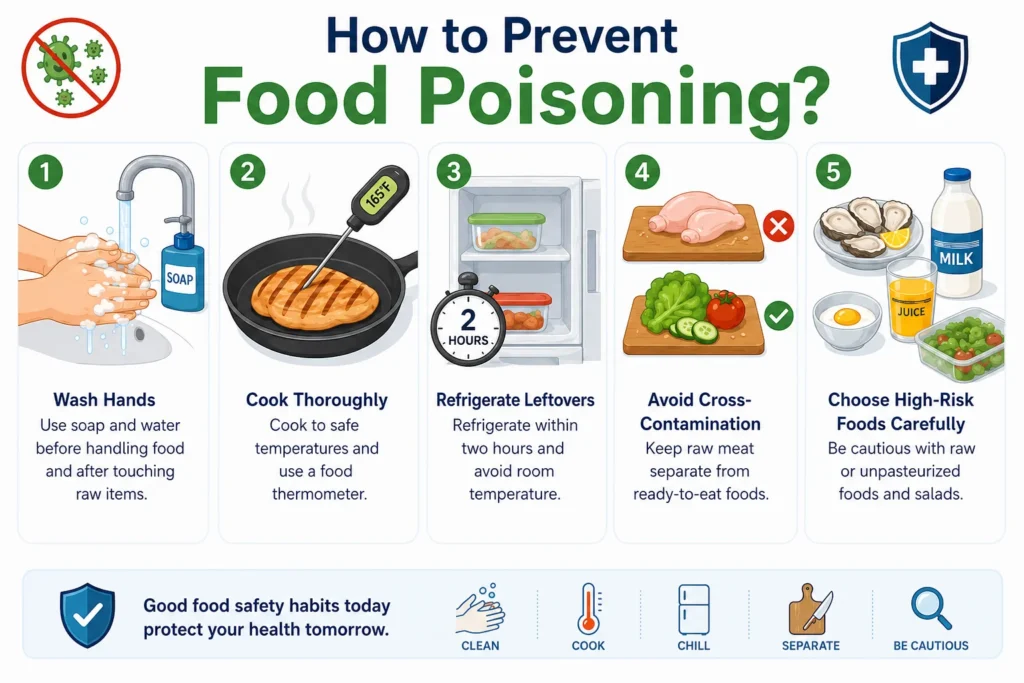
Most cases of food poisoning are preventable with consistent food safety habits that reduce the risk of bacterial and viral contamination before food ever reaches the table.
- Wash your hands thoroughly with soap and water before handling food and after touching raw meat, poultry, eggs, or unwashed produce.
- Cook meat, poultry, and eggs to their recommended internal temperatures and use a food thermometer rather than relying on visual cues alone.
- Refrigerate leftovers within two hours of cooking and never leave perishable food sitting at room temperature for extended periods.
- Avoid cross-contamination by keeping raw meat separate from ready-to-eat foods on cutting boards, in the refrigerator, and during food preparation
- Be especially cautious with high-risk foods, including raw shellfish, unpasteurized juices and dairy, undercooked eggs, and pre-packaged salads that have not been properly stored.
When to Go to the ER for Food Poisoning and Fever?
Most cases of food poisoning with a mild fever resolve safely at home, but certain symptoms indicate that the illness has reached a level requiring immediate emergency medical care. Visit Exceptional Emergency Centers right away if you or someone in your care is experiencing any of the following.
- Fever above 102 degrees Fahrenheit that does not begin to come down within 24 hours of home treatment and rest
- High fever in adults accompanied by confusion, extreme weakness, or difficulty staying conscious, which signals systemic infection
- Blood in the stool or vomit, which may indicate a more serious bacterial infection that requires diagnostic testing and targeted treatment
- Complete inability to keep any fluids down due to persistent vomiting that prevents meaningful rehydration at home
- Signs of severe dehydration include no urination for 8 or more hours, sunken eyes, dry mouth, and extreme fatigue
- Neurological symptoms such as blurred vision, muscle weakness, slurred speech, or difficulty swallowing, which may indicate a severe infection like botulism
- Worsening symptoms in infants, elderly adults, pregnant women, or anyone with an underlying health condition that reduces immune capacity
If you are searching for an emergency room near me due to severe food poisoning symptoms, visit Neighbors Emergency Center for immediate evaluation and treatment to help prevent serious complications.
Food Poisoning and Fever Care at Neighbors Emergency Center
When food poisoning and fever progress beyond what home care can handle, Neighbors Emergency Center provides fast, comprehensive treatment at our Texas locations. Our medical team offers IV fluid therapy, fever management, diagnostic testing for bacterial infections, and targeted treatment to help you recover safely and quickly. With an ER wait time of just 14 minutes, our 24/7 emergency room is available when symptoms worsen or require immediate attention. Do not wait if your fever persists or your condition continues to decline. Seek prompt emergency care to protect your health and prevent complications.