
If you or your child has developed a persistent cough, fever, or trouble breathing, it’s natural to feel concerned. Respiratory illnesses can worsen quickly, especially in infants, older adults, and people with weakened immune systems, making it important to recognize the warning signs early.
Respiratory syncytial virus (RSV) is a common upper respiratory infection that affects the nose, throat, and lungs. While many cases resemble a cold, RSV can sometimes lead to serious complications like bronchiolitis or pneumonia. Knowing the warning signs and when to seek emergency care at our ER in Livingston can help protect your health and your loved ones.
Dangerous RSV Symptoms
Most RSV infections cause mild cold-like symptoms, but some cases can become serious and require immediate medical attention. Seek emergency care if you or your loved one develops any of the following warning signs:
- Difficulty breathing or rapid, labored breathing.
- Wheezing or persistent noisy breathing.
- Bluish lips, tongue, or fingertips (a sign of low oxygen levels).
- Chest pulling in with each breath (chest retractions).
- High fever that does not improve or keeps returning.
- Extreme sleepiness, difficulty waking up, or unusual drowsiness.
- Poor feeding or refusal to eat or drink, especially in infants.
- Signs of dehydration, including dry mouth, no tears when crying, or fewer wet diapers.
- Long pauses in breathing (apnea), particularly in newborns.
- Symptoms that suddenly worsen after initially seeming to improve.
If RSV symptoms overlap with flu-like illness, knowing when to seek flu treatment near me can help ensure you receive timely care and prevent complications from worsening.
What Causes RSV?
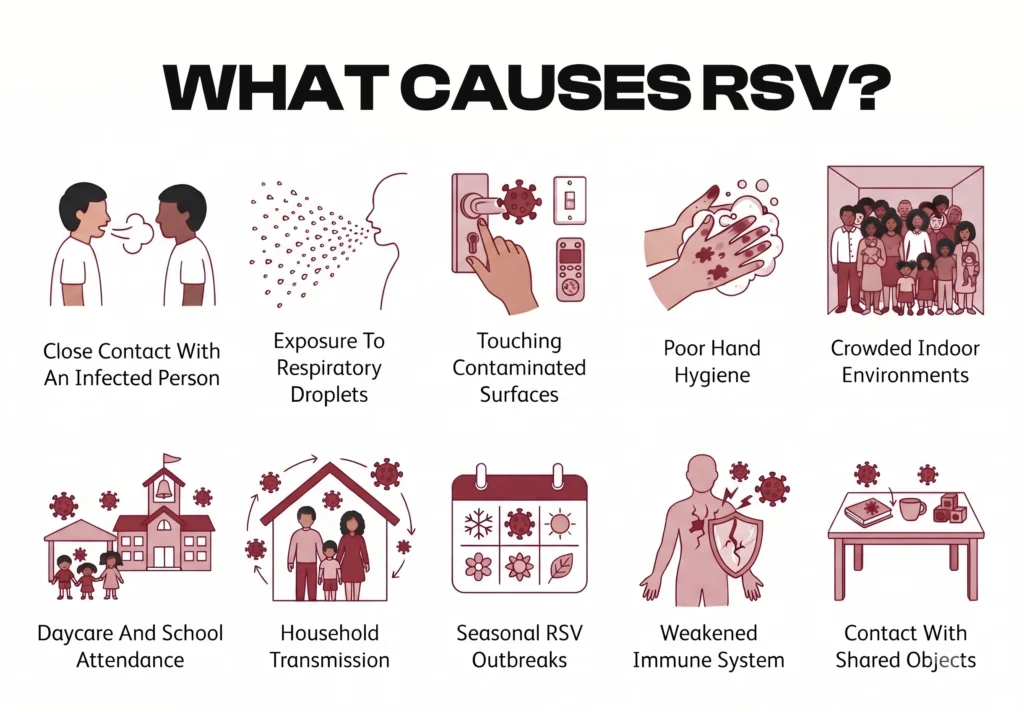
RSV is caused by a highly contagious virus that spreads easily from person to person, particularly during the fall and winter months. Because the virus can survive on hands and frequently touched surfaces for several hours, even brief contact with an infected person may lead to illness. While anyone can get RSV, certain situations and exposures make infection much more likely. Understanding these common sources of transmission can help reduce your risk and protect those most vulnerable to severe disease.
Close Contact With An Infected Person
The most common cause of RSV infection is close contact with someone who is already carrying the virus. Coughing, sneezing, talking, or kissing can release infectious respiratory droplets that are easily inhaled by people nearby. Since individuals can spread RSV before realizing they are sick, transmission often occurs within families and social settings.
Exposure To Respiratory Droplets
RSV spreads when virus-containing droplets enter the nose, mouth, or eyes after an infected person coughs or sneezes. These droplets usually travel short distances, making crowded indoor environments especially risky. Wearing good respiratory hygiene and avoiding close contact with sick individuals can help lower exposure.
Touching Contaminated Surfaces
The RSV virus can remain alive on hard surfaces such as toys, doorknobs, countertops, and mobile phones for several hours. Touching these objects and then rubbing your eyes, nose, or mouth allows the virus to enter your body. Regular cleaning and frequent handwashing significantly reduce this risk.
Poor Hand Hygiene
Hands are one of the most common ways RSV spreads from one person to another. Failing to wash hands after coughing, sneezing, or touching contaminated objects increases the chance of infection. Proper hand hygiene is one of the simplest and most effective ways to prevent RSV transmission.
Crowded Indoor Environments
Places where many people gather, such as schools, daycare centers, offices, shopping centers, and public transportation, increase the likelihood of RSV spreading. Close proximity allows respiratory droplets to move easily between individuals. Seasonal outbreaks often occur in these shared environments.
Daycare And School Attendance
Young children frequently share toys, classroom materials, and play areas, making daycare centers and schools common locations for RSV transmission. Children may not consistently cover coughs or wash their hands properly, allowing the virus to spread rapidly among classmates and then to family members at home.
Household Transmission
When one family member becomes infected, RSV can quickly spread throughout the household. Shared living spaces, frequent physical contact, and common household items all contribute to transmission. Infants and older adults living with infected individuals are particularly vulnerable.
Seasonal RSV Outbreaks
RSV infections are more common during seasonal outbreaks, typically in the colder months. During these periods, more people are infected at the same time, increasing the chances of exposure in the community. Staying alert during RSV season can help families take preventive measures.
Weakened Immune System
People with weakened immune systems are more likely to become infected after being exposed to RSV because their bodies have a harder time fighting the virus. Even limited exposure may result in illness, and symptoms may be more severe or last longer than usual.
Contact With Shared Objects
Sharing items such as drinking cups, eating utensils, towels, pacifiers, or children’s toys with someone who has RSV can contribute to the spread of the virus. Although direct respiratory contact is the primary route of transmission, contaminated personal items can also play a role in passing the infection from one person to another.
RSV Test
Doctors usually diagnose RSV based on symptoms, medical history, and a physical exam. If the illness is severe or another infection is suspected, additional tests may be needed to confirm the diagnosis and assess complications.
- Rapid RSV Antigen Test: A nasal swab that quickly detects RSV proteins.
- PCR Test: A highly accurate test that detects RSV genetic material.
- Respiratory Viral Panel: Identifies RSV, influenza, COVID-19, and other respiratory viruses.
- Chest X-ray: Checks for pneumonia or other lung complications.
- Pulse Oximetry: Measures blood oxygen levels to detect breathing problems.
- Blood Tests: May assess dehydration, inflammation, or bacterial infection, but do not diagnose RSV directly.
When To Go To The ER
While many RSV infections improve with rest and supportive care, severe symptoms should never be ignored. Seek emergency medical care immediately if you or your child experiences any of the following:
- Difficulty breathing or severe shortness of breath.
- Blue lips, tongue, or fingertips.
- Chest retractions or rapid breathing.
- High fever that does not respond to medication.
- Extreme drowsiness, confusion, or difficulty waking up.
- Signs of dehydration, such as very little urine, dry mouth, or no tears when crying.
- Infants who stop feeding or have pauses in breathing (apnea).
- Worsening cough with persistent wheezing or low oxygen levels.
- Symptoms that rapidly worsen or fail to improve after several days.
If symptoms become severe or you are searching for the closest emergency room near me due to breathing problems, high fever, or worsening RSV symptoms, seek immediate medical attention.
RSV Treatment
There is no specific cure for RSV in most cases. Treatment focuses on relieving symptoms, preventing dehydration, and supporting breathing while the immune system clears the virus. Severe infections may require hospital care.
- Acetaminophen (Tylenol): Helps reduce fever and relieve discomfort.
- Ibuprofen: Reduces fever and body aches in eligible children and adults.
- Saline Nasal Drops: Loosens mucus and eases nasal congestion.
- Nasal Suction: Helps infants breathe and feed more comfortably.
- Fluids: Prevent dehydration and keep mucus thinner.
- Humidified Air: May soothe congestion and irritated airways.
- Rest: Supports the body’s recovery from infection.
- Supplemental Oxygen: Used if oxygen levels become too low.
- IV Fluids: Given when patients cannot stay hydrated by drinking.
- Mechanical Ventilation: Reserved for rare cases of severe respiratory failure.
Note: Antibiotics do not treat RSV because it is a viral infection. They are only prescribed if a bacterial infection develops alongside RSV.
Key Takeaways
- RSV is a common, highly contagious virus that affects the nose, throat, and lungs.
- Most infections cause mild cold-like symptoms, but infants, older adults, and people with weakened immune systems are at higher risk of severe illness.
- RSV spreads through respiratory droplets, close contact, and contaminated surfaces.
- Diagnosis is usually based on symptoms, but PCR tests, rapid antigen tests, and other evaluations may be needed in severe cases.
- Treatment focuses on supportive care, including rest, fluids, fever control, and maintaining adequate oxygen levels.
- Seek emergency medical care immediately for difficulty breathing, blue lips, severe dehydration, or worsening symptoms.
Neighbors Emergency Center For RSV Care
If you or your loved one is experiencing severe RSV symptoms such as difficulty breathing, bluish lips, persistent high fever, or signs of dehydration, don’t wait to seek medical attention. At Neighbors Emergency Center, our experienced emergency physicians are available 24/7 to evaluate RSV quickly, perform advanced diagnostic testing when needed, and begin prompt treatment to help prevent serious complications. With ER wait times of just 18 minutes, our team provides fast, reliable emergency care when you need it most.
Whether you need oxygen therapy, IV fluids, or emergency care for RSV-related complications such as bronchiolitis or pneumonia, Neighbors Emergency Center is here to provide fast, compassionate, and high-quality care. Our team is committed to helping patients of all ages recover safely with timely diagnosis and expert emergency treatment.
Frequently Asked Questions
How Long Is RSV Contagious?
People with RSV are usually contagious for 3 to 8 days. However, infants, young children, and those with weakened immune systems may continue spreading the virus for several weeks.
How Long Does RSV Last?
Most RSV infections resolve within 1 to 2 weeks. Although the fever and congestion improve sooner, a cough may linger for several more weeks.
Can Adults Get RSV?
Yes. Adults can get RSV at any age. While symptoms are often similar to a common cold, older adults and people with chronic medical conditions are more likely to develop serious complications.
How Long Does RSV Vaccine Last?
Current RSV vaccines are designed to provide protection for one RSV season, which is typically about a year. Future booster recommendations may vary based on individual risk and public health guidance.
How Is RSV Spread?
RSV spreads through respiratory droplets, close personal contact, and touching contaminated surfaces before touching the eyes, nose, or mouth. Good hand hygiene and avoiding close contact with infected individuals can help prevent transmission.