

Worrying about how easily COVID-19 spreads can leave you wondering, “How Long Are You Contagious With COVID?” especially when symptoms like fever, cough, fatigue, or a sore throat appear suddenly. COVID-19, caused by the coronavirus SARS-CoV-2, can spread even when symptoms are mild or not noticeable, which makes understanding the contagious period important for protecting others.
In some cases, COVID-19 can become more serious, leading to breathing difficulty, high fever, or severe weakness that should not be ignored. When symptoms escalate or feel unmanageable, emergency care for COVID-19 may be necessary, and seeking immediate help at an emergency room ensures timely evaluation and treatment.
What Is COVID?
COVID-19 is a contagious respiratory illness caused by the coronavirus SARS-CoV-2 that spreads through droplets and airborne particles. It can cause symptoms ranging from mild fever, cough, and fatigue to severe breathing difficulty, especially in older adults and people with underlying health conditions. Some infected people may not show symptoms but can still transmit the virus to others.
According to a National Institutes of Health (NIH)-supported systematic review and meta-analysis published in Annals of Internal Medicine, about 40.5% of people with confirmed COVID-19 were asymptomatic at the time of testing.
COVID Symptoms That Are Dangerous
Some COVID-19 symptoms can indicate a more serious infection and require prompt medical attention, especially if they worsen quickly or affect breathing and daily functioning.
- Shortness of breath or difficulty breathing.
- Persistent chest pain or pressure.
- High fever that does not improve.
- Severe fatigue or weakness.
- Confusion or trouble staying awake.
- Bluish lips or face (low oxygen levels).
- Worsening cough with no relief.
How Long Does COVID Last?
The duration of COVID-19 can vary widely from person to person, depending on the severity of infection, age, immune response, and overall health. While some people recover quickly, others may experience lingering symptoms such as fatigue or cough that take longer to fully resolve.
- Mild Cases: Usually last 5–10 days, with gradual improvement in symptoms like fever, cough, and fatigue.
- Moderate Cases: May last around 1–2 weeks, often with more noticeable weakness and slower recovery.
- Severe Cases: Can last several weeks or longer, especially if complications like pneumonia or breathing difficulty develop.
How Long Is COVID Contagious?
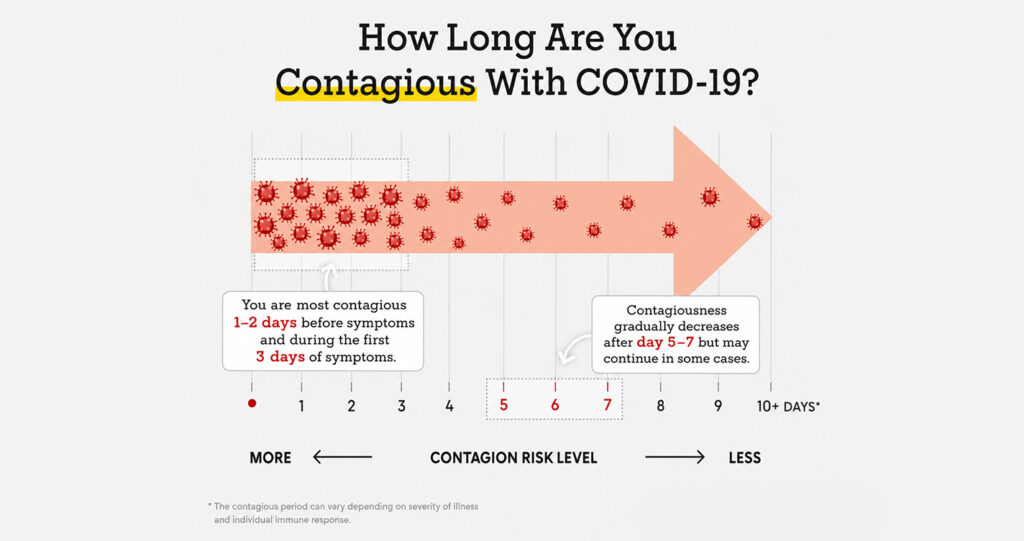
COVID-19 is most contagious around the time symptoms begin, but a person can spread the virus even before feeling sick. The contagious period can vary depending on the severity of infection and immune response, which is why isolation guidelines are important to reduce spread.
- Mild Cases: Usually contagious for about 5–7 days from symptom onset.
- Moderate Cases: May remain contagious for 7–10 days or slightly longer.
- Severe Cases: Can stay contagious for 10–20 days or more, especially in hospitalized patients or those with weakened immunity.
When Is COVID Most Contagious?
COVID-19 spreads most easily when the amount of virus in the body is at its highest, which often happens around the time symptoms first appear. However, a person can also spread the virus 1–2 days before symptoms start, making early transmission a key factor in its spread.
- 1–2 Days Before Symptoms: High risk of silent (pre-symptomatic) spread.
- Day 1–3 Of Symptoms: Peak contagious period, when viral load is usually highest.
- After Day 5–7: Contagiousness gradually decreases but may continue in some cases depending on illness severity and immunity.
How to Avoid Spreading COVID
Preventing the spread of COVID-19 is important to protect family members, coworkers, and vulnerable individuals around you. Even if symptoms are mild, the virus can still be transmitted, especially in the early days of infection.
- Stay home and isolate yourself when you feel sick or test positive.
- Wear a mask in crowded or indoor public spaces.
- Maintain good hand hygiene by washing hands regularly.
- Cover coughs and sneezes with a tissue or elbow.
- Avoid close contact with high-risk individuals.
- Improve ventilation by opening windows or using fresh air flow.
If any of these warning signs occur, it is vital to locate the closest emergency room near me to ensure you receive immediate medical intervention.
When To Go To The ER
COVID-19 can sometimes worsen quickly, and knowing when to seek emergency care is very important for preventing serious complications. If symptoms start affecting breathing, consciousness, or overall stability, immediate medical attention should not be delayed.
- Difficulty breathing or shortness of breath at rest.
- Persistent chest pain or pressure.
- Bluish lips or face indicating low oxygen.
- Confusion, drowsiness, or trouble waking up.
- High fever that does not improve with medication.
- Signs of severe dehydration or inability to keep fluids down.
How to Treat COVID
Treatment for COVID-19 depends on symptom severity, overall health, and risk factors, and most mild cases can be managed at home with rest and supportive care. Staying hydrated, monitoring symptoms, and isolating from others are important steps to prevent the spread and support recovery. In more severe cases, medical treatment may be required under close supervision.
- Rest and drink plenty of fluids to support recovery
- Use fever and pain relievers like acetaminophen (Tylenol), as prescribed by the doctor
- In some cases, doctors may prescribe antiviral medicines such as Paxlovid (nirmatrelvir/ritonavir) for high-risk patients
- Oxygen therapy or hospital care may be needed for severe breathing issues, as prescribed by the doctor
- Follow all medications and dosage strictly as prescribed by the doctor
- Avoid self-medication and always take treatment guidance from a qualified doctor
COVID-19 Care at Neighbors Emergency Center
Understanding “How Long Are You Contagious With COVID?” helps you take the right steps to protect others and limit the spread of infection. In most cases, people are contagious starting 1–3 days before symptoms appear and remain so for about 7–10 days after symptoms begin, though this can be longer in more severe infections.
At Neighbors Emergency Center, our clinicians help assess your symptoms, recommend appropriate testing, and guide you on safe isolation based on your condition. If symptoms persist, worsen, or you’re unsure about your contagious stage, seeking prompt medical care ensures safer recovery and reduces the risk of spreading illness to others.
Key Takeaways
- COVID-19 is a contagious respiratory illness that can range from mild to severe symptoms.
- People can spread the virus even before showing symptoms or without feeling sick.
- Mild cases usually recover in about 5–10 days, while severe cases may take weeks.
- The most contagious period is typically 1–3 days after symptoms begin.
- Early signs like breathing difficulty, chest pain, or confusion require urgent medical attention.
- Treatment is mainly supportive, and medications should always be taken only as prescribed by a doctor.
- Following preventive measures like masking, isolation, and hygiene helps reduce the spread effectively.
FAQs
How Bad Is COVID Right Now?
COVID-19 severity today is generally lower than earlier in the pandemic for many people due to immunity from vaccination and past infections, but it can still cause serious illness in older adults, unvaccinated individuals, and those with chronic health conditions. New variants continue to circulate, so hospitalizations and severe cases can still occur, especially in high-risk groups.
Is Diarrhea a Symptom Of COVID?
Yes, diarrhea can be a symptom of COVID-19 in some people, although it is less common than respiratory symptoms like cough and fever. It may occur along with nausea, vomiting, or abdominal discomfort, especially in early stages of infection.
Can You Have COVID Without A Fever?
Yes, many people with COVID-19 do not develop a fever at all. Symptoms can include cough, sore throat, fatigue, loss of taste or smell, or even no symptoms, which is why testing is important if exposure is suspected.
How Long To Isolate With COVID?
Isolation duration can vary, but most guidelines suggest staying home for at least 5 days from symptom onset or positive test, and continuing precautions like masking for several more days. People should remain in isolation longer if they still have a fever or worsening symptoms.