

Allergies can be frustrating and overwhelming, especially when symptoms appear suddenly and interfere with your daily life. They occur when the immune system overreacts to normally harmless substances like pollen, dust, certain foods, or pet dander. This reaction can lead to symptoms such as sneezing, itchy eyes, skin irritation, runny nose, or in more severe cases, difficulty breathing.
While many allergic reactions are mild, some can escalate quickly and become life-threatening, particularly when swelling affects the throat or breathing becomes restricted. In these situations, immediate medical attention is critical. Our Kingwood emergency room is equipped to provide fast, effective treatment for severe allergy symptoms and help prevent complications, because delaying care in serious allergic reactions can quickly turn into a dangerous emergency situation.
What Are Allergies?
Allergies occur when the immune system overreacts to substances that are usually harmless, such as pollen, dust, pet dander, or certain foods. This immune response releases chemicals like histamine, which can cause symptoms including sneezing, itchy eyes, skin rashes, congestion, and in more serious cases, breathing difficulties. These reactions can range from mild discomfort to severe, life-threatening conditions depending on the individual and trigger.
According to the NIH, allergic conditions are highly common, affecting about 31.7% of adults in the United States who report at least one type of allergy such as seasonal allergies, eczema, or food allergies.
Allergy Symptoms That May Be Dangerous
- Swelling of the face, lips, tongue, or throat.
- Difficulty breathing or shortness of breath.
- Wheezing or tightness in the chest.
- Rapid or weak pulse.
- Severe skin reactions such as widespread hives or rash.
- Dizziness, fainting, or confusion.
- Persistent vomiting or abdominal pain in food-related allergies.
Causes of Allergies
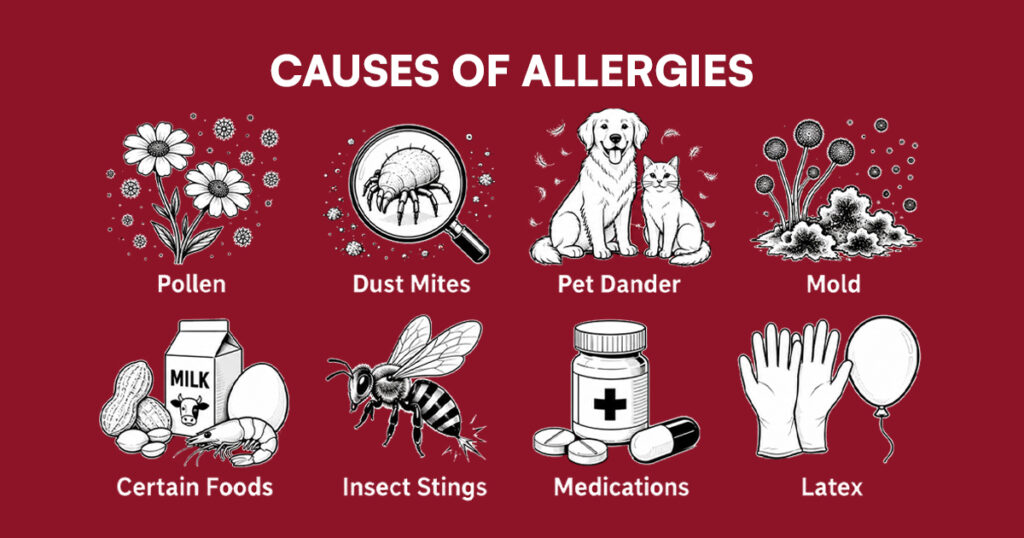
Living with allergies can be challenging because triggers are not always obvious and reactions can vary in severity. Allergies develop when the immune system becomes hypersensitive and reacts to specific environmental or internal substances. Identifying the cause is essential for long-term symptom control and prevention of severe reactions.
Pollen
Pollen is one of the most common causes of seasonal allergies and is released by trees, grass, and weeds during certain times of the year. When pollen particles travel through the air, they can easily enter the nose, eyes, and lungs, triggering allergic reactions. Many people experience sneezing, congestion, itchy eyes, and coughing during high pollen seasons. Symptoms often worsen outdoors or on windy days when pollen levels are high.
Dust Mites
Dust mites are tiny microscopic organisms that commonly live in bedding, carpets, furniture, and curtains. Although they are too small to see, their waste particles can trigger allergic reactions in sensitive individuals. Exposure may lead to sneezing, nasal congestion, itchy skin, or breathing discomfort. Allergy symptoms caused by dust mites often become worse indoors or during sleep.
Pet Dander
Pet allergies are commonly triggered by proteins found in an animal’s skin flakes, saliva, or urine rather than fur itself. Cats and dogs are frequent sources, but birds and other pets can also cause reactions. People with pet allergies may develop itchy eyes, sneezing, skin irritation, or breathing problems after exposure. Symptoms can persist even when pets are not directly nearby because dander easily spreads through indoor air.
Mold
Mold thrives in damp environments such as bathrooms, basements, kitchens, and poorly ventilated spaces. Tiny mold spores can spread through the air and trigger allergic reactions when inhaled. Common symptoms include coughing, nasal congestion, throat irritation, and watery eyes. People with asthma or weakened respiratory systems may experience more severe breathing difficulties from mold exposure.
Certain Foods
Food allergies occur when the immune system reacts to specific foods as harmful substances. Common triggers include peanuts, shellfish, milk, eggs, soy, wheat, and tree nuts. Reactions can range from mild itching and stomach discomfort to severe swelling and breathing problems. In serious cases, food allergies may lead to anaphylaxis, which requires immediate emergency treatment.
Insect Stings
Bee stings, wasp stings, fire ants, and other insect bites can trigger allergic reactions in some individuals. Mild reactions may include redness, swelling, or pain around the sting area, while severe reactions can affect the entire body. Symptoms such as difficulty breathing, dizziness, or throat swelling may indicate a dangerous allergic emergency. Immediate medical care is important if severe symptoms develop.
Medications
Certain medications can trigger allergic reactions in sensitive individuals, even when taken exactly as prescribed. Common medication allergies are linked to antibiotics, pain relievers, and some vaccines. Symptoms may include skin rashes, swelling, itching, or breathing difficulties. Severe drug allergies can progress rapidly and require urgent medical evaluation to avoid serious complications.
Latex
Latex allergies are caused by proteins found in natural rubber products such as gloves, balloons, and some medical equipment. Reactions may develop after repeated exposure and can affect healthcare workers or individuals with frequent medical procedures more often. Symptoms can include skin irritation, itching, sneezing, or breathing problems. In severe cases, latex exposure may trigger a dangerous allergic reaction requiring emergency care.
How Long Do Allergies Last?
The duration of allergies depends on the type of trigger, the severity of the reaction, and how long a person remains exposed to the allergen. Some allergy symptoms improve quickly, while others may continue for weeks or return repeatedly during certain seasons.
- Seasonal allergies: Usually last several weeks to a few months during pollen seasons.
- Dust or pet allergies: Can continue year-round if exposure remains constant.
- Food allergies: Symptoms often appear within minutes to hours and may last several hours.
- Skin allergies or rashes: May last from a few days up to 1–2 weeks.
- Medication allergies: Symptoms can last several hours to several days depending on the reaction.
- Severe allergic reactions (anaphylaxis): Can develop within minutes and require immediate emergency treatment.
Allergies in Kids
Allergies in children occur when the immune system overreacts to harmless triggers like pollen, dust, food, pet dander, or insect stings. Common symptoms include sneezing, runny nose, itchy eyes, skin rashes, coughing, or breathing issues. Since kids may not clearly describe symptoms, allergies can be missed or confused with common colds, making early recognition and medical evaluation important.
Allergy Medicine for Kids
- Antihistamines prescribed by the doctor: Help reduce sneezing and itching.
- Nasal sprays prescribed by the doctor: Reduce congestion and inflammation.
- Topical creams prescribed by the doctor: Relieve skin rashes and irritation.
- Allergy medications prescribed by the doctor: Used for moderate symptoms.
- Epinephrine auto-injector prescribed by the doctor: Used for severe allergic reactions and requires emergency care.
If your child is not feeling well or symptoms are getting worse, visit our emergency room for pediatrics for prompt evaluation and care.
When To Go To The ER
Some allergy symptoms can become dangerous very quickly, especially when they affect breathing, swallowing, or overall body function. Seeking emergency medical care at an ER for allergy immediately is important because severe allergic reactions can rapidly progress into life-threatening complications if treatment is delayed.
- Difficulty breathing or shortness of breath: May indicate airway swelling or a severe allergic reaction.
- Swelling of the lips, tongue, or throat: Can block the airway and become life-threatening.
- Chest tightness or wheezing: May signal serious respiratory involvement.
- Severe hives or widespread rash: Especially when combined with swelling or breathing problems.
- Dizziness, fainting, or confusion: Can be a sign of dangerously low blood pressure.
- Rapid heartbeat or weak pulse: May indicate the body is going into shock.
- Persistent vomiting or severe abdominal pain: Common in serious food-related allergic reactions.
- Symptoms of anaphylaxis: Require immediate ER treatment to prevent fatal complications.
How To Treat Allergies
Treating allergies usually involves avoiding triggers, managing symptoms early, and seeking medical care when reactions become severe. The right treatment depends on the type of allergy and how serious the symptoms are, and in some cases, delayed treatment can lead to dangerous complications.
- Avoiding allergy triggers: Limiting exposure to pollen, dust, pet dander, mold, or certain foods can help reduce reactions.
- Antihistamines prescribed by a doctor: May help relieve sneezing, itching, runny nose, and mild allergic symptoms.
- Nasal sprays prescribed by a doctor: Can reduce inflammation and congestion caused by seasonal or indoor allergies.
- Allergy medications prescribed by a doctor: May help control ongoing or severe allergy symptoms safely.
- Epinephrine injections prescribed by a doctor: Used for severe allergic reactions such as anaphylaxis and require immediate emergency care afterward.
- Cold compresses and hydration: May help soothe irritated skin, swelling, or discomfort during mild reactions.
- Emergency medical treatment: Necessary if symptoms involve breathing difficulty, throat swelling, chest tightness, or fainting.
Allergy Care at Neighbors Emergency Center
Allergy symptoms can range from mild discomfort to severe, life-threatening reactions. Identifying triggers early and responding quickly to worsening symptoms is essential for preventing complications. Even seemingly mild symptoms can escalate unexpectedly in some individuals.
At Neighbors Emergency Center, our team provides rapid evaluation and emergency treatment for allergic reactions of all severities. If you experience swelling, breathing difficulty, or sudden worsening symptoms, immediate medical attention can help stabilize your condition and prevent serious outcomes.
Key Takeaways
- Allergies are immune overreactions to harmless substances.
- Symptoms range from mild irritation to life-threatening reactions.
- Common triggers include pollen, dust mites, food, mold, and medications.
- Severe allergic reactions require immediate emergency care.
- Early recognition and treatment reduce the risk of complications.
FAQs
Can Allergies Cause Fever?
Allergies do not typically cause fever. If fever is present, it may indicate an infection rather than an allergic reaction.
Can Allergies Cause Sore Throat?
Yes, allergies can cause a sore throat due to postnasal drip and throat irritation from constant drainage or coughing.
Are Allergies Genetic?
Yes, allergies can run in families, increasing the likelihood of developing similar immune sensitivities.
Can Allergies Cause Headaches?
Yes, allergies can cause sinus pressure and inflammation, leading to headaches, especially during seasonal flare-ups.