
An ear infection is one of the most common infections in both children and adults, and it often comes with uncomfortable symptoms such as ear pain, pressure, irritability, difficulty sleeping, and sometimes fever. In many cases, parents are especially concerned when a child develops a high fever along with ear pain, leading to questions about whether the infection is becoming severe.
While mild fever is common with ear infections, some cases can cause higher temperatures and may require prompt medical attention. Understanding how ear infections develop and when fever becomes a warning sign is important, especially when symptoms may require evaluation at an ER for high fever or a pediatric emergency facility, such as an emergency room Baytown, TX, or an urgent care center like Neighbors Emergency Center.
What Causes an Ear Infection?
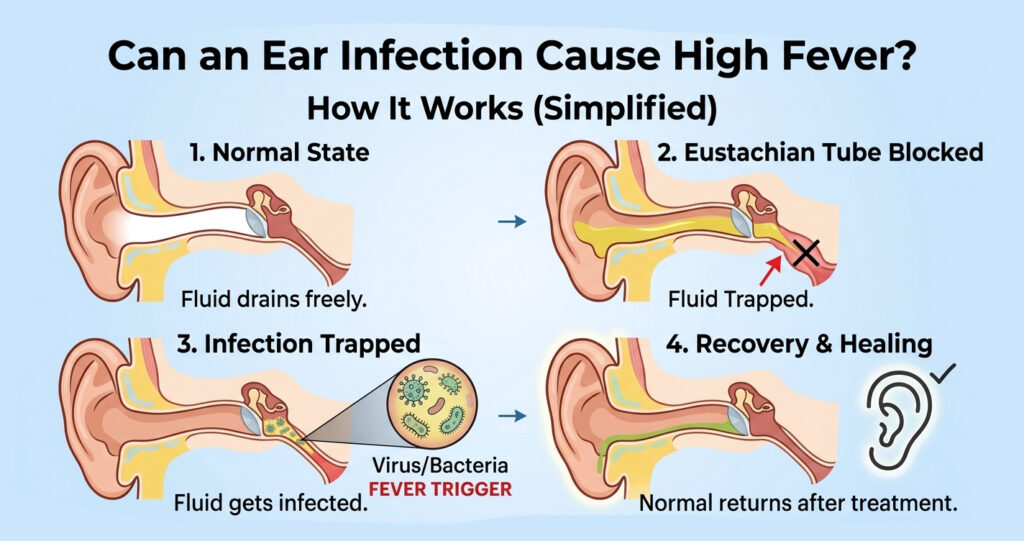
An ear infection develops when bacteria or viruses enter the middle ear, the small air-filled space located behind the eardrum. These infections commonly occur after illnesses like colds, flu, or sinus infections because congestion and inflammation can block normal drainage in the ear. When fluid becomes trapped, germs can grow easily, leading to pain, swelling, and sometimes fever.
Common causes include:
- Viral infections such as colds or flu: Respiratory viruses can cause swelling in the nasal passages and Eustachian tubes, preventing fluid from draining properly from the middle ear. This trapped fluid creates pressure and increases the risk of infection.
- Bacterial infections: Bacteria may grow inside fluid trapped behind the eardrum, especially after a respiratory illness. Bacterial ear infections are often more painful and may cause higher fever or worsening symptoms.
- Fluid trapped behind the eardrum: Normally, the middle ear drains fluid through the Eustachian tubes. When drainage is blocked, fluid accumulates and creates an ideal environment for infection and inflammation.
- Blocked Eustachian tubes: The Eustachian tubes connect the middle ear to the back of the throat and help regulate pressure. Allergies, colds, or swelling can block these tubes, causing pressure buildup and increasing infection risk.
- Allergies or sinus infections: Allergies and sinus inflammation can lead to congestion and swelling in the nasal passages, which may interfere with ear drainage and contribute to recurring ear infections.
When fluid builds up and cannot drain properly, pressure increases inside the ear and germs can multiply quickly. In some cases, symptoms like severe pain, swelling, or high fever may require immediate medical evaluation at an ER for earache to prevent complications and provide fast relief.
Is a Fever Common With an Ear Infection?
Yes, fever is a common symptom of an ear infection, especially in children. When the body detects infection, it raises its temperature as part of the immune response.
Typical symptoms of an ear infection include:
- Ear pain or pressure
- Irritability or fussiness in children
- Difficulty sleeping
- Fluid drainage from the ear
- Fever
Many children with ear infections develop a mild to moderate fever, and in some cases, the temperature may become higher depending on the severity of the infection. If symptoms become severe or a child develops worsening fever, dehydration, or extreme irritability, visiting an emergency room for pediatrics may be necessary to evaluate the infection and prevent complications.
How High Can Fever Go With an Ear Infection?
The severity of fever can vary depending on the type of infection and the patient’s age.
In general:
- Mild ear infections: low-grade fever (around 100–101°F)
- Moderate infections: 101–102°F
- Severe bacterial infections: can reach 103°F or higher
When to Worry About an Ear Infection?
While many ear infections improve on their own, certain symptoms may indicate a more serious condition that needs medical attention.
You should seek care if you notice:
- Fever above 102–103°F
- Severe or worsening ear pain
- Symptoms lasting more than 2–3 days
- Fluid or pus draining from the ear
- Difficulty hearing
- Excessive drowsiness or irritability in children
- Swelling around the ear or face
Ear Infection in Children vs Adults
Ear infections are more common and often more symptomatic in children because their Eustachian tubes are smaller and more easily blocked. This makes fluid buildup and infection more likely.
Children may also show:
- Crying and irritability
- Tugging at the ear
- Loss of appetite
- Trouble sleeping
Adults, on the other hand, are more likely to experience:
- Ear pressure
- Muffled hearing
- Mild fever or no fever at all
When to Go to the ER?
An ear infection with high fever may require emergency care if symptoms become severe or worsen rapidly.
Go to the emergency room if you experience:
- Fever over 103°F
- Seizures or confusion
- Severe ear pain not relieved by medication
- Swelling behind the ear
- Signs of dehydration
- In infants or young children: persistent crying, lethargy, or refusal to eat
In these situations, prompt evaluation at a facility such as the emergency room Baytown, TX, or Neighbors Emergency Center can help prevent complications and provide fast relief.
Ear Infection Treatment & When to Seek Care
Treatment for an ear infection depends on whether it is caused by a virus or bacteria, as well as the severity of symptoms. In many mild cases, the infection can improve on its own with supportive care, while more serious infections may require medical treatment to prevent complications.
Common treatment options include:
- Doctors may recommend Pain relievers such as acetaminophen or ibuprofen to reduce pain and fever
- Warm compresses applied to the ear to help ease discomfort and pressure
- Antibiotics for confirmed or suspected bacterial infections
- Careful monitoring of mild cases to see if symptoms improve naturally
For severe or worsening symptoms, timely evaluation at Neighbors Emergency Center can ensure quick diagnosis and appropriate treatment, helping patients, especially children recover safely and comfortably.
Key Takeaways
- Ear infections can cause high fever, especially in children.
- Colds, flu, and allergies commonly trigger ear infections.
- Severe fever and ear pain may need emergency care.
- Children often experience stronger symptoms than adults.
- Early treatment helps prevent complications and speeds recovery.