

When you’re dealing with sudden vomiting, diarrhea, stomach cramps, or nausea, it’s understandable to worry about getting others sick. Yes, some types of food poisoning are contagious, particularly infections caused by viruses or bacteria that can spread through contaminated food, surfaces, vomit, or stool.
However, not all food poisoning spreads between people. Illness caused by toxins or chemicals in food is generally not contagious. If symptoms become severe, you cannot keep fluids down, or you develop signs of dehydration causing diarrhea, our Lubbock emergency room can provide prompt medical evaluation.
What Causes Contagious Food Poisoning?
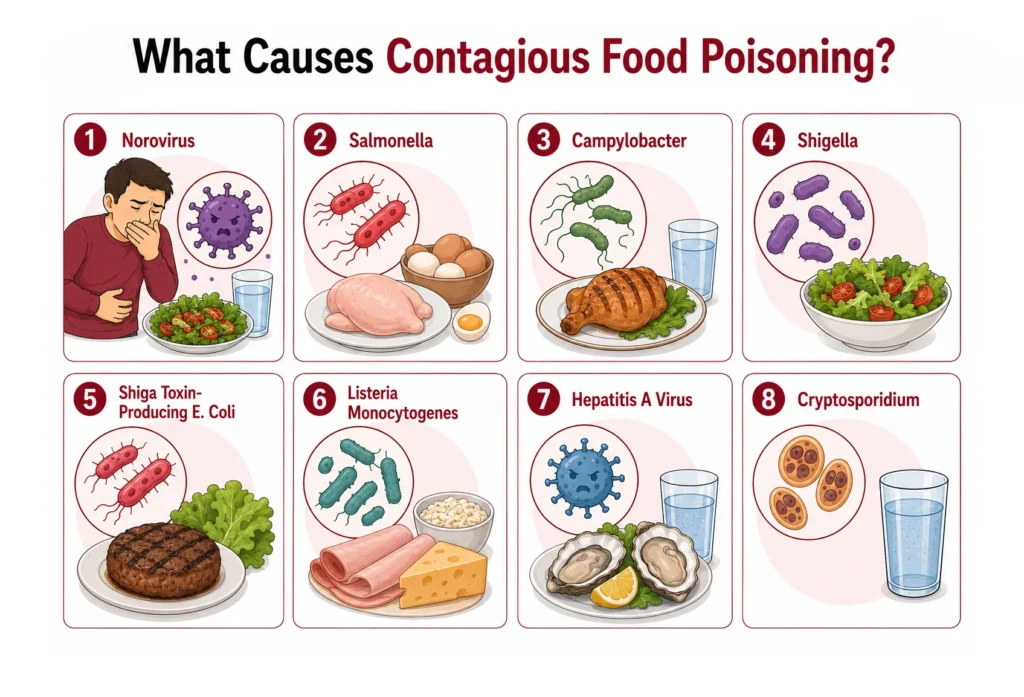
Contagious food poisoning usually occurs when an infectious germ enters the digestive system and can then spread between people through contaminated food, hands, surfaces, vomit, or stool. Some infections spread particularly easily in households, workplaces, schools, and other shared environments. Identifying the likely cause can help you take precautions and recognize when symptoms require medical attention.
Norovirus
Norovirus is one of the most common causes of foodborne illness and is highly contagious. It can spread through contaminated food or water, infected food handlers, contaminated surfaces, and direct contact with an infected person. Common symptoms include sudden vomiting, watery diarrhea, nausea, and stomach cramps.
Salmonella
Salmonella can cause diarrhea, fever, stomach cramps, nausea, and vomiting after eating contaminated food. It is commonly associated with poultry, eggs, meat, unpasteurized dairy products, and contaminated produce. The bacteria can also spread from infected people or animals through contaminated hands and surfaces.
Campylobacter
Campylobacter is a common bacterial cause of foodborne illness and can produce diarrhea, abdominal cramps, fever, and vomiting. Infection is often linked to raw or undercooked poultry, unpasteurized milk, or contaminated water. The bacteria can also spread through contact with infected animals or contaminated materials.
Shigella
Shigella can spread easily from person to person, particularly when infected stool contaminates hands, food, or surfaces. It can cause diarrhea, fever, stomach cramps, vomiting, and sometimes bloody stools. Poor hand hygiene and contaminated food or water are important routes of transmission.
Shiga Toxin-Producing E. Coli
Certain strains of E. coli, including Shiga toxin-producing E. coli, can cause severe diarrhea, abdominal pain, and vomiting. Contaminated ground beef, unpasteurized milk or juice, raw produce, and contaminated water can transmit these bacteria. Some infections can cause serious complications, including kidney damage.
Listeria Monocytogenes
Listeria can cause foodborne illness after consuming contaminated ready-to-eat foods, unpasteurized dairy products, and certain meats or seafood. Symptoms may include fever, muscle aches, nausea, vomiting, and diarrhea. Listeria can be particularly dangerous during pregnancy and for older adults or people with weakened immune systems.
Hepatitis A Virus
Hepatitis A can be transmitted through contaminated food or water and can also spread through close contact with an infected person. Early symptoms may include fatigue, nausea, abdominal discomfort, fever, and diarrhea, followed by jaundice in some people. Poor hand hygiene can allow the virus to contaminate food and surfaces.
Cryptosporidium
Cryptosporidium is a parasite that can cause prolonged, watery diarrhea and stomach cramps. Infection may occur after consuming contaminated food or water or through contact with contaminated surfaces or an infected person. Because the parasite can spread through microscopic amounts of stool, careful handwashing is important for preventing transmission.
How Does Food Poisoning Spread?
Food poisoning can spread when harmful germs enter food, water, or the digestive system. Some infections can also pass between people through contaminated hands, surfaces, vomit, or stool. Knowing how these germs spread can help reduce your risk of infection.
- Contaminated Food: Germs can enter food during preparation, handling, processing, or storage.
- Contaminated Water: Drinking or using contaminated water can spread bacteria, viruses, and parasites.
- Person-To-Person Contact: Some infections spread through contact with an infected person, especially through contaminated hands.
- Contaminated Surfaces: Germs can remain on countertops, utensils, bathroom fixtures, and other frequently touched surfaces.
- Poor Hand Hygiene: Unwashed hands can transfer germs to food, drinks, surfaces, or your mouth.
- Cross-Contamination: Germs can spread from raw meat, poultry, seafood, or eggs to ready-to-eat foods.
- Infected Food Handlers: Infected food workers can contaminate food when proper hygiene is not followed.
- Infected Animals: Contact with infected animals or their feces can spread certain foodborne germs.
How Long Is Food Poisoning Contagious?
The contagious period varies depending on the germ causing the food poisoning. Some infections can spread only while symptoms are present, while others may remain transmissible after you feel better. If the duration differs by infection, these common examples can help:
- Norovirus: Most contagious during symptoms and for the first few days after recovery; the virus can remain in stool for 2 weeks or more.
- Salmonella: Can be spread while diarrhea is present and sometimes for weeks after symptoms improve.
- Shigella: Usually contagious while symptoms are present and can remain in stool for several weeks.
- E. Coli: Can spread while bacteria are present in stool, often for about a week or longer.
- Campylobacter: Usually contagious while the bacteria are present in stool, typically for several days to a few weeks.
If you still have diarrhea or vomiting, practice careful hand hygiene and avoid preparing food for others to reduce the risk of spreading infection.
How To Prevent Food Poisoning From Spreading
If food poisoning may be contagious, simple precautions can reduce the risk of spreading germs to others. Good hygiene, safe food handling, and avoiding close contact while sick are especially important.
- Wash hands with soap and water for at least 20 seconds.
- Avoid preparing food for others while sick and for 48 hours after symptoms stop.
- Disinfect toilets, sinks, counters, and frequently touched surfaces.
- Wash clothing, towels, and bedding contaminated with vomit or stool.
- Avoid sharing utensils, cups, towels, and other personal items.
- Stay home while experiencing vomiting or diarrhea.
- Keep raw foods separate and cook meat, eggs, and seafood thoroughly.
When To Go To The ER For Food Poisoning
Most cases of food poisoning improve with rest and fluids, but severe symptoms can signal dehydration, serious infection, or complications. Seek emergency care if symptoms are severe, worsening, or you cannot safely manage them at home.
- Severe or persistent abdominal pain.
- Bloody diarrhea or vomiting blood.
- Frequent vomiting that prevents you from keeping fluids down.
- Signs of severe dehydration, such as very little urine, confusion, fainting, or extreme weakness.
- High fever, especially with worsening symptoms.
- Severe diarrhea that continues for several days.
- Trouble breathing, seizures, or loss of consciousness.
- Symptoms in a young child, older adult, pregnant person, or someone with a weakened immune system.
If you have severe symptoms, visit the nearest emergency room for prompt medical evaluation.
Neighbors Emergency Center For Food Poisoning Care
If you or your loved one develops severe food poisoning symptoms such as persistent vomiting, bloody diarrhea, severe abdominal pain, dehydration, or confusion, do not wait to seek medical attention. Our experienced emergency physicians are available 24/7 to evaluate concerning symptoms, provide diagnostic testing when needed, and deliver prompt supportive treatment.
Whether you need IV fluids for dehydration, symptom management, or urgent evaluation for complications, our 24/7 emergency room, Neighbors Emergency Center is here to provide compassionate, timely emergency care when serious food poisoning symptoms arise.
Key Takeaways
- Some types of food poisoning are contagious, while others are not.
- Germs can spread through contaminated food, water, hands, surfaces, vomit, or stool.
- Contagiousness depends on the specific infection and may continue after symptoms improve.
- Wash hands, clean surfaces, and avoid preparing food for others while sick.
- Seek emergency care for severe dehydration, bloody diarrhea, persistent vomiting, or severe abdominal pain.
Frequently Asked Questions
Does Food Poisoning Cause Fever?
Yes. Some types of food poisoning can cause fever, particularly bacterial infections. A high or persistent fever with severe diarrhea, vomiting, or dehydration may require medical evaluation.
What To Eat After Food Poisoning?
Start with fluids and electrolytes, then eat foods you can tolerate as your appetite returns. You can usually resume your normal diet, while limiting fatty foods, caffeine, and high-sugar drinks if they worsen symptoms.