

It can be frustrating when you’re constantly searching for the nearest bathroom and wondering, “Why do I have diarrhea?” Whether it started out of nowhere or keeps coming back, the discomfort, inconvenience, and uncertainty can make it difficult to focus on work, enjoy meals, or even leave your home. If you’re feeling worried, you’re not alone.
Although diarrhea is often temporary, it isn’t always something you should ignore. If it’s severe, lasts longer than expected, or is accompanied by symptoms like dehydration, bloody stools, high fever, or severe abdominal pain, it may require immediate medical attention. Recognizing these warning signs early can help prevent serious complications and ensure you get the care you need. Our Amarillo emergency room provides prompt evaluation and treatment for severe diarrhea symptoms.
What Is Diarrhea?
Diarrhea is a condition that causes loose, watery, or frequent bowel movements, usually occurring three or more times in a day. It can develop suddenly and last a few days or continue for weeks, depending on the underlying cause.
The National Institute of Diabetes and Digestive and Kidney Diseases (NIDDK) reports that up to 5% of people in the United States have chronic diarrhea, highlighting that persistent diarrhea is relatively common and should not be ignored.
Types Of Diarrhea
If you’re wondering why your diarrhea feels different from someone else’s, it’s because not all cases are the same. Diarrhea is classified based on how long it lasts and the underlying problem affecting the digestive system. Identifying the type of diarrhea can help healthcare providers determine the most appropriate treatment and whether further testing is needed.
- Acute Diarrhea: Lasts less than 14 days and is commonly caused by infections or food poisoning.
- Persistent Diarrhea: Continues for 14 to 30 days and may require medical evaluation if symptoms do not improve.
- Chronic Diarrhea: Lasts more than four weeks and is often linked to long-term digestive disorders.
- Secretory Diarrhea: Occurs when the intestines release too much water into the stool, causing ongoing watery diarrhea.
- Osmotic Diarrhea: Develops when certain foods or substances draw excess water into the intestines.
- Inflammatory Diarrhea: Results from intestinal inflammation and may cause blood, mucus, and severe abdominal pain.
If diarrhea leads to severe fluid loss or signs of dehydration, visit an ER for dehydration to receive timely treatment and prevent complications.
Also Read: How to Stop Diarrhea Fast
Reasons Why You Have Diarrhea
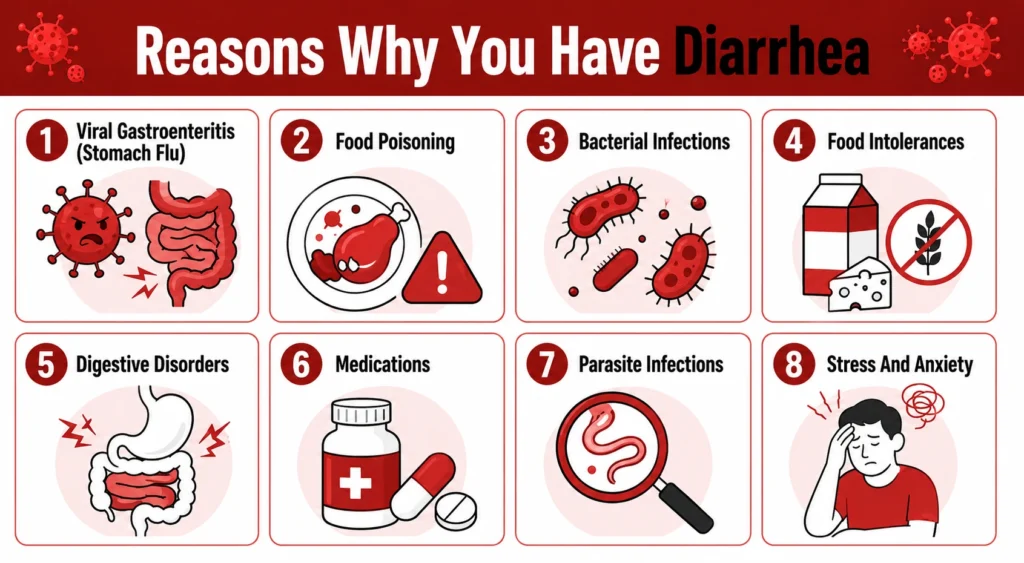
It can be worrying when diarrhea starts unexpectedly and you’re left wondering what triggered it. The truth is that diarrhea is a symptom rather than a disease, and it can result from anything from a temporary stomach infection to an underlying digestive disorder. Identifying the cause is important because some cases improve within a few days, while others require prompt medical evaluation to prevent complications such as dehydration.
Viral Gastroenteritis (Stomach Flu)
Viruses such as norovirus and rotavirus are among the most common causes of diarrhea. These infections spread easily through contaminated food, water, or close contact with an infected person. Symptoms often include watery diarrhea, nausea, vomiting, stomach cramps, and a low-grade fever. Most cases improve within a few days, but staying hydrated is essential.
Food Poisoning
Eating food contaminated with bacteria, viruses, or toxins can cause diarrhea within hours or days. Common sources include undercooked meat, raw seafood, unpasteurized dairy products, and contaminated produce. Food poisoning may also cause vomiting, fever, abdominal cramps, and dehydration. Severe symptoms or bloody diarrhea require immediate medical attention.
Bacterial Infections
Bacteria such as Salmonella, Campylobacter, Shigella, and certain strains of E. coli can infect the intestines and trigger diarrhea. These infections are usually acquired through contaminated food or water. Depending on the bacteria involved, symptoms may include fever, severe stomach pain, and bloody stools. Antibiotics may be needed in selected cases.
Food Intolerances
Some people develop diarrhea because their body cannot properly digest certain foods. Lactose intolerance, fructose intolerance, and sensitivity to artificial sweeteners are common examples. Symptoms usually occur shortly after eating the trigger food and often improve once it is avoided. Keeping a food diary may help identify the cause.
Digestive Disorders
Chronic digestive conditions such as irritable bowel syndrome (IBS), inflammatory bowel disease (IBD), and celiac disease frequently cause recurring diarrhea. These disorders affect how the intestines function or absorb nutrients. Diarrhea may be accompanied by bloating, abdominal pain, weight loss, or blood in the stool.
Medications
Certain medications can disrupt normal bowel function and lead to diarrhea. Antibiotics are a common cause because they alter the balance of healthy bacteria in the intestines. Other medications, including some antacids, chemotherapy drugs, and diabetes medications, may also trigger loose stools. Never stop prescribed medication without consulting your healthcare provider.
Parasite Infections
Parasites such as Giardia and Cryptosporidium can cause diarrhea after exposure to contaminated water, food, or poor sanitation. These infections are more common after international travel, camping, or drinking untreated water. Symptoms may persist for several weeks if left untreated. Laboratory testing can help confirm the diagnosis.
Stress And Anxiety
The digestive system and brain are closely connected, so emotional stress can sometimes lead to diarrhea. Anxiety may speed up bowel movements and worsen symptoms in people with IBS. Although stress-related diarrhea is usually temporary, frequent episodes should still be evaluated to rule out other medical conditions. Managing stress can help reduce symptom flare-ups.
How To Get Rid Of Diarrhea
Having diarrhea can leave you feeling drained, uncomfortable, and concerned about when you’ll start feeling better. The best way to get rid of diarrhea depends on its cause, how long it has lasted, and whether dehydration or another medical condition is involved.
Stay Hydrated
Diarrhea causes your body to lose large amounts of water and electrolytes, increasing the risk of dehydration. Drink plenty of water, clear broths, or an Oral Rehydration Solution (ORS) to replace lost fluids. Staying hydrated is one of the most effective ways to recover safely.
Eat Bland, Easy-To-Digest Foods
Choose foods that are gentle on your digestive system while your intestines recover. Bananas, rice, applesauce, toast, plain potatoes, and oatmeal are commonly recommended because they are easy to digest. Avoid greasy, spicy, or high-fiber foods until symptoms improve.
Avoid Foods That Can Make Diarrhea Worse
Certain foods and drinks can irritate your digestive tract and prolong diarrhea. Limit dairy products, alcohol, caffeine, sugary beverages, and fatty or heavily seasoned meals until you have fully recovered. Reintroduce your normal diet gradually as symptoms improve.
Take Medications As Prescribed By The Doctor
If your diarrhea is caused by a bacterial infection, inflammatory condition, or another medical problem, medications prescribed by the doctor may be needed. Anti-diarrheal medicines should also be used only when appropriate and under medical advice, as they are not safe for every type of diarrhea.
Get Plenty Of Rest
Your body needs energy to fight infection and repair the digestive system. Getting enough rest can support recovery and help you regain strength more quickly. If diarrhea persists, worsens, or is accompanied by severe symptoms, seek prompt medical evaluation.
When To Go To The ER
Most cases of diarrhea resolve on their own, but some can quickly become life-threatening due to severe dehydration or a serious underlying illness. Seek emergency medical care immediately if you experience any of the following symptoms:
- Signs of severe dehydration, such as extreme thirst, confusion, dizziness, or very little urine.
- Blood in the stool or black, tarry stools.
- Severe or worsening abdominal pain.
- A high fever of 102.2°F (39°C) or higher.
- Persistent vomiting that prevents you from keeping fluids down.
- Fainting, confusion, or loss of consciousness.
If you experience any of these warning signs, visit the nearest emergency room for immediate evaluation and care.
Neighbors Emergency Center For Diarrhea Care
Severe or persistent diarrhea should never be ignored, especially if it is accompanied by dehydration, bloody stools, severe abdominal pain, or a high fever. If you’re asking, “Why do I have diarrhea?”, our team at Neighbors Emergency Center is available through our 24/7 emergency room to quickly evaluate your symptoms, identify the underlying cause, and provide the emergency care you need.
At Neighbors Emergency Center, our experienced emergency physicians use advanced diagnostic testing and a comprehensive medical evaluation to diagnose the cause of diarrhea and begin prompt treatment. From IV fluids for dehydration to emergency care for serious infections or other underlying conditions, we’re committed to helping you recover safely and as quickly as possible.
Key Takeaways
- Diarrhea is a symptom, not a disease, and is commonly caused by infections, food intolerances, medications, or digestive disorders.
- Most cases improve within a few days, but persistent diarrhea, dehydration, bloody stools, or a high fever require prompt medical evaluation.
- Staying hydrated, eating easy-to-digest foods, and following your doctor’s treatment plan are the most effective ways to recover safely.
- Knowing the warning signs of severe diarrhea can help you seek emergency care before serious complications develop.
Frequently Asked Questions
What To Eat When You Have Diarrhea?
Choose bland, easy-to-digest foods such as bananas, rice, applesauce, toast, plain potatoes, oatmeal, and crackers. Drink plenty of water or an oral rehydration solution (ORS) to prevent dehydration, and avoid spicy, greasy, high-fat, and sugary foods until your symptoms improve.
Why Do I Have Diarrhea After I Eat?
Diarrhea after eating may be caused by food poisoning, food intolerances (such as lactose intolerance), irritable bowel syndrome (IBS), digestive disorders, or certain infections. If it happens frequently or is accompanied by severe pain, weight loss, or bloody stools, seek medical evaluation.
Why Do I Have Diarrhea During My Period?
Diarrhea during your period is common because hormonal changes, particularly increased prostaglandins, can stimulate the intestines and speed up bowel movements. If diarrhea is severe, lasts beyond your menstrual cycle, or occurs with heavy bleeding or severe abdominal pain, consult a healthcare provider.
Can Dehydration Cause Diarrhea?
Dehydration does not typically cause diarrhea, but diarrhea can quickly lead to dehydration by causing loss of fluids and electrolytes. Staying hydrated is important during episodes of diarrhea.
Can Antibiotics Give You Diarrhea?
Yes, antibiotics can cause diarrhea by disturbing the natural balance of bacteria in your gut. This side effect may occur during or shortly after antibiotic treatment.