

Frequent diarrhea is usually caused by infections, diet changes, medications, or digestive conditions rather than cancer. However, persistent diarrhea with no clear cause or other warning signs should be medically evaluated. Our Amarillo emergency room provides prompt care for severe or concerning digestive symptoms.
Understanding when frequent diarrhea crosses from a manageable digestive issue into a potential warning sign of something more serious is one of the most important things you can do for your long-term health. If you have been experiencing ongoing changes in your bowel habits and are unsure how to stop diarrhea fast or whether home care is appropriate, getting evaluated sooner rather than later is always the safer choice.
Can Diarrhea Be a Sign of Cancer?
Yes, diarrhea can be a sign of cancer in some cases, particularly cancers that affect the digestive system or disrupt normal bowel function through hormonal or structural changes. According to the National Cancer Institute, diarrhea is one of the recognized gastrointestinal symptoms that can occur both as a result of certain cancers and as a side effect of cancer treatments like chemotherapy and radiation. The key distinction between cancer-related diarrhea and diarrhea from other causes is that cancer-related diarrhea tends to be persistent, does not resolve with typical remedies, and is usually accompanied by other symptoms that paint a broader clinical picture.
What Types of Cancer Cause Frequent Diarrhea?
Not all cancers cause diarrhea, but several types are specifically known for disrupting bowel function in ways that produce persistent loose stools.
Colorectal Cancer
Colorectal cancer is the most common cancer associated with persistent bowel habit changes, including frequent diarrhea that alternates with constipation. Tumors in the colon or rectum disrupt normal motility, cause inflammation, and produce loose or bloody stools that do not resolve with dietary changes. Persistent bowel changes lasting more than four weeks are one of the most recognized early warning signs and should always be medically evaluated.
Pancreatic Cancer
Pancreatic cancer interferes with the digestive enzymes needed to properly break down food, leading to chronic diarrhea and pale, greasy, foul-smelling stools that are often among the first noticeable symptoms. As enzyme production declines, fat and nutrients pass through the digestive system largely unabsorbed, causing frequent and difficult-to-manage diarrhea. Unexplained diarrhea with weight loss, jaundice, or upper abdominal pain should always prompt immediate medical investigation.
Carcinoid Tumors and Lymphoma
Carcinoid tumors produce hormones that actively stimulate bowel activity, causing watery diarrhea that is frequently misattributed to irritable bowel syndrome for months before a correct diagnosis is made. Lymphoma affecting the gastrointestinal tract disrupts absorption, causes chronic inflammation, and produces persistent diarrhea alongside weight loss, fatigue, and night sweats. Both conditions are consistently missed because the symptom is so commonly attributed to more ordinary causes.
How Long Does Cancer-Related Diarrhea Last?
Cancer-related diarrhea does not resolve on its own because it is driven by the underlying disease rather than a temporary infection or dietary trigger. Unlike diarrhea from a stomach virus that clears within a few days, cancer-related diarrhea persists for weeks or months and tends to worsen gradually alongside other symptoms. Any diarrhea lasting more than four weeks without a clear identifiable cause warrants investigation to rule out serious conditions, including cancer.
What Else Can Cause Frequent Diarrhea Besides Cancer?
The vast majority of cases of frequent diarrhea are caused by conditions that are entirely unrelated to cancer, and it is important not to assume the worst when this symptom appears without other red flags. Common non-cancer causes include:
- Viral or bacterial gastrointestinal infections that typically resolve within a few days with rest and hydration
- Irritable bowel syndrome, which causes chronic and recurring bowel changes without any structural abnormality
- Inflammatory bowel disease, including Crohn’s disease and ulcerative colitis, which cause ongoing gut inflammation and frequent loose stools
- Food intolerances, such as lactose or gluten intolerance, that trigger digestive symptoms after specific foods are consumed
- Antibiotics and other medications that disrupt the natural gut flora and cause diarrhea as a known side effect
- Chronic stress and anxiety, which have well-documented effects on gut motility and can cause persistent changes in bowel habits
If frequent diarrhea causes severe fluid loss or signs of dehydration, visit an ER for dehydration to restore fluids and prevent serious complications.
What Are Other Symptoms of Cancer Besides Diarrhea?
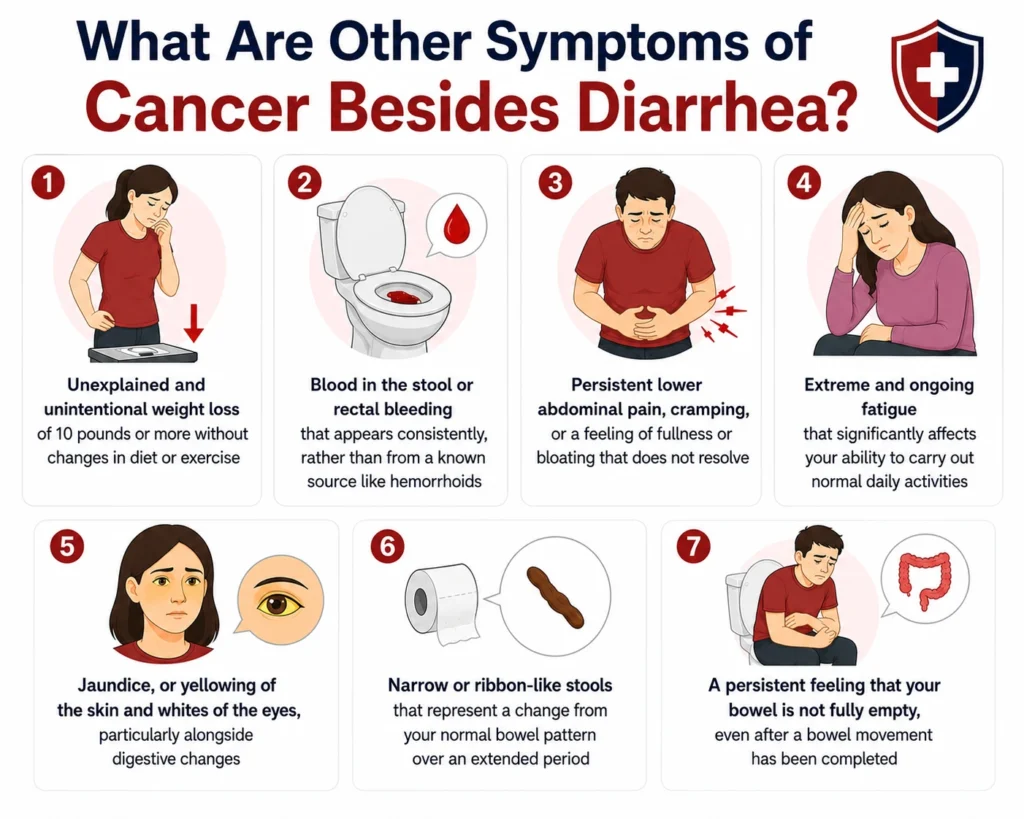
When diarrhea is related to cancer rather than a benign condition, it is almost always accompanied by other symptoms that together form a clearer warning picture. According to MedlinePlus, warning signs that may indicate a serious underlying condition include:
- Unexplained and unintentional weight loss of 10 pounds or more without changes in diet or exercise
- Blood in the stool or rectal bleeding that appears consistently, rather than from a known source like hemorrhoids
- Persistent lower abdominal pain, cramping, or a feeling of fullness or bloating that does not resolve
- Extreme and ongoing fatigue that significantly affects your ability to carry out normal daily activities
- Jaundice, or yellowing of the skin and whites of the eyes, particularly alongside digestive changes
- Narrow or ribbon-like stools that represent a change from your normal bowel pattern over an extended period
- A persistent feeling that your bowel is not fully empty, even after a bowel movement has been completed
If these warning signs occur, visit the emergency room near me for immediate evaluation and treatment.
When to Go to the ER for Frequent Diarrhea?
Most cases of diarrhea can be managed at home or addressed through a scheduled doctor’s appointment, but certain combinations of symptoms signal a medical emergency that requires immediate evaluation at an emergency room. Visit Neighbors Emergency Center right away if you experience any of the following.
- Blood in the stool or black, tarry stools that have appeared suddenly and cannot be explained
- Signs of severe dehydration include extreme thirst, no urination for 8 or more hours, dizziness, or confusion
- Diarrhea lasting more than four weeks without improvement despite dietary changes and home care
- Significant unexplained weight loss occurring alongside persistent changes in bowel habits
- Severe abdominal pain that is worsening rather than improving, alongside frequent diarrhea
- High fever above 102°F accompanying persistent diarrhea that does not respond to basic fever reduction
- Diarrhea in elderly patients, infants, or anyone with a compromised immune system that is worsening
Frequent Diarrhea Care at Neighbors Emergency Center
Persistent or severe diarrhea that does not respond to home care deserves professional evaluation, especially when it is accompanied by other warning signs that suggest something more serious may be present. With ER wait times of just 15 minutes, Neighbors Emergency Center provides immediate diagnostic testing, comprehensive evaluation, and expert emergency care for patients experiencing severe or concerning digestive symptoms at any of our locations around the clock. Do not wait for symptoms to resolve on their own when they have been persisting for weeks or when they are accompanied by red flags that demand urgent attention. Visit Neighbors Emergency Center today for fast, thorough care that identifies the cause and gets you on the right path to recovery.