

Yes, HPV infections are spread through direct skin-to-skin contact, most commonly through sexual activity, but the virus can also spread through intimate contact even when an infected person has no visible symptoms. Human papillomavirus (HPV) is one of the most common viral infections, and many people do not know they have it because the infection can remain unnoticed for months or even years.
Although many HPV infections clear naturally, some types can cause genital warts and cancers affecting areas such as the cervix, throat, and anus. Recognizing warning signs and seeking timely care for unusual growths, bleeding, pain, or worsening symptoms can help prevent complications. Our Porter emergency room provides prompt evaluation concerning HPV-related symptoms.
What Is HPV Infection?
Human papillomavirus (HPV) is a group of more than 200 related viruses that infect the skin and mucous membranes, including the genitals, mouth, throat, and anus. More than 40 HPV types can spread through intimate skin-to-skin contact and affect the genital area. According to the Centers for Disease Control and Prevention (CDC), HPV is the most common sexually transmitted infection (STI), with millions of new infections occurring each year.
Some HPV types are considered low-risk because they can cause genital warts but are not associated with cancer. Other high-risk HPV types can cause persistent infections that may lead to changes in cells, increasing the risk of cancers such as cervical, anal, penile, vaginal, vulvar, and certain throat cancers if left undetected and untreated. Most people with HPV do not develop noticeable symptoms, allowing the virus to spread unknowingly. Understanding how HPV is transmitted and taking preventive measures, such as vaccination and regular screenings, can help reduce the risk of infection and HPV-related complications.
How Do You Get HPV Infections?
HPV spreads when the virus enters the body through tiny cuts, abrasions, or openings in the skin or mucous membranes. Unlike many viral infections, HPV does not require the exchange of blood or other bodily fluids to spread. Instead, direct skin-to-skin contact with an infected area is enough to transmit the virus. Because many people with HPV have no symptoms, they may unknowingly pass the infection to others during intimate contact.
The virus most commonly affects the genital area, mouth, and throat, but the risk of transmission depends on the type of contact and the HPV strain involved. While the body’s immune system clears many HPV infections naturally within a few years, some infections persist and increase the risk of developing genital warts or certain cancers. Understanding how HPV spreads can help you take preventive steps and recognize situations where medical evaluation may be necessary.
Sexual Contact
The most common way HPV spreads is through vaginal, anal, or oral sexual contact with someone who has the virus. Transmission can occur even when the infected person has no symptoms or visible signs of HPV. Because the virus can remain dormant for months or years, it is often impossible to determine exactly when or from whom the infection was acquired.
Skin-to-Skin Genital Contact
HPV does not always require penetration to spread. Close intimate contact involving infected genital skin can transmit the virus from one person to another. This means HPV may spread during sexual touching or other forms of genital contact, even when intercourse does not occur.
Oral Contact
HPV can spread through oral sexual activity and infect the mouth and throat. Certain high-risk HPV strains are associated with cancers of the throat, base of the tongue, and tonsils. Persistent sore throat, difficulty swallowing, or unexplained lumps in the neck should be evaluated by a healthcare provider, especially if symptoms do not improve.
Contact With Infected Areas
Touching an infected area and then transferring the virus to another part of the body may contribute to HPV spread, although this is much less common than sexual transmission. The virus survives best on skin and mucous membranes, making direct contact the primary method of infection.
Mother-to-Baby Transmission
In rare cases, a pregnant person with HPV can pass the virus to a baby during vaginal delivery. Although uncommon, this may lead to a condition called recurrent respiratory papillomatosis, in which wart-like growths develop in the child’s airway. Healthcare providers monitor these situations carefully to reduce the risk of complications.
What Increases Your Risk of Getting HPV?
Anyone who has intimate contact with an infected person can develop HPV. However, certain factors increase the likelihood of contracting the virus or developing complications.
Having Multiple Sexual Partners
Having more sexual partners increases the chance of exposure to someone carrying HPV. However, HPV can spread even within a long-term relationship if one partner has an undetected infection.
Starting Sexual Activity at a Younger Age
Younger individuals may have a higher risk because the tissues in the genital area can be more vulnerable to infection, increasing the chance that HPV enters the body.
A Weakened Immune System
The immune system plays an important role in controlling HPV. People with weakened immunity may have more difficulty clearing the infection and may face a higher risk of persistent HPV-related complications.
Smoking
Smoking can weaken immune defenses and may make it harder for the body to fight HPV infections. It is also associated with an increased risk of HPV-related cancers.
Lack of HPV Vaccination
The HPV vaccine helps protect against several HPV types that are strongly linked to genital warts and cancers. People who are not vaccinated may have a higher risk of infection from preventable HPV strains.
What Are the Symptoms of HPV Infection?
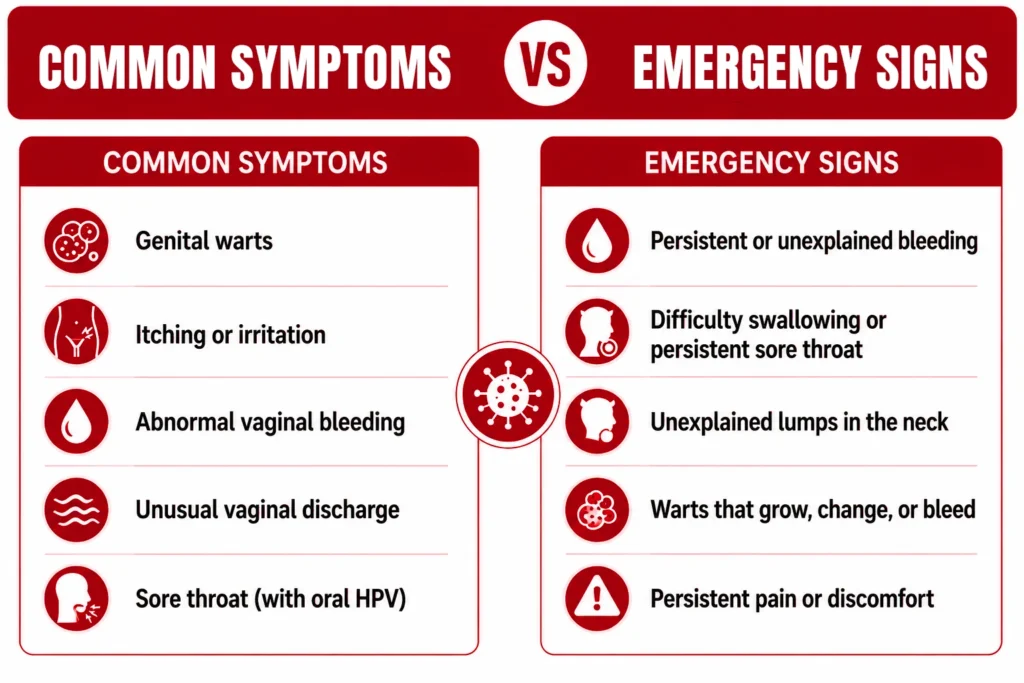
Many HPV infections do not cause symptoms, which is why the virus can spread easily without detection. When symptoms do occur, they depend on the type of HPV involved and the area affected.
Possible signs of HPV include:
- Small bumps or clusters of genital warts around the genitals, anus, or surrounding skin
- Raised, flat, or cauliflower-shaped growths that may appear weeks or months after exposure
- Itching, discomfort, or irritation around affected areas
- Bleeding or pain during sexual activity in some cases
- Persistent sore throat, voice changes, or difficulty swallowing with certain oral HPV infections
- Abnormal cervical screening results caused by HPV-related cell changes
Depending on your symptoms, healthcare providers may recommend diagnostic testing, including a blood test lab, along with other evaluations to identify related health concerns and guide treatment.
Can HPV Infections Become Dangerous?
Most HPV infections resolve naturally as the immune system controls the virus. However, some infections remain in the body for years and cause changes in cells that may eventually become cancerous. High-risk HPV types are associated with several cancers, including:
- Cervical cancer
- Anal cancer
- Penile cancer
- Vaginal cancer
- Vulvar cancer
- Certain throat and mouth cancers
The danger with HPV is that serious complications often develop slowly and may not cause obvious symptoms in the early stages. Regular screenings and early medical evaluation are essential because detecting abnormal changes before they progress can significantly improve outcomes.
How Are HPV Infections Diagnosed?
HPV diagnosis depends on the location of the infection and the symptoms present. Healthcare providers may use different methods to identify HPV-related concerns. Common diagnostic approaches include:
- Physical Examination: A healthcare provider examines visible areas for genital warts, lesions, or other unusual skin and tissue changes that may be related to HPV.
- HPV Testing: An HPV test detects certain high-risk strains of the virus, most commonly during cervical cancer screening.
- Pap Smear (Pap Test): A Pap test checks for abnormal cervical cell changes that may be caused by high-risk HPV before they develop into cancer.
- Biopsy: If abnormal growths or suspicious tissue changes are found, a small tissue sample may be removed and examined to determine whether precancerous or cancerous cells are present.
Early diagnosis allows healthcare providers to monitor changes and provide treatment when necessary before complications become more serious.
How Are HPV Infections Treated?
There is no medication that completely removes HPV from the body. In many cases, the immune system clears the infection naturally. Treatment focuses on managing symptoms, removing abnormal growths, and monitoring possible complications.
Treatment options may include:
- Prescription medications to treat external genital warts
- Procedures to remove warts or abnormal tissue
- Monitoring abnormal cell changes through regular screenings
- Treatment for HPV-related cancers when necessary
If symptoms appear suddenly, become painful, spread quickly, or are accompanied by bleeding or other concerning changes, professional medical evaluation is important.
When to Go to the ER for HPV Symptoms?
Most HPV infections do not require emergency treatment, but certain symptoms may indicate a more serious problem that needs immediate medical attention. Delaying evaluation when concerning symptoms appear can allow infections or complications to worsen.
Visit Exceptional Emergency Centers immediately if you experience:
- Severe pain, swelling, or rapidly worsening symptoms in the genital area
- Heavy or unexplained bleeding from the genital or rectal area
- Signs of a serious infection, including fever, chills, worsening redness, or severe discomfort
- Rapidly growing or painful growths that appear suddenly
- Difficulty breathing, swallowing, or persistent throat symptoms linked to possible oral HPV complications
- Severe weakness, dizziness, or signs of a broader health concern
- Symptoms during pregnancy that cause concern or require urgent medical evaluation
If symptoms become severe, worsen quickly, or require immediate evaluation, visit the nearest emergency room for prompt medical attention.
HPV Infection Care at Neighbors Emergency Center
When unusual symptoms, infections, or concerning changes require fast medical attention, timely evaluation can make a significant difference. At Neighbors Emergency Center, our 24/7 emergency room provides comprehensive evaluation and treatment for urgent medical concerns with advanced diagnostic services. Our experienced emergency team helps identify the cause of symptoms and provides timely care to support your health and recovery.
Whether you are experiencing painful symptoms, signs of infection, or complications that need immediate attention, our experienced providers are available to deliver the care you need. Do not ignore symptoms that are worsening or causing concern. Visit the Neighbors Emergency Center today for prompt and professional medical care.