

Many people brush off breathing problems as stress, allergies, or being out of shape until the sensation keeps coming back. If you’ve ever felt like you can’t take a full breath, your chest is tightening, or every inhale takes extra effort, it’s natural to wonder, what does asthma feel like? The experience can range from mild discomfort to sudden episodes that make even simple activities feel exhausting.
Asthma symptoms can worsen quickly, and recognizing how they feel may help you know when to seek medical care. Persistent shortness of breath, wheezing, chest tightness, or coughing that affects daily activities should never be ignored. Our emergency room Baytown, TX provides prompt evaluation and treatment for asthma symptoms and breathing emergencies.
What Is Asthma?
Asthma is a chronic lung condition that causes inflammation and narrowing of the airways, making it harder for air to move in and out of the lungs. Symptoms often come and go, with periods of normal breathing followed by flare-ups that can range from mild to life-threatening. While asthma cannot be cured, it can usually be managed with proper treatment and regular medical care.
Study: According to the U.S. Centers for Disease Control and Prevention (CDC), approximately 7.7% of adults and 6.2% of children in the United States have asthma, making it one of the most common chronic respiratory conditions.
Asthma Symptoms You Should Never Ignore
- Severe shortness of breath that makes it difficult to talk or walk.
- Persistent wheezing or whistling sounds while breathing.
- Chest tightness or pressure that does not improve.
- Continuous coughing, especially at night or early in the morning.
- Rapid breathing or struggling to catch your breath.
- Lips or fingertips turning blue or gray.
- Needing your rescue inhaler more often than usual.
- Symptoms that suddenly become worse despite using prescribed medication.
If these symptoms become severe or continue worsening, visit the nearest emergency room for immediate evaluation and treatment.
What Causes Asthma?
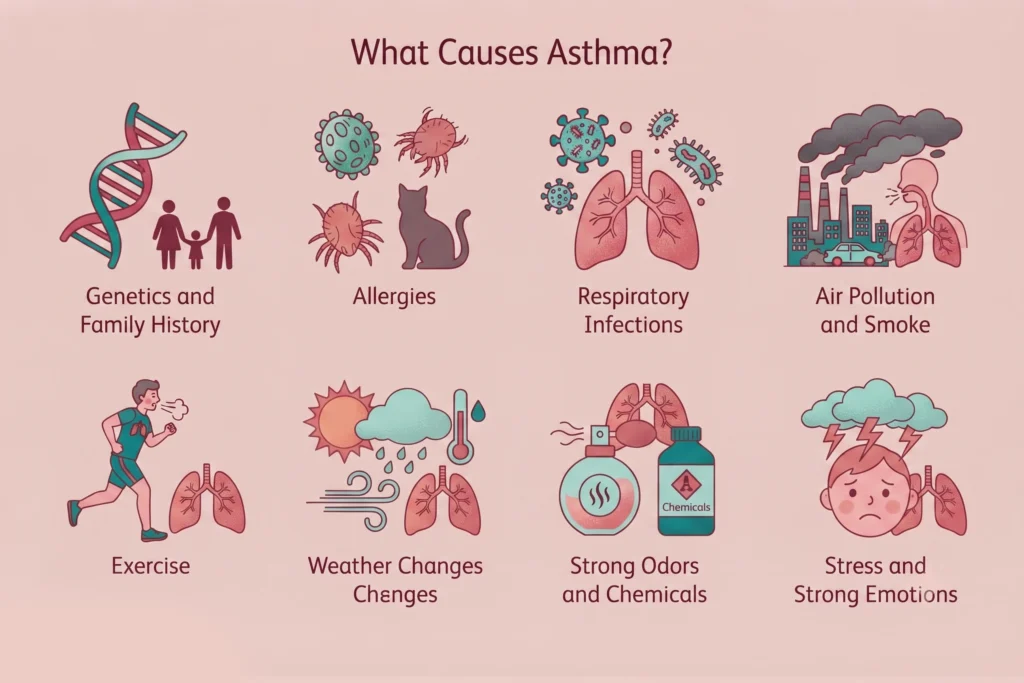
Asthma develops when the airways become overly sensitive and react strongly to certain triggers, causing inflammation and temporary narrowing. The exact reason why some people develop asthma is not always clear, and several factors may contribute over time.
Genetics and Family History
People with a parent or sibling who has asthma are more likely to develop the condition themselves. Inherited genes can make the immune system and airways more sensitive to environmental triggers. Although genetics increase the risk, they do not guarantee that someone will develop asthma.
Allergies
Allergic reactions to pollen, dust mites, mold, pet dander, or cockroaches are common asthma triggers. When these allergens enter the airways, they can cause inflammation, wheezing, coughing, and breathing difficulty. Managing allergies often helps reduce asthma flare-ups.
Respiratory Infections
Colds, influenza, COVID-19, and other viral respiratory infections can trigger asthma symptoms or worsen existing asthma. These infections increase airway inflammation and may lead to prolonged coughing or breathing problems. Young children with asthma are especially vulnerable.
Air Pollution and Smoke
Exposure to cigarette smoke, wildfire smoke, traffic pollution, and chemical fumes can irritate the airways. Even short-term exposure may trigger asthma symptoms in sensitive individuals. Avoiding polluted environments can help lower the risk of attacks.
Exercise
Physical activity, particularly in cold or dry air, can trigger exercise-induced asthma. Symptoms usually develop during or shortly after exercise and include coughing, wheezing, and shortness of breath. Many people can remain active with proper treatment.
Weather Changes
Cold air, sudden temperature changes, high humidity, or thunderstorms can irritate the airways and trigger asthma symptoms. Some people notice seasonal worsening due to changing weather conditions. Monitoring weather-related triggers can be helpful.
Strong Odors and Chemicals
Perfumes, cleaning products, paint fumes, and other strong-smelling chemicals may irritate sensitive airways. Exposure can quickly lead to coughing, wheezing, or chest tightness. Reducing exposure often decreases flare-ups.
Stress and Strong Emotions
Intense stress, anxiety, laughing, or crying can change breathing patterns and contribute to asthma symptoms in some people. Emotional stress does not cause asthma but can make symptoms worse. Managing stress may help improve asthma control.
When To Go To The ER
Asthma symptoms can become life-threatening if the airways narrow severely and breathing becomes difficult. Seek emergency medical care immediately if symptoms are severe or do not improve after using your prescribed rescue inhaler.
- Severe shortness of breath or gasping for air.
- Difficulty speaking because of breathlessness.
- Blue or gray lips, face, or fingertips.
- Chest tightness that rapidly worsens.
- A rescue inhaler does not relieve symptoms.
- Rapid breathing or severe wheezing.
- Confusion, extreme fatigue, or fainting.
- Visible pulling in of the muscles between the ribs or neck while breathing.
If you experience severe asthma symptoms or difficulty breathing, visit the emergency room near me for fast medical attention.
Asthma Treatment
Asthma treatment focuses on reducing airway inflammation, relieving symptoms, and preventing future attacks. The right treatment depends on symptom severity, age, and how often flare-ups occur. Following a healthcare provider’s treatment plan and avoiding known triggers can significantly improve quality of life. Regular follow-up visits also help ensure asthma remains well controlled.
- Rescue Inhalers (Albuterol): Most doctors recommend a short-acting bronchodilator such as albuterol for quick relief during an asthma attack. It relaxes the airway muscles within minutes.
- Inhaled Corticosteroids: Most doctors recommend these prescription medications as the primary long-term treatment to reduce airway inflammation and prevent asthma flare-ups.
- Combination Inhalers: Most doctors recommend inhalers containing both a corticosteroid and a long-acting bronchodilator for people with moderate to severe persistent asthma.
- Oral Corticosteroids: Most doctors recommend short courses of oral steroids for severe asthma attacks when symptoms do not respond to inhalers.
- Over-the-Counter Pain Relievers: Most doctors recommend using OTC pain relievers only for fever or body aches when appropriate. They do not treat asthma, and some, such as aspirin or ibuprofen, may worsen asthma in certain people.
- Nebulizer Therapy: Most doctors recommend nebulizer treatments during severe flare-ups or for patients who have difficulty using inhalers effectively.
- Allergy Management: Avoiding allergens, using air purifiers, and controlling indoor dust and mold can reduce asthma symptoms in people with allergic asthma.
- Breathing Exercises: Techniques such as diaphragmatic breathing or pursed-lip breathing may help improve breathing efficiency when used alongside prescribed treatment.
- Trigger Avoidance: Staying away from cigarette smoke, air pollution, strong odors, and other known triggers can help prevent asthma attacks.
- Oxygen Therapy: In emergency settings, doctors may provide supplemental oxygen when asthma causes dangerously low oxygen levels.
Asthma Emergency Care at Neighbors Emergency Center
If you’re wondering what asthma feels like, don’t ignore symptoms such as severe shortness of breath, chest tightness, persistent wheezing, or difficulty speaking. These can be signs of a serious asthma attack that requires immediate medical attention. At Neighbors Emergency Center, our experienced emergency team provides rapid evaluation and treatment to help restore your breathing and prevent complications.
Asthma symptoms can worsen within minutes, making early care essential. Our Texas emergency centers provide oxygen therapy, nebulizer treatments, medications, and continuous monitoring for asthma emergencies. If your symptoms are severe or your rescue inhaler is not helping, visit Neighbors Emergency Center for expert emergency care, 24/7.
Key Takeaways
- Asthma often feels like chest tightness, shortness of breath, wheezing, coughing, or difficulty taking a full breath.
- Symptoms can range from mild to severe and may worsen suddenly during an asthma attack.
- Common asthma triggers include allergies, respiratory infections, smoke, exercise, cold air, and air pollution.
- Seek emergency medical care if you have severe breathing difficulty, blue lips, or symptoms that do not improve with a rescue inhaler.
- Most asthma symptoms can be managed with prescribed medications, trigger avoidance, and prompt treatment when flare-ups occur.
Frequently Asked Questions
Is Asthma Genetic?
Yes. Asthma can run in families, and having a parent or sibling with asthma increases your risk. However, environmental factors and allergies also play an important role in whether the condition develops.
Can Asthma Go Away?
Asthma may improve or become less noticeable over time, especially in some children, but it does not always go away completely. Even if symptoms disappear, they can return later in life, so regular medical follow-up is important.
Can You Develop Asthma As An Adult?
Yes. Asthma can develop at any age, including adulthood. Adult-onset asthma may be triggered by allergies, respiratory infections, workplace irritants, hormonal changes, or long-term exposure to smoke or pollution.
How To Test For Asthma?
Doctors diagnose asthma using your medical history, a physical exam, and breathing tests such as spirometry. They may also perform peak flow testing, bronchial challenge tests, or allergy testing to confirm the diagnosis and identify triggers.