
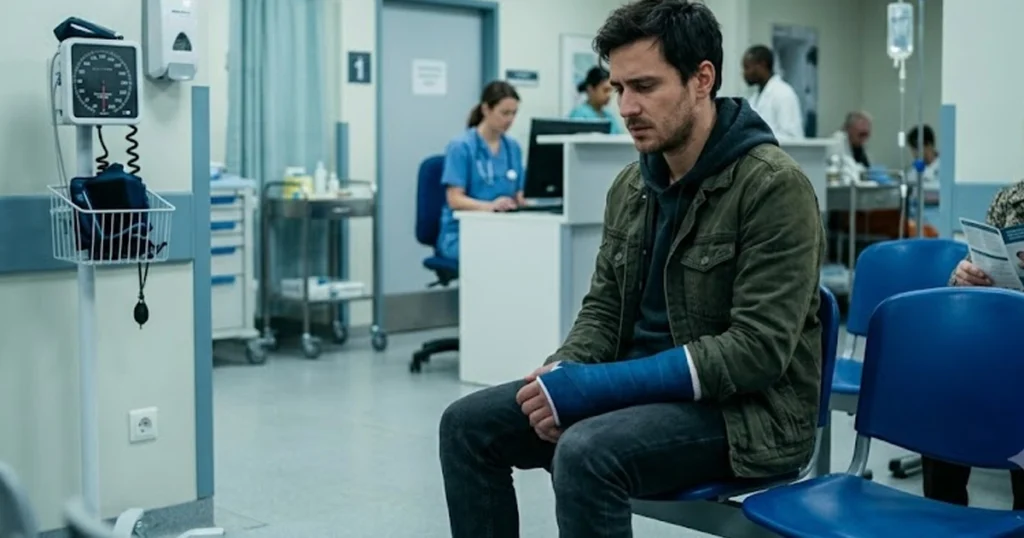
Living with sudden pain after an injury can be frightening, especially when it disrupts your daily routine and leaves you wondering how serious the damage might be. Whether it happens during sports, a fall, or a simple accident at home, the uncertainty can be just as stressful as the discomfort itself.
When a bone injury is severe, delaying medical attention can lead to complications, prolonged recovery, or permanent damage. Recognizing warning signs and seeking timely care is critical, especially for fractures that require immediate evaluation. Visit our Amarillo emergency room for prompt assessment and treatment to help protect function and support recovery.
What Is A Fracture?
A fracture is a partial or complete break in a bone that occurs when the force placed on the bone exceeds its strength. It can result from falls, sports injuries, accidents, repetitive stress, or conditions that weaken the bones. Fractures vary in severity and may require prompt medical treatment to prevent complications and support proper healing.
Study Insight: According to the Global Burden of Disease Study published in PubMed Central (NIH), there were an estimated 178 million new fracture cases worldwide in 2019, representing a 33.4% increase since 1990, highlighting the significant global impact of bone fractures.
Bone Fracture Symptoms To Watch For
- Sudden pain at the site of the injury.
- Swelling around the affected area.
- Bruising or skin discoloration.
- Tenderness when touched or moved.
- Difficulty moving or using the injured body part.
- Visible deformity or an abnormal bone position.
- Inability to bear weight on the injured limb.
- A grinding or cracking sensation at the time of injury.
- Numbness or tingling near the affected area.
- Bone protruding through the skin in severe cases.
If you notice these signs after an injury, timely evaluation is important to confirm the severity of the damage and begin proper care. Our urgent care for fracture provides prompt assessment and treatment to support healing and prevent complications.
Types Of Bone Fractures And Their Symptoms
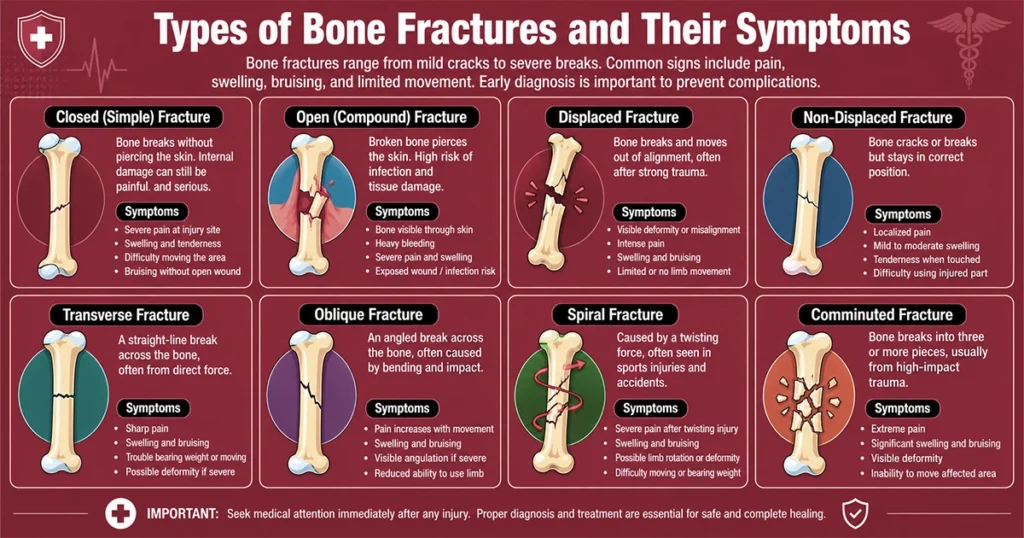
Bone fractures can range from mild cracks to severe breaks, and their symptoms often depend on the severity and location of the injury. Most fractures cause pain, swelling, and difficulty moving the affected area, but some may also lead to visible deformity or bruising. In many cases, symptoms can worsen if the injury is not treated early, making timely diagnosis very important.
Closed (Simple) Fracture
A closed fracture occurs when the bone breaks but does not pierce the skin. Although the skin remains intact, internal damage can still be serious and painful. Swelling and tenderness usually develop quickly after the injury. Proper immobilization is essential to prevent further complications.
Symptoms
- Severe pain at the injury site
- Swelling and tenderness around the bone
- Difficulty or inability to move the area
- Bruising without an open wound
Open (Compound) Fracture
An open fracture happens when the broken bone breaks through the skin. This type is more serious due to the high risk of infection and tissue damage. Immediate medical attention is required to prevent complications. Bleeding is often visible along with severe pain.
Symptoms
- Visible bone through the skin
- Heavy bleeding at the injury site
- Severe pain and swelling
- Risk of infection or exposed wound
Displaced Fracture
In a displaced fracture, the bone breaks into two or more parts that move out of alignment. This can significantly affect bone healing and may require medical realignment. The injury is usually caused by strong force or trauma. Treatment often involves casting or surgery.
Symptoms
- Visible deformity or misalignment
- Intense pain at the fracture site
- Swelling and bruising
- Limited or no movement of the limb
Non-Displaced Fracture
A non-displaced fracture means the bone cracks or breaks but stays in its correct position. Even though alignment is maintained, the injury still requires proper care. These fractures often heal well with immobilization. Pain and swelling are still common symptoms.
Symptoms
- Localized pain in the affected area
- Mild to moderate swelling
- Tenderness when touched
- Difficulty using the injured part
Transverse Fracture
A transverse fracture occurs when the break is a straight line across the bone. This usually results from a direct blow or high-impact force. It can be stable or unstable depending on severity. Healing requires proper stabilization to avoid displacement.
Symptoms
- Sharp pain at the injury point
- Swelling and bruising
- Difficulty bearing weight or movement
- Possible bone deformity in severe cases
Oblique Fracture
An oblique fracture happens at an angled line across the bone. It is often caused by a combination of bending and forceful impact. These fractures may become unstable if not properly treated. Healing typically requires careful alignment.
Symptoms
- Pain that increases with movement
- Swelling and bruising
- Visible angulation in severe cases
- Reduced ability to use the limb
Spiral Fracture
A spiral fracture occurs when a twisting force is applied to a bone. This type is often seen in sports injuries or accidents involving sudden rotation. It can be more complex than straight fractures. Treatment may require surgery in severe cases.
Symptoms
- Severe pain after twisting injury
- Swelling and bruising
- Possible deformity or rotation of limb
- Difficulty moving or bearing weight
Comminuted Fracture
A comminuted fracture means the bone is broken into three or more pieces. This is usually caused by high-impact trauma such as accidents. It is considered a severe type of fracture. Recovery often takes longer and may need surgical repair.
Symptoms
- Extreme pain at the injury site
- Significant swelling and bruising
- Visible deformity
- Inability to move the affected area
When To Go To The ER For A Fracture
Some fractures require immediate medical attention to prevent serious complications, especially when there is severe damage, loss of function, or signs of nerve and blood vessel problems. If the injury appears severe or symptoms are worsening, visit the closest emergency room near me for prompt evaluation and treatment.
- Severe pain that does not improve or becomes worse over time.
- Visible deformity or the bone appears out of its normal position.
- Bone is sticking through the skin or there is an open wound near the injury.
- Inability to move the injured area or put weight on the affected limb.
- Numbness, tingling, or loss of sensation near the injury site.
- Severe swelling, bruising, or increasing pressure around the fracture.
- Pale, cold, or discolored skin below the injury, which may indicate circulation problems.
- Signs of infection, such as increasing redness, warmth, drainage, or fever after an open fracture.
- A fracture occurs after a major accident, high-impact injury, or serious fall.
How To Treat A Fracture
Treating a fracture correctly is important for proper bone healing and to prevent long-term complications like deformity or reduced movement. The treatment approach depends on the type and severity of the fracture. With proper management, most fractures heal successfully over time and restore normal function.
- Immobilization (Cast or Splint): This keeps the bone in place while it heals. It reduces movement, controls pain, and helps maintain proper alignment.
- Closed Reduction: A doctor manually realigns the bone without surgery before applying a cast or splint. Most doctors recommend this for displaced but manageable fractures.
- Surgery (Open Reduction and Internal Fixation): Metal plates, screws, or rods are used to stabilize severe fractures. Most doctors recommend this for complex or unstable bone breaks.
- Over-the-Counter Pain Relief: Medicines like ibuprofen or acetaminophen help reduce pain and swelling. Most doctors recommend these for short-term symptom relief.
- Rest and Activity Limitation: Avoiding pressure on the injured area prevents further damage. Rest is essential for proper and uninterrupted healing.
- Cold Therapy (Ice Application): Ice packs help reduce swelling and pain in the early phase of injury. It is commonly used along with other treatments.
- Physical Therapy (Rehabilitation): Guided exercises help restore strength and movement after healing begins. Most doctors recommend physiotherapy for full recovery and mobility.
Fracture Care At Neighbors Emergency Center
Recognizing types of fractures early is important because even small bone injuries can lead to pain, swelling, and long-term mobility issues if not treated properly. Delaying care may increase the risk of complications such as improper healing or chronic discomfort. Our 24/7 emergency room provides prompt evaluation and treatment to ensure fractures are properly diagnosed and managed.
At Neighbors Emergency Center, patients receive fast and reliable care for all types of fractures, from simple cracks to complex bone breaks. Our medical team focuses on accurate diagnosis, pain management, and stabilizing the injury to support safe healing and recovery. With timely treatment and expert care, we aim to restore function and help patients return to daily activities with confidence.
Key Takeaways
- Fractures range from mild cracks to severe bone breaks requiring urgent care.
- Common symptoms include pain, swelling, bruising, and difficulty moving the affected area.
- Some fractures may show visible deformity or even bone exposure in severe cases.
- Early diagnosis helps prevent complications like misalignment and delayed healing.
- ER care is necessary for severe pain, open wounds, or inability to move the limb.
- Treatment may include immobilization, reduction, surgery, and pain management.
- Children and older adults are at higher risk for specific fracture types.
- Proper rest and follow-up care are essential for full recovery and mobility.
Frequently Asked Questions
How Long Can A Stress Fracture Take To Heal?
Most stress fractures heal within 6 to 8 weeks with proper rest and reduced activity. Recovery time can vary depending on the bone involved, the severity of the crack, and the patient’s overall health. In some cases, healing may take several months if the injury is more severe or not properly rested.
Is A Fracture The Same As A Break?
Yes, a fracture and a break refer to the same condition. Both mean that the bone has cracked or broken, and “fracture” is simply the medical term used by healthcare professionals. There is no difference in meaning between the two.
How Long Does A Fractured Bone Take To Heal?
Most fractured bones take about 6 to 12 weeks to heal. However, healing time depends on the type of fracture, the bone affected, age, and overall health. More complex or severe fractures may require a longer recovery period.
How Serious Is A Compression Fracture Of The Spine?
A compression fracture of the spine can range from mild to serious depending on the extent of damage. Some cases cause only temporary pain, while others may lead to long-term discomfort, posture changes, reduced mobility, or nerve-related issues. Proper medical evaluation is essential to determine severity and treatment.