

Middle back pain can be unsettling, especially when it appears suddenly or starts interfering with your daily comfort. Many people feel worried when the discomfort doesn’t go away quickly or begins to affect simple movements.
If you are dealing with middle back pain, it can impact posture, sleep, and overall mobility. The pain may feel mild at first, but can gradually become more persistent. In some cases, it may even limit routine activities and require medical attention. If your symptoms become severe or suddenly worsen, visiting our emergency room in Crosby, TX, can help ensure you receive prompt evaluation and treatment.
Understanding Middle Back Pain
Middle back pain (thoracic spine pain) affects the area between the neck and lower back and can range from mild stiffness to persistent discomfort. It may feel sharp, burning, or aching depending on the underlying trigger. In some cases, the pain worsens with movement, breathing deeply, or long sitting hours.
According to the National Institute of Neurological Disorders and Stroke (NINDS), pain becomes clinically significant when it persists beyond normal healing and begins affecting daily function and quality of life.
Middle Back Pain Causes And Conditions
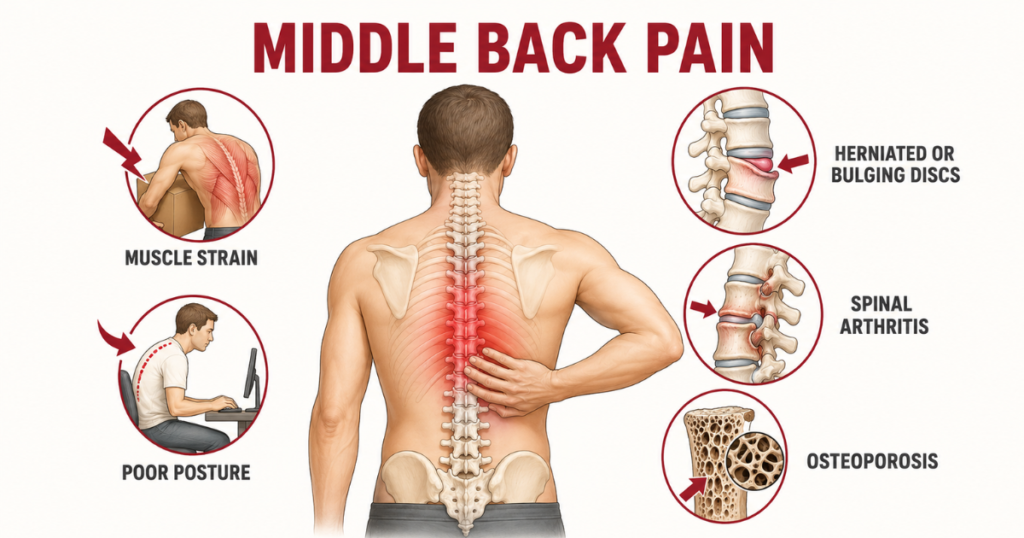
Middle back pain can develop due to mechanical stress, posture habits, or underlying spinal issues. It may start mildly but can progress if ignored. Recognizing early patterns like stiffness, sharp pain, or movement-related discomfort is important for timely care.
Muscle Strain
Muscle strain is one of the most frequent contributors to middle back pain and often develops after overuse or sudden movement. It may cause tightness, soreness, or sharp discomfort that worsens with activity. People who lift heavy objects, sit for long hours, or maintain poor posture are more prone to this issue.
Poor Posture
Poor posture places continuous stress on the thoracic spine and surrounding muscles, leading to persistent discomfort. It is commonly seen in individuals who spend long hours working at desks or using mobile devices. Over time, this strain can cause stiffness and aching sensations between the shoulder blades.
Herniated Or Bulging Discs
A herniated or bulging disc can contribute to middle back pain by putting pressure on nearby nerves or spinal structures. This may result in localized pain, stiffness, or discomfort that increases with certain movements. In some cases, the pain may feel sharp or radiate to nearby areas of the back.
Spinal Arthritis
Spinal arthritis can lead to gradual wear and tear in the joints of the thoracic spine, causing stiffness and chronic discomfort. It typically develops over time and may worsen with age or repetitive stress on the spine. People often experience reduced flexibility and aching pain in the middle back region.
Osteoporosis
Osteoporosis weakens the bones in the spine, making them more vulnerable to pain and small fractures. This condition may lead to a gradual onset of discomfort or sudden pain after minor strain. It is more common in older adults and those with low bone density.
Medical Conditions That Lead To Middle Back Pain
Sometimes, middle back pain may indicate a deeper medical issue affecting the spine, nerves, or internal organs. These conditions are less common but more serious and may require urgent evaluation if symptoms worsen.
- Spinal Fractures: Sudden trauma or weakened bones can cause sharp, severe mid-back pain. Movement may worsen discomfort significantly.
- Spinal Infections: These may cause persistent pain along with fever, fatigue, or general illness. They require urgent medical care.
- Kidney-Related Conditions: Kidney issues may cause referred pain in the mid-back region along with urinary symptoms or abdominal discomfort.
- Aortic Problems: Serious vascular conditions can cause sudden, deep back pain and are considered medical emergencies.
- Nerve Compression Disorders: Compressed spinal nerves may lead to pain, tingling, or weakness that worsens with movement or prolonged sitting.
If your middle back pain is severe, accompanied by concerning symptoms, or develops suddenly, our emergency room for back pain can provide prompt evaluation and treatment to help identify the underlying cause and prevent complications.
Who Is At Risk Of Middle Back Pain?
Middle back pain can affect anyone, but certain individuals are more likely to develop it due to lifestyle habits, age-related changes, or physical demands. Recognizing these risk groups helps in early prevention and encourages timely changes to reduce strain on the thoracic spine.
- Office Workers: Long sitting hours and poor posture increase spinal stress and lead to stiffness and pain.
- Older Adults: Age-related bone and joint changes make the spine more vulnerable to pain and back injury.
- People Who Lift Heavy Objects: Improper lifting techniques can strain back muscles and spinal structures.
- Athletes: High physical demand can sometimes overwork spinal muscles if recovery is inadequate.
- Poor Posture Habits: Slouching or improper device use gradually weakens spinal alignment and causes pain.
Diagnosis Of Middle Back Pain
Diagnosing middle back pain involves a careful review of symptoms, medical history, and physical examination to understand the possible underlying cause. Healthcare providers assess when the pain started, its severity, and whether it worsens with movement or rest. In some cases, additional tests may be needed to rule out serious conditions affecting the spine, nerves, or internal organs.
- Medical History Evaluation: Doctors ask about pain patterns, lifestyle habits, injuries, and associated symptoms to identify potential triggers. This helps narrow down whether the pain is mechanical or related to an underlying condition.
- Physical Examination: A physical exam checks posture, range of motion, muscle strength, and areas of tenderness. It helps determine whether the pain is muscular, joint-related, or nerve-related.
- Imaging Tests: X-rays, MRI, or CT scans may be used to get a detailed view of the spine and surrounding structures. These tests help detect fractures, disc issues, or structural abnormalities.
- Blood Tests: In some cases, blood tests are recommended to check for signs of infection or inflammation. They can help identify underlying systemic conditions contributing to pain.
- Neurological Assessment: This evaluation checks reflexes, sensation, and nerve function. It helps detect possible nerve compression or related neurological issues affecting the middle back.
If middle back pain is severe, persistent, or accompanied by concerning symptoms, visiting an ER near me can help you receive prompt evaluation and appropriate diagnostic testing.
When To Go To The ER
Middle back pain is usually not serious, but certain symptoms may signal a medical emergency. Prompt evaluation is important if these warning signs appear, as they could indicate nerve, spinal, or heart-related complications.
- Sudden, intense middle back pain that does not improve with rest.
- Pain that radiates to the chest, abdomen, or arms.
- Shortness of breath or difficulty breathing.
- Weakness, numbness, or tingling in the legs.
- Loss of bladder or bowel control.
Also read: When To Go To The Emergency Room for Back Pain
Middle Back Pain Treatment
Middle back pain treatment depends on the cause and severity of symptoms. Most cases improve with conservative care, while persistent pain may require medical treatment or specialist evaluation.
- Over-The-Counter Pain Relievers: Ibuprofen or acetaminophen help reduce pain and inflammation. Most doctors recommend them for short-term relief in mild to moderate cases.
- Muscle Relaxants (Prescription): Used for short-term relief when muscle spasms are present. Most doctors recommend them only when needed due to possible side effects.
- Physical Therapy: Improves posture, strength, and flexibility through guided exercises. Helps reduce pain and prevent recurrence.
- Hot And Cold Therapy: Heat relaxes tight muscles while cold reduces inflammation and swelling. Commonly used for quick at-home relief.
- Posture And Ergonomic Changes: Correct sitting habits and workspace setup reduce spinal strain. Most doctors recommend this for long-term prevention.
- Medical Procedures (Severe Cases): Injections or minimally invasive treatments may be used when conservative care fails. Typically reserved for chronic or severe pain.
If symptoms become severe or require urgent attention, our ER wait times are typically around 14 minutes, helping patients receive timely evaluation and care when needed.
Middle Back Pain Care At Neighbors Emergency Center
Understanding the warning signs of middle back pain is important, but timely medical care is essential when symptoms persist or worsen. Delayed treatment may lead to increased discomfort and complications, especially if an underlying issue is present.
At Neighbors Emergency Center, our emergency team provides fast evaluation and treatment for middle back pain, especially when symptoms are severe or ongoing. If you are dealing with middle back pain, we ensure prompt diagnosis and care to help relieve pain and prevent further issues.
Key Takeaways
- Middle back pain can range from mild to severe and may affect daily movement.
- Common causes include muscle strain, poor posture, disc issues, arthritis, and osteoporosis.
- Some cases may signal serious conditions and should not be ignored if symptoms worsen.
- Risk is higher in office workers, older adults, athletes, and people with poor posture or heavy lifting habits.
- Diagnosis may include physical exams, imaging, blood tests, and nerve evaluation.
- Treatment includes medications, physical therapy, posture correction, and medical procedures in severe cases.
- Seek urgent care if pain is sudden, severe, or linked with numbness, weakness, or fever.