

Fever is your body’s built-in alarm system, and when that alarm goes off loudly with a temperature climbing past 101°F or 102°F, it is rarely without reason. One of the most common reasons fever spikes high and stays there is that the body is actively fighting a bacterial infection, and the immune system has shifted into an aggressive response mode that most viral illnesses simply do not trigger to the same degree. The troubling thing about bacterial fever is not the temperature itself but what it signals about what is happening underneath the surface.
When bacteria invade your tissues, the body responds by raising its temperature to slow their ability to multiply while activating immune defenses to fight the infection. Proper diagnosis and treatment are essential to prevent bacteria from spreading to other organs or the bloodstream. Our Porter emergency room provides timely evaluation and care to help identify and treat bacterial infections before complications develop.
Why Does A Bacterial Infection Cause High Fever?
Bacterial infections cause high fever because bacteria release toxins and trigger the immune system to produce chemical messengers called pyrogens, which signal the hypothalamus in the brain to raise the body’s internal temperature set point. This deliberate rise in temperature accelerates white blood cell activity, slows bacterial reproduction, and helps the immune system work more effectively against the invading organisms.
What Is Your Fever Actually Telling You?
Not every fever means a bacterial infection, but certain characteristics of a fever are strong indicators that bacteria, rather than a virus, are driving the temperature. Paying attention to these details can help you decide much faster whether your situation calls for urgent medical evaluation.
- A fever that appears suddenly and reaches 102°F or higher within a short period, rather than building slowly over days.
- A fever accompanied by sharp localized pain, such as severe throat pain, ear pain, back pain, or chest pain, pointing clearly to a specific area.
- A fever that persists beyond 48 to 72 hours without showing any meaningful improvement, even with fever-reducing medications.
- A fever that does not follow the gradual natural resolution pattern typically seen with viral illnesses over three to five days.
- A fever returning after initially improving, which often signals an undertreated or spreading bacterial infection that needs immediate reassessment.
Understanding what your fever is signaling can help you seek care at the right time. Our urgent care for high fever provides prompt evaluation and treatment to identify the cause of your symptoms and help prevent infections from becoming more serious.
Which Bacterial Infections Most Commonly Cause High Fever?
Bacterial infections can take hold in many different parts of the body, and the type of infection is usually reflected in the specific symptoms that accompany the fever.
Strep Throat And Upper Respiratory Infections
Streptococcal infections produce rapid onset fever reaching 101°F to 104°F alongside severe throat pain, difficulty swallowing, and swollen lymph nodes. The absence of significant coughing is the key distinction between strep and a viral sore throat. Respiratory infections in kids from bacterial sources like strep require antibiotic treatment and should never be managed at home with rest and fluids alone.
Urinary Tract And Kidney Infections
Urinary tract infections begin with burning and frequent urination, but when bacteria ascend to the kidneys, fever climbs significantly higher alongside flank pain, chills, and nausea. According to the National Library of Medicine, kidney infections can progress rapidly to sepsis if bacteria enter the bloodstream without prompt antibiotic treatment. High fever combined with back pain and urinary symptoms requires emergency evaluation without delay.
Bacterial Pneumonia
Bacterial pneumonia produces a persistent high fever reaching 103°F or beyond, alongside a productive cough, chest pain, shortness of breath, and worsening weakness. Unlike viral respiratory infections that gradually improve, bacterial pneumonia frequently deteriorates without antibiotic treatment. Any high fever combined with breathing difficulty or chest pain should be treated as a medical emergency immediately.
Skin And Soft Tissue Infections
Bacterial skin infections like cellulitis cause spreading redness, warmth, swelling, and tenderness alongside a rising systemic fever. These infections become especially dangerous when red streaking extends from the original site or the infection occurs near the face, hands, or eyes. A fever accompanying any rapidly spreading skin infection requires emergency evaluation rather than a scheduled appointment.
Bacterial Fever vs Viral Fever: Key Differences
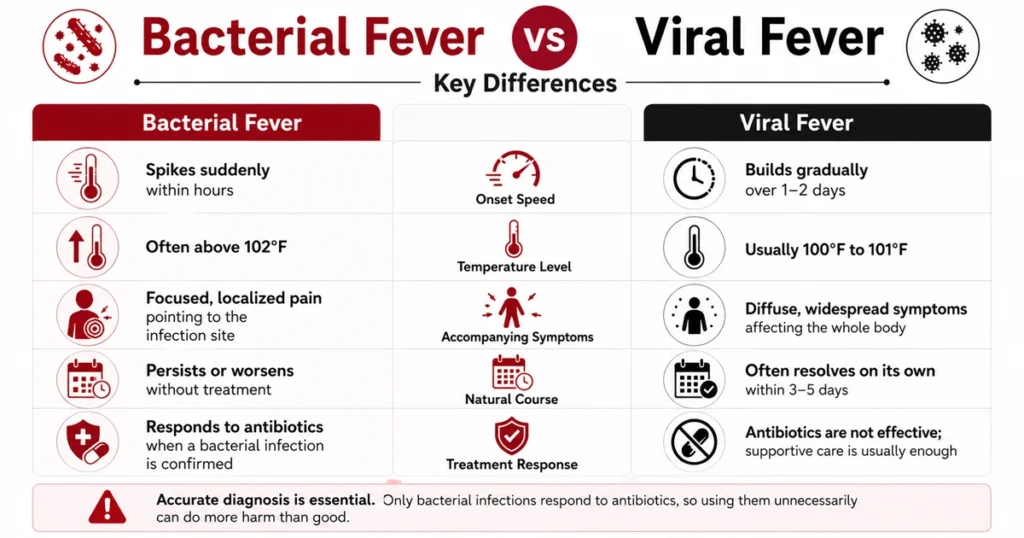
Understanding the difference between a bacterial and viral fever helps you respond appropriately rather than waiting to see what develops.
- Onset Speed: Bacterial fevers typically spike suddenly within hours, while viral fevers usually build more gradually over one to two days.
- Temperature Level: Bacterial infections regularly push temperatures above 102°F, while viral fevers more commonly stay in the 100°F to 101°F range.
- Accompanying Symptoms: Bacterial infections produce focused, localized pain pointing to the infection site, while viral symptoms are typically more diffuse and widespread.
- Natural Course: Viral fevers tend to resolve on their own within three to five days, while bacterial fevers persist or worsen without targeted antibiotic treatment.
- Treatment Response: Only bacterial infections respond to antibiotics, which is why accurate diagnosis before starting any medication is so important.
How Long Does A Bacterial Infection Fever Last?
A properly treated bacterial infection typically reduces fever within 24 to 48 hours of starting the correct antibiotic, though the full treatment course runs 7 to 14 days to fully eradicate the bacteria. Without treatment, bacterial fevers do not resolve naturally and will persist or worsen as bacteria continue to spread.
- Fever usually improves within 24 to 48 hours of starting the right antibiotic
- A full antibiotic course typically runs 7 to 14 days, even after the fever resolves
- Untreated bacterial fevers escalate over time and significantly increase the risk of hospitalization
How To Treat A High Fever From A Bacterial Infection
Treating a bacterial infection fever effectively requires directly targeting the bacteria with the right antibiotic while supporting the body through the recovery process.
- Prescribed Antibiotics: The only treatment that actually eliminates bacterial infections, prescribed after proper diagnosis, and must be completed for the full course, even after symptoms improve.
- Fever Reducers: Acetaminophen or ibuprofen helps lower the temperature and relieve discomfort while the antibiotic works to eliminate the underlying infection.
- Hydration: High fevers increase fluid loss significantly, and consistent hydration is essential to preventing dehydration that can compound the severity of symptoms.
- Rest: The immune system functions best when the body is not expending energy on other demands, making adequate rest a critical part of bacterial infection recovery.
- Diagnostic Testing: Emergency imaging and lab services, including blood cultures, urine testing, and chest imaging, help confirm the infection source and guide effective treatment decisions.
Bacterial Infection Warning Signs That Demand Emergency Care
Certain symptoms alongside a bacterial fever signal that the infection has escalated beyond what can be safely managed at home and requires immediate emergency intervention.
- Fever rising above 103°F in adults or any fever in infants under three months old
- Sudden severe headache with stiff neck and sensitivity to light, which can indicate bacterial meningitis
- Rapid heart rate, difficulty breathing, or confusion alongside high fever are warning signs of sepsis developing from the infection
- A spreading red rash appearing with a high fever, which may indicate a systemic bacterial infection requiring emergency treatment
- Fever that initially responds to treatment but returns or spikes higher within a few days, suggesting the infection is spreading or becoming resistant
If you experience these warning signs, do not wait for symptoms to worsen. Visit an emergency room near me for immediate evaluation and treatment to help prevent serious complications from a bacterial infection.
When To Go To The ER?
A bacterial infection fever that is rising, not responding to medication, or accompanied by serious warning signs should be evaluated in an emergency room without delay. Visit the ER near me immediately if:
- Your temperature exceeds 103°F and is not coming down with medication
- Symptoms are worsening rather than improving after 24 to 48 hours
- Any signs of sepsis are present, such as confusion, rapid heart rate, or difficulty breathing
Knowing the top reasons to go to the emergency room helps you make faster decisions when fever and serious symptoms appear together. Neighbors Emergency Center provides 24/7 evaluation with rapid blood work, cultures, imaging, and intravenous antibiotic therapy for patients who need immediate care.
Bacterial Infection Care At Neighbors Emergency Center
A bacterial infection driving a high fever deserves fast, accurate evaluation and treatment rather than a watchful waiting approach that allows the infection more time to spread. With our ER wait time of 20 minutes, at Neighbors Emergency Center, patients receive thorough diagnostic workups, including blood panels, cultures, urinalysis, and imaging to quickly identify the source of the infection and initiate targeted antibiotic treatment. Whether your symptoms point to strep throat, a kidney infection, bacterial pneumonia, or another source, our team is ready around the clock to evaluate, diagnose, and treat bacterial infections at every level of severity.
Key Takeaways
- Yes, bacterial infections are one of the most common and serious causes of high fever above 101°F to 103°F.
- Your fever’s speed of onset, height, persistence, and accompanying localized pain are the key signals pointing toward a bacterial cause.
- Common bacterial infections causing high fever include strep throat, pneumonia, kidney infections, and skin infections.
- Bacterial fevers do not resolve naturally like viral fevers and require targeted antibiotic treatment to clear.
- Warning signs like neck stiffness, spreading rash, confusion, or fever above 103°F require immediate ER care.
- Untreated bacterial infections can progress to sepsis within hours, making early evaluation the most important protective step you can take.