

If you or someone you love develops a fever, severe headache, or unusual weakness after a mosquito bite, it is natural to feel concerned. Most West Nile virus infections are mild, but some can become serious.
Yes, West Nile virus can be deadly, especially when it causes encephalitis or meningitis. If you develop confusion, stiff neck, severe headache, muscle weakness, or seizures, seek urgent care at an ER in Amarillo, TX without delay.
What Makes West Nile Virus Dangerous?
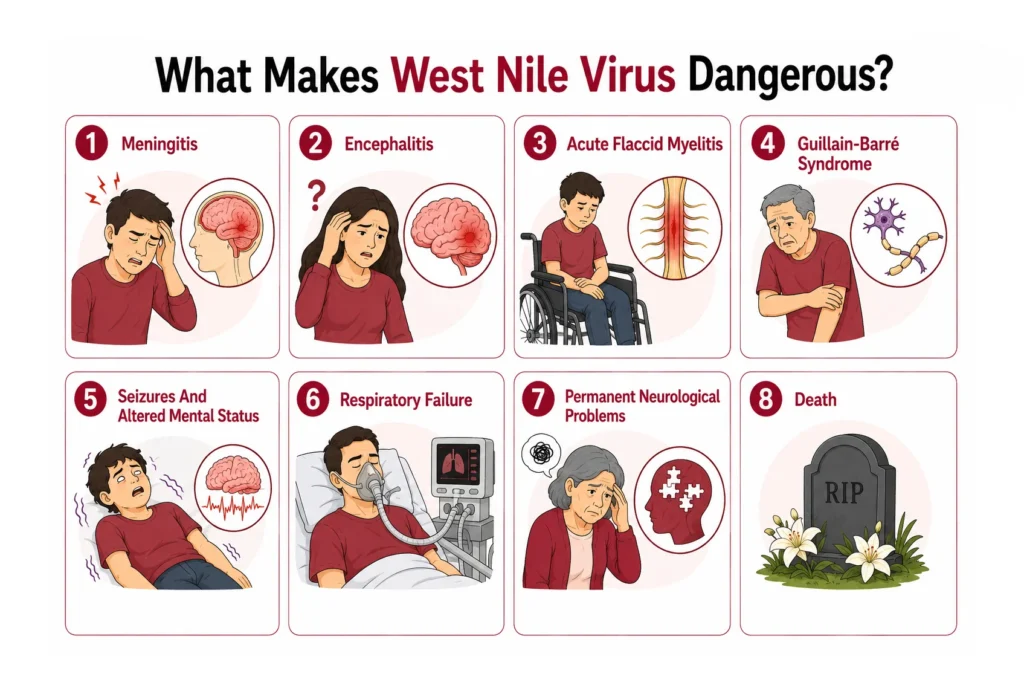
West Nile virus becomes dangerous when it affects the central nervous system rather than causing only a mild, flu-like illness. Less than 1% of infected people develop neuroinvasive disease, but it can lead to meningitis, encephalitis, or acute flaccid myelitis. These complications may cause lasting neurological problems, paralysis, respiratory failure, or death.
Meningitis
West Nile meningitis causes inflammation of the membranes surrounding the brain and spinal cord. It can produce severe headache, fever, neck stiffness, and sensitivity to light. Prompt medical evaluation is important because these symptoms can resemble other serious infections.
Encephalitis
West Nile encephalitis occurs when the virus causes inflammation of the brain. Symptoms may include confusion, altered mental status, tremors, seizures, and problems with coordination or movement. Severe cases can progress to stupor, coma, or long-term neurological impairment.
Acute Flaccid Myelitis
Acute flaccid myelitis affects nerve cells in the spinal cord and can cause sudden limb weakness or paralysis. It may develop within 24–48 hours after illness begins and can affect breathing muscles. Severe cases may require respiratory support in a hospital.
Guillain-Barré Syndrome
West Nile infection can rarely trigger Guillain-Barré syndrome, a condition in which the immune system attacks peripheral nerves. It may cause progressive, symmetrical weakness that starts in the legs and moves upward. Symptoms can develop weeks after the initial infection and may become medically serious.
Seizures And Altered Mental Status
Seizures, confusion, disorientation, and changes in alertness can signal that West Nile virus is affecting the brain. These symptoms are not typical of uncomplicated West Nile fever and require urgent medical assessment. Severe neurological involvement can progress rapidly and may become life-threatening.
Respiratory Failure
Severe neurological disease can interfere with the muscles and nerves responsible for breathing. Acute flaccid myelitis, in particular, may cause neuromuscular respiratory failure. Difficulty breathing, rapidly worsening weakness, or paralysis requires emergency medical attention.
Permanent Neurological Problems
Recovery from severe West Nile disease does not always mean a complete return to normal health. Survivors of encephalitis or acute flaccid myelitis may experience lasting weakness, movement problems, cognitive difficulties, or other neurological deficits. Some patients continue to have symptoms for a year or longer.
Death
Although severe West Nile disease is uncommon, neuroinvasive infection can be fatal. The CDC reports that approximately 10% of people with neuroinvasive disease die, with mortality substantially higher among older adults and people who are severely immunocompromised.
Who Is Most At Risk Of Severe West Nile Virus?
Most people infected with West Nile virus either have no symptoms or develop a mild illness, but certain groups have a greater chance of serious disease. The risk is especially important when infection occurs in someone whose age, immune function, or existing health conditions can make complications more likely. Recognizing these risk factors can help people take concerning symptoms seriously and seek care sooner.
- Adults Age 60 And Older: The risk of neuroinvasive disease increases with age. Adults 60 and older are more vulnerable to hospitalization and severe neurological complications.
- People With Weakened Immune Systems: Immunosuppressive conditions and medications can increase the risk of severe West Nile disease. This includes people receiving certain treatments that suppress immune function.
- People With Cancer: Certain cancers are associated with a greater risk of severe illness, particularly when the disease or its treatment weakens immune defenses.
- People With Diabetes: Diabetes is associated with an increased risk of neuroinvasive West Nile disease. Fever, severe headache, confusion, or unusual weakness should be evaluated promptly.
- People With High Blood Pressure: Hypertension has been identified as a risk factor for severe West Nile disease. The risk may be particularly concerning when it occurs alongside older age or other chronic conditions.
- People With Kidney Disease: Chronic kidney or renal disease is associated with a higher risk of severe West Nile illness. People with kidney disease should take significant or worsening symptoms seriously.
- Organ Transplant Recipients: People who have received an organ transplant may be especially vulnerable because anti-rejection medications suppress the immune system. Severe West Nile infection has been reported in this group.
- People With Alcohol Use Disorder: Alcohol use disorder has been identified among factors associated with severe West Nile disease. Anyone with this risk factor who develops significant symptoms should seek timely medical evaluation.
Dangerous West Nile Virus Symptoms You Should Never Ignore
Most West Nile infections are mild, but severe illness can affect the brain, spinal cord, or nervous system and become life-threatening. Seek immediate medical attention if you develop any of these warning signs:
- High or worsening fever.
- Severe or sudden headache.
- Stiff neck.
- Confusion or disorientation.
- Muscle weakness.
- Tremors or uncontrolled shaking.
- Seizures or convulsions.
- Sudden numbness or paralysis.
- Difficulty breathing.
- Loss of consciousness.
Can You Recover From Severe West Nile Virus?
Yes, some people recover from severe West Nile virus, but recovery can be slow and incomplete. Severe infections affecting the brain or spinal cord may cause lasting weakness, fatigue, movement problems, or cognitive difficulties. The CDC reports that more than 50% of hospitalized patients may have symptoms lasting longer than a year, while some require rehabilitation or long-term care.
When To Go To The ER
Go to the ER if you develop signs that suggest West Nile virus may be affecting your brain, spinal cord, or ability to breathe. Severe or rapidly worsening illness needs prompt evaluation because neurological complications can become life-threatening.
- Trouble breathing or shortness of breath.
- Inability to walk or sudden loss of movement.
- Difficulty speaking or swallowing.
- Inability to stay awake or respond normally.
- Sudden loss of coordination or balance.
- Severe weakness that rapidly worsens.
- New loss of bladder or bowel control.
- Symptoms that rapidly progress over hours.
- Fainting or becoming unresponsive.
- A seizure lasting more than 5 minutes or repeated seizures without recovery.
If you’re experiencing severe or rapidly worsening West Nile symptoms and searching for an ER near me, seek emergency medical care without delay.
West Nile Virus Treatment
There is no specific antiviral treatment for West Nile virus, so care focuses on relieving symptoms and supporting the body while it recovers. Mild illness can often be managed at home, while severe infections may require hospitalization, close monitoring, and supportive care.
- Rest: Get plenty of rest while your body fights the infection and recovers from fever, weakness, and fatigue.
- Stay Hydrated: Drink plenty of fluids to help prevent dehydration, especially if fever, vomiting, or diarrhea is present.
- Fever And Pain Relief: Acetaminophen may help reduce fever, headaches, and body aches. Follow the recommended dosage on the label.
- Hospital Care: Severe West Nile illness may require hospitalization for IV fluids, pain control, nursing care, and close monitoring.
- Breathing Support: Severe neurological disease can affect breathing muscles. Some patients may need oxygen, airway management, or mechanical ventilation.
- Seizure Management: Patients with encephalitis may require close monitoring and treatment if seizures develop or brain inflammation causes complications.
- Neurological Rehabilitation: People left with weakness, paralysis, or other neurological problems may need physical, occupational, or other rehabilitation during recovery.
- No Proven Antiviral Therapy: Drugs such as interferon, immunoglobulin, and corticosteroids have been studied, but none has demonstrated conclusive benefit for treating West Nile disease.
Neighbors Emergency Center For West Nile Virus Care
If you or your loved one develops severe West Nile virus symptoms such as confusion, severe headache, stiff neck, seizures, muscle weakness, or difficulty breathing, don’t wait to seek medical attention. At Neighbors Emergency Center, our experienced emergency physicians are available 24/7 to evaluate concerning symptoms, perform diagnostic testing when needed, and provide prompt supportive treatment. With ER wait times of just 15 minutes, our team provides fast, reliable emergency care when you need it most.
Whether you need IV fluids, fever management, breathing support, or emergency care for neurological complications of West Nile virus, Neighbors Emergency Center is here to provide compassionate, high-quality care. Our team is committed to helping patients receive timely evaluation and appropriate emergency treatment when serious symptoms arise.
H2: Key Takeaways
- West Nile virus can be deadly, especially when it causes encephalitis, meningitis, or other neurological complications.
- Most people have no symptoms or develop a mild illness, but severe disease can affect the brain, spinal cord, and muscles.
- Adults age 60 and older and people with weakened immune systems have a higher risk of severe illness.
- Warning signs include confusion, severe headache, stiff neck, seizures, sudden weakness, paralysis, and difficulty breathing.
- There is no specific antiviral treatment; severe cases may require hospitalization and supportive care.
- Seek emergency care immediately if symptoms become severe or rapidly worsen.
H2: Frequently Asked Questions
H3: Is West Nile Virus Contagious?
West Nile virus is not usually spread directly from person to person. It is primarily transmitted through the bite of an infected mosquito, although rare transmission can occur through blood transfusions, organ transplants, and from mother to baby during pregnancy or breastfeeding.
H3: How Long Does West Nile Virus Last?
Most people who develop West Nile fever recover within several days to a few weeks. However, severe neurological illness can last much longer, and some people may experience persistent weakness, fatigue, or other complications for months or longer.
H3: What Causes West Nile Virus?
West Nile virus is caused by infection with the West Nile virus, which is mainly transmitted to people through the bite of an infected mosquito. Mosquitoes typically become infected after feeding on infected birds.