
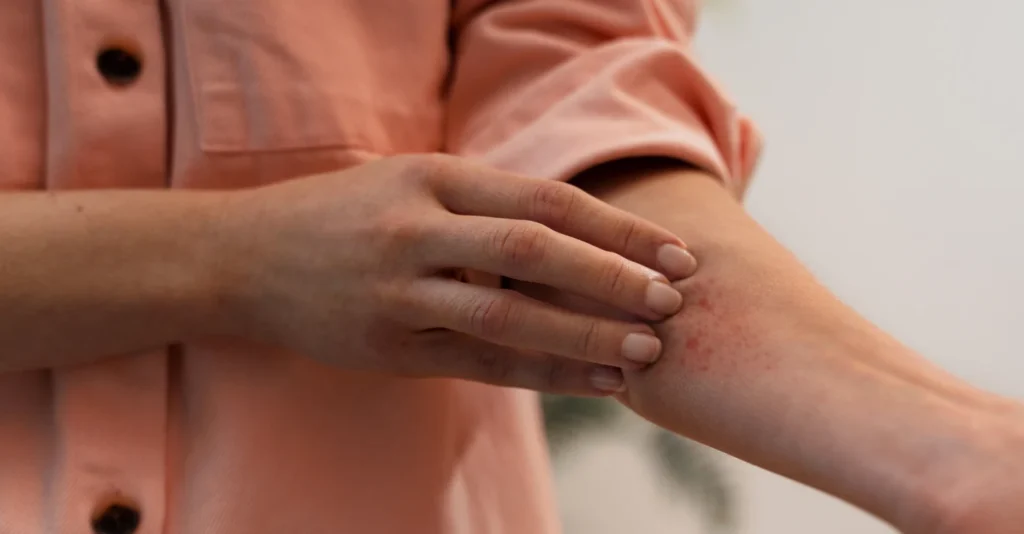
That sudden, annoying itch after a mosquito bite can be hard to ignore, especially when the urge to scratch keeps getting stronger. You may also notice a small, red, swollen bump developing within minutes or hours.
The itching happens because your immune system reacts to proteins in mosquito saliva released into your skin during the bite. But some reactions can become more severe, spread quickly, or cause concerning symptoms that should not be ignored. If you develop significant swelling, trouble breathing, dizziness, or other severe symptoms, seek urgent medical care at our Porter emergency room.
What Is A Mosquito Bite?
A mosquito bite occurs when a female mosquito pierces the skin and injects saliva while feeding on blood. The saliva contains proteins that can trigger an immune response, causing a red, raised, swollen, and itchy bump at the bite site. The reaction may appear within minutes or develop several hours later, depending on a person’s sensitivity and previous exposure. Most reactions are mild, but some people develop larger areas of swelling or more intense itching.
Study: A clinical review reports that more than 70% of people in Central Europe develop an immediate skin reaction after mosquito bites, while 50–60% develop a delayed reaction.
Dangerous Mosquito Bite Symptoms
Most mosquito bites cause only mild itching, redness, and swelling. However, seek prompt medical attention if you develop symptoms suggesting a severe allergic reaction, infection, or a mosquito-borne illness.
- Rapidly increasing or extensive swelling around the bite.
- Widespread hives or an itchy rash beyond the bite area.
- Swelling of the lips, tongue, face, or throat.
- Trouble breathing, wheezing, or difficulty swallowing.
- Dizziness, fainting, confusion, or unusual weakness.
- Fever, severe headache, significant muscle or joint pain, or vomiting after a mosquito bite.
- Increasing redness, warmth, pain, pus, or red streaks spreading from the bite, which may indicate an infection.
- Unusual bleeding, severe abdominal pain, or persistent vomiting, particularly with fever, which can be warning signs of severe dengue.
Why Do Mosquito Bites Itch?
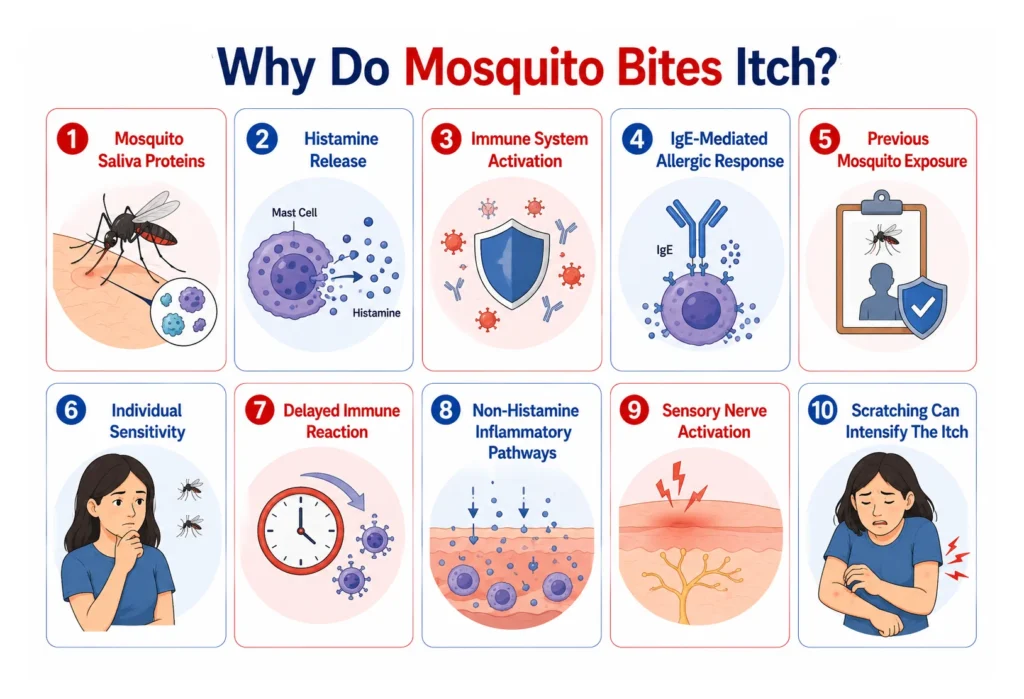
That persistent itch after a mosquito bite can be surprisingly uncomfortable, especially when scratching only seems to make the irritation worse. The itching is your skin reacting to what was introduced during the bite. But why do some bites itch intensely while others barely bother you? The answer involves several immune and skin responses that can vary from person to person.
Mosquito Saliva Proteins
When a female mosquito bites, it injects saliva into the skin while feeding. This saliva contains proteins that your immune system recognizes as foreign substances. The resulting local immune response can produce itching, redness, swelling, and a raised bump.
Histamine Release
Histamine is one of the major chemicals involved in the itching caused by mosquito bites. It can stimulate sensory nerve endings in the skin while also increasing blood flow and fluid movement into surrounding tissue, contributing to itching and swelling.
Immune System Activation
Your immune system responds to mosquito saliva by activating inflammatory cells and chemical signals around the bite. This localized response helps explain why the area may become itchy, red, warm, or swollen.
IgE-Mediated Allergic Response
In some people, antibodies called immunoglobulin E (IgE) recognize proteins in mosquito saliva and activate mast cells in the skin. These cells can release histamine and other inflammatory substances, producing a stronger itchy or swollen reaction.
Previous Mosquito Exposure
Your reaction to mosquito bites can change depending on your previous exposure to mosquito saliva. Repeated exposure can influence how strongly the immune system responds, which is one reason some people develop noticeable itching while others have little reaction.
Individual Sensitivity
People do not all respond to mosquito bites in the same way. Some develop only a small, mildly itchy bump, while others can develop extensive redness, swelling, and intense itching because their immune response is more pronounced.
Delayed Immune Reaction
Not every mosquito-bite reaction happens immediately. Some people develop itching, redness, or swelling several hours later or even the following day as additional immune pathways become involved. These delayed reactions can persist longer than the initial response.
Non-Histamine Inflammatory Pathways
Histamine is important, but it is not the only substance involved in mosquito-bite itching. Research suggests that proteins and inflammatory mediators such as tryptase, leukotrienes, and cytokines can also activate itch-related pathways in the skin.
Sensory Nerve Activation
Itching occurs when specialized sensory nerve endings in the skin detect chemical signals associated with the bite. Histamine and other inflammatory substances can activate these nerves, which then transmit an itch signal through the nervous system.
Scratching Can Intensify The Itch
Scratching may provide brief relief, but repeatedly scratching a mosquito bite can further irritate the skin and increase inflammation. Broken skin can also allow bacteria to enter, raising the risk of a secondary skin infection.
When To Go To The ER For A Mosquito Bite
Most mosquito bites cause temporary itching, redness, and swelling that improve without medical treatment. However, a severe allergic reaction or signs of infection can become dangerous and require prompt evaluation. Do not wait for symptoms to worsen if you develop sudden breathing problems, swelling of the throat, fainting, or other severe symptoms.
- Trouble breathing, wheezing, or shortness of breath.
- Swelling of the lips, tongue, throat, or face.
- Difficulty swallowing or a feeling that your throat is closing.
- Dizziness, fainting, confusion, or severe weakness.
- Rapidly spreading hives or a severe allergic reaction affecting multiple areas of the body.
- Severe or rapidly increasing swelling around the bite.
- Increasing redness, warmth, pain, or swelling accompanied by pus or drainage.
- Red streaks spreading away from the bite or rapidly worsening skin inflammation.
- High fever, severe headache, confusion, or significant weakness after a mosquito bite.
- Persistent vomiting, unusual bleeding, or severe abdominal pain, particularly with fever.
If you develop severe symptoms after a mosquito bite, go to the nearest emergency room for prompt medical evaluation and treatment.
How To Prevent Mosquito Bites
Repeated mosquito bites can be frustrating, especially when the itching and swelling linger. Taking a few simple precautions can significantly reduce your exposure and help protect you from mosquito-borne diseases.
- Use Insect Repellent: Apply an EPA-registered repellent containing DEET, picaridin, or oil of lemon eucalyptus to exposed skin as directed on the label.
- Wear Long Clothing: Wear loose-fitting long-sleeved shirts, long pants, and socks to reduce exposed skin when outdoors.
- Remove Standing Water: Empty water from buckets, flowerpots, toys, and other outdoor containers where mosquitoes can breed.
- Use Window And Door Screens: Keep screens intact to prevent mosquitoes from entering your home.
- Treat Clothing With Permethrin: Permethrin-treated clothing can provide additional protection when spending time in mosquito-prone areas. Do not apply permethrin directly to your skin.
- Use Mosquito Nets: Sleep under a mosquito net when staying in areas with high mosquito activity or when adequate screens are unavailable.
Neighbors Emergency Center For Mosquito Bite Care
If you or your loved one develops a severe reaction to a mosquito bite, such as significant swelling, trouble breathing, dizziness, fainting, widespread hives, or signs of infection, do not wait to seek medical attention. Our experienced emergency physicians are available 24/7 to evaluate concerning symptoms, identify serious allergic or infectious complications, and provide prompt treatment.
Whether you need urgent treatment for a severe allergic reaction, evaluation of a worsening skin infection, or supportive care for concerning symptoms following a mosquito bite, our 24/7 emergency room, Neighbors Emergency Center, is here to provide compassionate, timely emergency care. Our ER wait time is 18 minutes, helping you receive prompt attention when urgent symptoms arise.
Key Takeaways
- Mosquitoes itch because the body’s immune system reacts to proteins in mosquito saliva.
- Common reactions include itching, redness, swelling, and a small raised bump.
- Scratching can worsen irritation and increase the risk of a skin infection.
- Severe swelling, breathing difficulty, dizziness, widespread hives, or signs of infection require urgent medical attention.
- Using insect repellent, wearing protective clothing, and removing standing water can help prevent mosquito bites.
Frequently Asked Questions
How To Get Rid Of Mosquito Bites?
Most mosquito bites improve on their own. Wash the area, apply a cold compress, and avoid scratching. An anti-itch cream or oral antihistamine may help relieve persistent itching.
How Long Do Mosquito Bites Last?
Most mosquito bites improve within a few days, although itching, redness, or swelling can sometimes last longer. A bite that continues worsening or develops pus, increasing pain, or spreading redness should be medically evaluated.
How To Keep Mosquitoes Away?
Use insect repellent, wear long sleeves and pants, keep doors and windows screened, and remove standing water around your home. These measures can reduce mosquito exposure and bites.
How To Make Mosquito Bites Stop Itching?
Apply a cold compress and avoid scratching the bite. Calamine lotion, hydrocortisone cream, or an oral antihistamine may help relieve itching when used according to the product directions.
Can You Be Allergic To Mosquito Bites?
Yes, some people can have an allergic reaction to mosquito bites, causing unusually large swelling, redness, itching, or blistering. In rare cases, a severe reaction can cause hives, swelling of the throat, difficulty breathing, dizziness, or fainting, which requires immediate emergency care.