

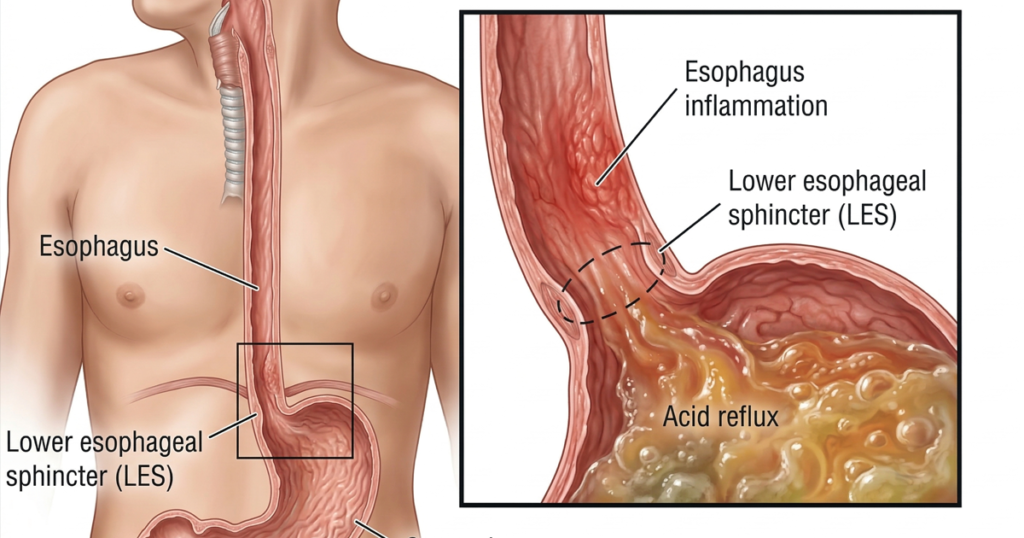
Acid reflux is a common digestive condition that occurs when stomach acid flows backward into the esophagus, the tube connecting the throat to the stomach. This happens when the lower esophageal sphincter (LES), a ring-shaped muscle that normally prevents stomach contents from moving upward, becomes weak or relaxes inappropriately. When acid enters the esophagus, it can irritate the lining and cause discomfort, including heartburn, chest pressure, nausea, or a sour taste in the mouth. Occasional reflux often happens after large meals or trigger foods and is generally mild.
However, frequent or persistent episodes may signal gastroesophageal reflux disease (GERD), a chronic condition that can damage the esophagus if untreated. Recognizing the signs of acid reflux early allows individuals to manage symptoms effectively. Timely medical care is important for preventing complications and improving digestive health. In severe or persistent cases, seeking evaluation at an emergency room Amarillo can ensure prompt treatment and prevent further complications.
What Happens During Acid Reflux?
Normally, a muscle called the lower esophageal sphincter (LES) acts as a valve between the esophagus and the stomach. It opens to allow food into the stomach and closes to prevent stomach acid from moving back upward.
When the LES becomes weak or relaxes at the wrong time, stomach acid can travel back into the esophagus. Because the esophagus does not have the same protective lining as the stomach, this acid can cause irritation, burning sensations, and inflammation.
What does Acid Reflux Feel like?
Acid reflux symptoms can vary from mild discomfort to more severe digestive irritation. Common symptoms include:
- Burning sensation in the chest (heartburn)
- Sour or bitter taste in the mouth
- Regurgitation of food or acid
- Nausea after eating
- Difficulty swallowing
- Chronic cough
- Hoarseness or sore throat
- Feeling of food stuck in the throat
These symptoms may occur after eating, when lying down, or during the night.
What Causes an Acid Reflux?
Several factors can contribute to acid reflux by increasing stomach pressure or weakening the lower esophageal sphincter.
- Weak Lower Esophageal Sphincter: The most common cause of acid reflux is a weakened or relaxed LES. When this muscle fails to close properly, stomach acid can easily move back into the esophagus.
- Certain Foods and Beverages: Some foods are known to trigger acid reflux symptoms. These may include spicy foods, fried foods, chocolate, caffeine, citrus fruits, carbonated drinks, and alcohol.
- Overeating: Large meals increase pressure in the stomach, making it easier for acid to move upward into the esophagus.
- Obesity or Increased Abdominal Pressure: Excess weight or pressure around the abdomen can push stomach contents upward and trigger reflux symptoms.
- Pregnancy: Hormonal changes and increased abdominal pressure during pregnancy can make acid reflux more common.
For individuals experiencing frequent or severe acid reflux, consulting Amarillo Hospitals can provide access to specialized care, accurate diagnosis, and effective treatment plans to manage symptoms and prevent complications.
How Long Does Acid Reflux Last?
Acid reflux duration can vary depending on the trigger, eating habits, and overall digestive health. Some episodes resolve quickly, while others may last longer depending on the cause.
- Mild Acid Reflux: Mild reflux episodes may last only a few minutes and often improve on their own as digestion continues and stomach acid levels decrease.
- Reflux After Large Meals: Symptoms may last for several hours after eating large or heavy meals because the stomach takes longer to digest food and empty its contents.
- Reflux Triggered by Certain Foods: Spicy, fatty, or acidic foods can trigger reflux that lasts longer than usual, especially if the digestive system is sensitive to these foods.
- Nighttime Acid Reflux: Symptoms may last longer when lying down because gravity no longer helps keep stomach acid in the stomach, allowing it to move upward more easily.
- Frequent or Chronic Reflux (GERD): If acid reflux occurs multiple times a week or persists for long periods, it may indicate gastroesophageal reflux disease (GERD), which may require medical treatment to prevent complications.
How to get Rid of Acid Reflux
Treatment for acid reflux depends on the severity and frequency of symptoms. Most cases can be managed with lifestyle adjustments and medications, while persistent or severe symptoms may require professional care.
Lifestyle Changes
Many people can control acid reflux with simple lifestyle adjustments:
- Eating smaller meals
- Avoiding trigger foods
- Not lying down immediately after eating
- Maintaining a healthy weight
- Elevating the head while sleeping
- Limiting alcohol and caffeine
Over-the-Counter Medications
Several over-the-counter medications can help relieve acid reflux symptoms by reducing or neutralizing stomach acid. These treatments are commonly used for short-term symptom control.
- Antacids: Antacids work by neutralizing stomach acid and providing quick relief from heartburn and mild reflux symptoms. They are often used for occasional discomfort after meals.
- H2 Blockers: H2 blockers reduce the amount of acid the stomach produces, helping relieve symptoms for a longer period compared to antacids.
- Proton Pump Inhibitors (PPIs): PPIs significantly decrease stomach acid production and are often used for more frequent or persistent reflux symptoms.
- Proper Usage Guidance: Although these medications are available without a prescription, they should be used according to recommended instructions or medical guidance to ensure safe and effective treatment.
These medications are commonly used for symptom relief but should be taken according to medical guidance.
Prescription Treatments
If symptoms become frequent or severe, a healthcare provider may recommend:
- Stronger Medications: Prescription-strength H2 blockers or PPIs.
- Medical Evaluation: Tests to rule out complications like GERD or esophagitis.
Professional care ensures proper symptom management and helps prevent long-term damage to the esophagus. For children experiencing severe or persistent acid reflux, visiting an emergency room for pediatrics can provide specialized, prompt care tailored to young patients.
Acid Reflux vs Heartburn vs GERD
Although these terms are often used interchangeably, they describe different aspects of the same digestive issue.
- Acid Reflux: Acid reflux is the actual process where stomach acid flows backward from the stomach into the esophagus. The esophagus is not designed to handle stomach acid, so when this happens, it can irritate or inflame the lining.
- Heartburn: Heartburn is the symptom, not the condition itself. It is the burning sensation in the chest or throat caused by acid reflux. When stomach acid irritates the esophagus, the nerve endings sense this irritation, producing the familiar burning feeling.
- GERD (Gastroesophageal Reflux Disease): GERD is a chronic or persistent form of acid reflux. It occurs when acid reflux happens frequently, typically more than two times per week, and starts to affect daily life or cause complications.
When to Go to the ER for Acid Reflux
Most acid reflux episodes can be managed at home or with routine medical care. However, emergency evaluation may be necessary if symptoms resemble those of a heart attack or if severe complications occur.
You should seek emergency care if acid reflux symptoms are accompanied by:
- Intense chest pain
- Trouble breathing
- Severe or persistent vomiting
- Sudden swallowing difficulty
- Symptoms that do not improve with medication
Emergency physicians can quickly evaluate whether symptoms are related to acid reflux or another serious medical condition.
Care For Acid Reflux Concerns At Neighbors Emergency Center
At Neighbors emergency center, patients with acid reflux receive prompt and specialized care to address both acute and chronic symptoms. Doctors evaluate heartburn, regurgitation, nausea, and swallowing difficulties while considering triggers like diet, obesity, or lifestyle factors. Advanced diagnostics, including pH monitoring and endoscopy, help identify inflammation, esophagitis, or other complications. Personalized treatment strategies may include medications, dietary recommendations, and behavioral adjustments to minimize reflux episodes. Ongoing monitoring ensures long-term symptom management and reduces the risk of esophageal damage. Emergency care is prioritized for patients with severe chest pain or persistent vomiting. Timely professional intervention helps restore comfort, improve digestion, and prevent complications.
Key Takeaway
- Acid reflux occurs when stomach acid flows back into the esophagus, causing irritation and discomfort.
- Occasional reflux is common, especially after large meals or trigger foods, and usually resolves quickly.
- Frequent or persistent reflux may indicate GERD, a chronic condition requiring medical evaluation.
- Lifestyle changes, such as smaller meals and avoiding trigger foods, can help manage symptoms.
- Over-the-counter and prescription medications can reduce acid and provide relief when needed.
- Severe symptoms like chest pain, difficulty swallowing, or vomiting blood require immediate medical attention.
FAQs
Can you die from acid reflux in your sleep?
Acid reflux itself is rarely fatal, but severe cases of GERD can cause complications like esophageal damage or respiratory issues. Nighttime reflux increases the risk of choking, aspiration, or worsening asthma. Proper management and medical care can significantly reduce these risks.
What to drink for acid reflux?
Water is the best drink to help dilute stomach acid and reduce irritation. Non-citrus herbal teas like chamomile or ginger can soothe the digestive tract. Avoid caffeinated, carbonated, or acidic drinks that may trigger reflux symptoms.
Can acid reflux cause chest pain?
Yes, acid reflux can cause burning chest pain, often mistaken for heart-related pain. This occurs when stomach acid irritates the esophagus lining. If chest pain is severe, sudden, or accompanied by shortness of breath, seek medical attention immediately.