

Pneumonia is a serious lung infection that can affect people of all ages, but many assume it always comes with a fever. In reality, you can have pneumonia without a fever, especially in older adults, infants, or people with weakened immune systems. This makes the condition more difficult to recognize early, which can delay treatment.
Pneumonia can range from mild to life-threatening depending on the cause and the person’s overall health. In some cases, symptoms may be subtle at first, such as fatigue, coughing, or shortness of breath, without the classic sign of fever. Because of this, it is important to know the warning signs and when to seek urgent care or visit an emergency room such as an emergency room Amarillo or a facility like Neighbors Emergency Center.
What Is Pneumonia?
Pneumonia is an infection that inflames the air sacs in one or both lungs. These air sacs may fill with fluid or pus, making it difficult to breathe properly and reducing oxygen intake.
It can be caused by:
- Bacteria
- Viruses
- Fungi
The severity depends on the type of infection, the patient’s age, and overall health condition. Some cases require only outpatient treatment, while others require hospitalization or emergency care.
Can You Have Pneumonia Without a Fever?
Yes, you can have pneumonia without a fever. While fever is a common symptom, it is not always present. According to medical sources, pneumonia without fever is more likely in:
- Older adults
- Newborns and young children
- People with weakened immune systems
- Individuals taking certain medications that suppress immune response
Because fever may be absent, it is important to pay attention to other symptoms such as persistent cough, fatigue, chest discomfort, or shortness of breath. If symptoms worsen or breathing problems develop, seeking urgent care for high fever and infection symptoms or emergency evaluation may help prevent serious complications.
What Are the Symptoms of Pneumonia Without Fever?
Even without a fever, pneumonia can still cause noticeable symptoms. Because these symptoms can develop gradually, pneumonia may sometimes be mistaken for a common cold or mild respiratory infection. These may include:
- Persistent cough (dry or with mucus)
- Shortness of breath
- Chest pain when breathing or coughing
- Fatigue or weakness
- Confusion (especially in older adults)
- Rapid breathing or heart rate
- Loss of appetite
Does Pneumonia Always Cause Fever?
No, pneumonia does not always cause fever. While fever is a common symptom in many cases, its presence depends on how strongly the immune system responds to the infection.
In bacterial pneumonia, fever is more likely and can be high and persistent. In viral pneumonia or in high-risk individuals such as older adults, infants, or people with weakened immune systems, fever may be mild or even completely absent. In these situations, the infection can still be serious even without a noticeable temperature rise.
Because of this, it is important not to rely on fever alone when identifying pneumonia. Other symptoms like cough, chest pain, fatigue, and shortness of breath should also be closely monitored. If symptoms worsen or breathing becomes difficult, seeking urgent care for infection treatment is important for early diagnosis and timely medical support.
How Do You Get Pneumonia?
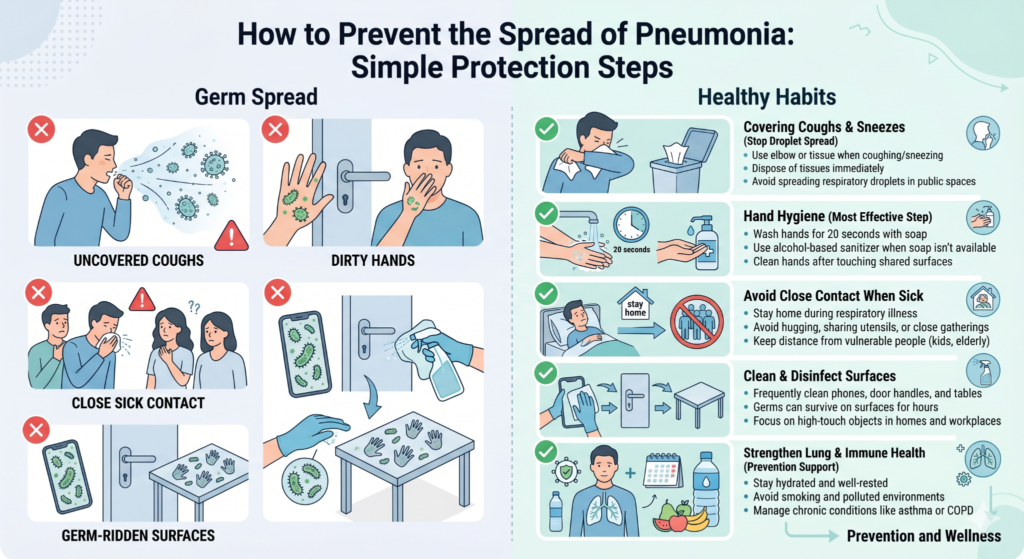
Pneumonia spreads when germs enter the lungs. Understanding how pneumonia spreads helps reduce the risk of infection. This can happen through:
- Breathing in airborne droplets from coughing or sneezing
- Aspiration (inhaling food, liquid, or vomit into the lungs)
- Contact with contaminated surfaces followed by touching the face
Risk factors include:
- Weak immune system
- Chronic illnesses (like asthma or COPD)
- Smoking
- Recent viral infections such as the flu
Pneumonia is more likely to develop when the body’s defenses are weakened, allowing germs to travel deeper into the respiratory system. In children, symptoms can worsen quickly, so early evaluation at a pediatrics ER may be necessary if breathing difficulties or severe symptoms appear.
How to Treat Pneumonia?
Treatment for pneumonia depends on the underlying cause (bacterial, viral, or fungal) and how severe the infection is. The goal is to eliminate the infection, support breathing, and prevent complications such as low oxygen levels or lung damage.
1. Antibiotics
Antibiotics are used when pneumonia is caused by bacteria. These medications help kill the infection and prevent it from spreading further into the lungs. Doctors may prescribe oral antibiotics for mild cases, while more severe infections may require intravenous (IV) antibiotics in a hospital setting. It is important to complete the full course of antibiotics even if symptoms start improving early.
2. Antiviral or Antifungal Medication
If pneumonia is caused by a virus or fungus, antibiotics will not work. Instead, antiviral medications may be used for certain viral infections, while antifungal drugs are prescribed for fungal pneumonia. These treatments help control the infection and reduce inflammation in the lungs, but recovery may take longer compared to bacterial pneumonia.
3. Rest and Fluids
Rest is essential because pneumonia can make the body weak and fatigued. Staying hydrated helps thin mucus in the lungs, making it easier to cough it out. Drinking plenty of fluids also prevents dehydration, especially if fever, sweating, or reduced appetite is present. Proper rest allows the immune system to focus on fighting the infection.
4. Oxygen Therapy
In more serious cases, pneumonia can make it difficult for the lungs to absorb enough oxygen. Oxygen therapy is used to improve oxygen levels in the blood and help with breathing. This may be given through a mask or nasal tubes in a hospital or emergency setting. It is especially important for patients experiencing shortness of breath or low oxygen saturation.
5. Hospital or ER Care
Severe pneumonia may require hospitalization for close monitoring and intensive treatment. This can include IV medications, oxygen support, and continuous vital sign monitoring. Patients with high fever, chest pain, confusion, or breathing difficulty may need immediate evaluation. In rapidly worsening cases, visiting an emergency facility ensures quick diagnosis and life-saving care.
When Pneumonia Becomes an Emergency
Pneumonia can become dangerous if symptoms escalate. You should seek emergency care if you experience:
- Severe shortness of breath
- Chest pain that worsens with breathing
- Confusion or disorientation
- Bluish lips or fingernails
- Persistent cough with worsening symptoms
- Low oxygen levels
In urgent situations, visiting a 24/7 emergency room such as Neighbors Emergency Center or a nearby emergency room Amarillo facility can be critical for stabilizing the condition. For children showing signs of severe infection or breathing difficulty, a pediatrics ER is especially important for immediate care.
Key Takeaway
- Yes, pneumonia can occur without a fever
- Symptoms may still include cough, fatigue, and breathing difficulty
- High-risk groups may not show typical fever symptoms
- Pneumonia can become serious quickly if untreated
- Emergency care is needed for severe or worsening symptoms
FAQs
What could be mistaken for pneumonia?
Pneumonia is often mistaken for flu, bronchitis, or a bad cold. These conditions share symptoms like cough, fatigue, and congestion. Only medical evaluation and imaging can confirm pneumonia accurately.
What are the first warning signs of pneumonia?
Early signs include persistent cough, chest discomfort, and shortness of breath. You may also feel tired, weak, or develop mild fever or chills. Symptoms often worsen over time instead of improving.
How do you know if you have pneumonia without a fever?
Look for symptoms like ongoing cough, chest pain, and breathing difficulty. Fatigue and rapid breathing can also be key warning signs. A medical exam is needed since pneumonia can occur without fever.