

Many men begin to notice subtle changes in their urinary habits as they get older, often brushing them off as “normal aging.” It can feel uncomfortable, even a little worrying, when sleep is interrupted or daily routines start revolving around bathroom visits.
These changes may seem minor at first, but they can gradually affect confidence, comfort, and quality of life. Ignoring persistent urinary symptoms can sometimes delay important medical evaluation, especially when symptoms start progressing or becoming disruptive. When urinary symptoms become severe, painful, or begin interfering with daily activities, seeking prompt care at our emergency room Pearland, Texas, can help ensure timely evaluation and appropriate treatment.
Understanding Prostate Enlargement
Benign prostatic hyperplasia (BPH) is a non-cancerous condition where the prostate gradually enlarges, most often due to age-related hormonal changes. As it grows, it can press against the urethra and interfere with normal urine flow, leading to progressive urinary difficulties if not assessed in time.
According to the U.S. National Institute of Diabetes and Digestive and Kidney Diseases (NIDDK), BPH affects about 5%–6% of men aged 40–64 and increases to nearly 30%–33% in men aged 65 and older, highlighting its strong link with aging.
Enlarged Prostate Symptoms That You Should Never Ignore
- Frequent urination, especially at night (nocturia).
- Weak or slow urine stream that starts and stops.
- Difficulty starting urination or straining to pass urine.
- Feeling of incomplete bladder emptying after urination.
- Sudden, urgent need to urinate that is hard to control.
If you or a loved one experience these symptoms, seek prompt medical attention. Our emergency room provides expert care for a wide range of urological conditions.
What Causes Enlarged Prostate
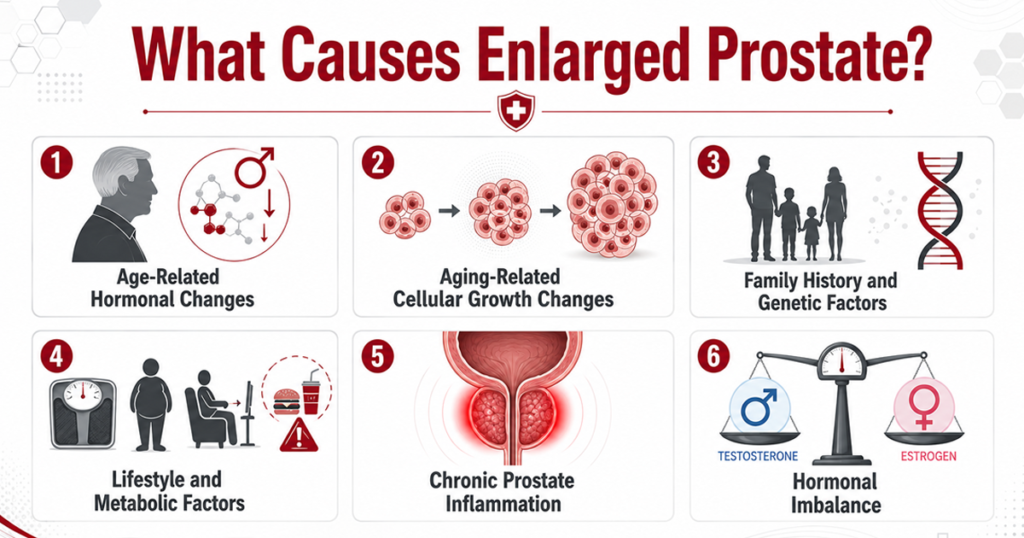
The exact cause of prostate enlargement is not fully known, but it is strongly associated with aging. It develops gradually and is influenced by hormonal, genetic, and lifestyle factors. These slow changes can cause the prostate to grow over time. As it enlarges, it may begin to affect normal urinary function and lead to symptoms.
Age-Related Hormonal Changes
As men age, the balance of hormones such as testosterone and dihydrotestosterone (DHT) begins to shift. These hormonal changes can gradually stimulate prostate cell growth, leading to enlargement over time. This is considered the most common underlying factor behind BPH and explains why the condition is rare in younger men. The process is slow and progressive, often developing over many years without immediate warning signs.
Symptoms
- Frequent urination, especially at night.
- Weak or interrupted urine stream.
- Difficulty starting urination.
- Sudden urge to urinate.
- Feeling of incomplete bladder emptying.
Aging-Related Cellular Growth Changes
With aging, prostate cells may become more sensitive to growth signals in the body, leading to gradual tissue expansion. This is a natural biological process where cell turnover and regulation become less efficient over time. As the prostate slowly enlarges, it can begin to place pressure on the urethra, affecting normal urine flow. These changes usually progress slowly and vary in severity among individuals.
Symptoms
- Frequent nighttime urination.
- Straining during urination.
- Weak urine stream.
- Dribbling after urination.
- Urinary urgency.
Family History and Genetic Factors
Genetics can also play a role in the likelihood of developing an enlarged prostate. Men with a family history of BPH are more likely to experience similar changes earlier or with greater severity. This suggests that inherited traits may influence how the prostate responds to hormonal and aging-related changes. While genetics cannot be changed, awareness can help with earlier monitoring and prevention strategies.
Symptoms
- Increased frequency of urination.
- Difficulty starting urine flow.
- Weak or slow stream.
- Nocturia (night-time urination).
- Sensation of incomplete emptying.
Lifestyle and Metabolic Factors
Certain lifestyle and metabolic conditions, such as obesity, lack of physical activity, and insulin resistance may contribute to prostate enlargement risk. These factors can influence inflammation and hormone balance in the body, which may indirectly affect prostate tissue growth. While not the primary cause, they can worsen symptoms and accelerate progression in some men.
Symptoms
- Frequent urination during the day.
- Sudden urgency to urinate.
- Weak urine flow.
- Interrupted urination stream.
- Nocturia.
Chronic Prostate Inflammation
Low-grade or long-term inflammation of the prostate may also contribute to tissue enlargement over time. This inflammation can be caused by repeated urinary tract irritation, infections, or metabolic stress. It may promote cellular changes that slowly affect prostate size and urinary function. Many men may not notice inflammation until urinary symptoms begin.
Symptoms
- Burning or discomfort during urination.
- Frequent urination with urgency.
- Weak urine flow.
- Pelvic or lower abdominal discomfort.
- Nocturia.
Hormonal Imbalance
Along with testosterone changes, aging can also lead to a relative increase in estrogen activity in men. This imbalance may contribute to prostate cell growth and tissue sensitivity over time. The interaction between estrogen and androgens is believed to play a supporting role in prostate enlargement. These hormonal shifts occur gradually and are influenced by overall metabolic health.
Symptoms
- Increased urinary frequency.
- Weak urine stream.
- Night-time urination.
- Difficulty initiating urination.
- Incomplete bladder emptying.
When To Go To The ER
An enlarged prostate can sometimes cause sudden severe symptoms that need urgent medical care. Delaying treatment may lead to complications like urinary retention or infection. Seek emergency help if symptoms become intense or urine flow stops completely.
- Complete inability to urinate despite strong urges.
- Severe lower abdominal pain or swelling.
- Blood in urine or dark, clotted urine.
- Fever, chills, or signs of urinary tract infection.
- Sudden worsening of urinary symptoms with discomfort.
If you or a loved one experience any of these warning signs, visit the closest emergency room near me for immediate evaluation and treatment.
Enlarged Prostate Treatment
Treatment for an enlarged prostate depends on symptom severity and impact on daily life. Mild cases may be managed with lifestyle changes, while moderate to severe symptoms may require medication or procedures. Our 24/7 emergency room provides prompt evaluation and care for urgent urinary concerns.
Lifestyle Changes
For mild symptoms, doctors often recommend lifestyle changes as the first approach to manage discomfort. These adjustments can help reduce bladder pressure and improve urinary control naturally. Small changes in daily habits can make symptoms more manageable over time. Consistency is important for noticeable improvement.
Medications
When symptoms are moderate, doctors may prescribe medications to relax prostate muscles or reduce prostate size. Alpha-blockers help improve urine flow, while 5-alpha reductase inhibitors may shrink the prostate over time. These medicines are selected based on individual symptoms and health conditions. They should always be taken under medical supervision.
Minimally Invasive Procedures
If medications are not effective, doctors may recommend minimally invasive procedures to relieve urinary blockage. These treatments help improve urine flow by reducing pressure on the urethra. They are usually done without major surgery and allow quicker recovery. The choice of procedure depends on the patient’s condition and the doctor’s evaluation.
Surgical Treatments
In severe cases, surgery may be recommended by a urologist when other treatments fail to provide relief. Procedures like TURP remove excess prostate tissue to improve urine flow. Surgery is typically reserved for advanced symptoms or complications. It is performed under specialist care to ensure safety and long-term improvement.
Enlarged Prostate Care When You Need It Most
An enlarged prostate can affect comfort, sleep, and daily life, but timely evaluation helps prevent complications and improve urinary health. At Neighbors Emergency Center, we provide prompt assessment, diagnostic testing, and effective care for prostate-related urinary symptoms. Whether symptoms are mild or severe, we are ready to relieve discomfort and guide you toward the right treatment for lasting improvement.
Key Takeaway
- Enlarged prostate (BPH) is a common, non-cancerous condition in older men that can still affect urinary health and daily comfort.
- Early symptoms include weak urine flow, frequent urination, and difficulty starting urination.
- If it progresses, it may lead to urinary retention, infections, or blood in the urine that need urgent medical care.
- Risk factors include aging, hormonal changes, obesity, diabetes, and family history.
- Treatment options range from lifestyle changes and medications to minimally invasive procedures or surgery.
- Seek emergency care if you cannot urinate, have severe pain, fever, or blood in urine.
Frequently Asked Questions
What Is The Best Treatment For Enlarged Prostate?
The best treatment depends on symptom severity. Mild cases are managed with lifestyle changes, while doctors often prescribe medications like alpha-blockers. In more advanced cases, procedures such as TURP or minimally invasive options may be recommended.
Does An Enlarged Prostate Affect A Man Sexually?
Yes, it can in some cases, but not everyone is affected. It may lead to erectile issues, reduced libido, or ejaculation changes. Some effects may also be related to medications used for treatment.