

A runny nose may seem like a small problem at first, but it can quickly become frustrating when it won’t stop. Constant dripping, frequent tissues, interrupted sleep, and difficulty focusing can make even simple daily activities uncomfortable. If you’re searching for how to stop a runny nose, you’re likely looking for fast, reliable relief.
Although most runny noses improve on their own, they can sometimes signal a more serious illness that needs prompt medical attention. If symptoms are severe, last longer than expected, or occur with high fever, breathing problems, severe facial pain, or bloody nasal drainage, don’t ignore them. Knowing when to seek care can help prevent complications. Visit our Lubbock emergency room for urgent evaluation when symptoms become concerning.
Runny Nose You Should Never Ignore
While many cases of a runny nose are caused by temporary viral infections or allergies, certain symptoms may indicate a more serious medical condition. A persistent or severe runny nose accompanied by other concerning symptoms should never be dismissed, especially if it interferes with breathing or is associated with significant illness. Seek prompt medical evaluation if you experience any of the following:
- High fever that persists or worsens.
- Difficulty breathing or shortness of breath.
- Severe facial pain or swelling.
- Thick green or yellow nasal drainage lasting more than 10 days.
- Bloody nasal discharge that continues or is heavy.
- Clear watery drainage after a head injury.
- Severe headache with neck stiffness.
- Confusion, extreme drowsiness, or difficulty waking up.
- Symptoms that worsen after initially improving.
- Symptoms lasting longer than 10–14 days without improvement.
If your runny nose occurs with a high fever that does not improve, seek medical evaluation for proper treatment for high fever and to identify any underlying infection.
How To Stop A Runny Nose Effectively
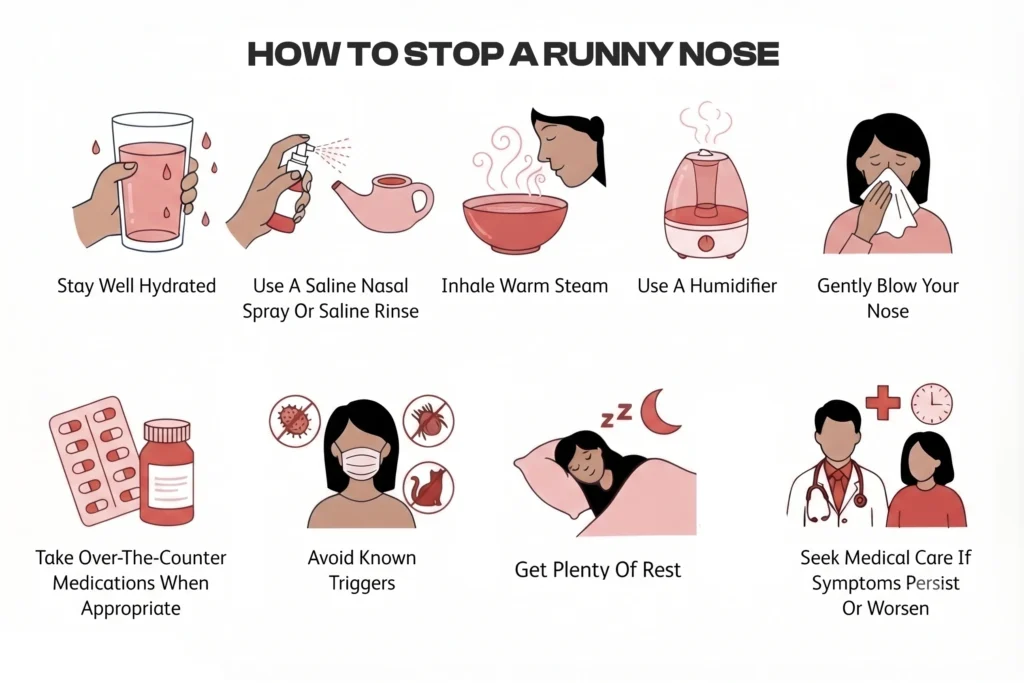
A runny nose often improves with the right combination of supportive care and treating the underlying cause. The best approach depends on whether your symptoms are related to a cold, allergies, irritants, dry air, or another medical condition. Taking appropriate steps early can reduce nasal drainage, improve comfort, and help you recover faster while lowering the risk of complications. If symptoms become severe or continue despite treatment, medical evaluation is recommended.
Stay Well Hydrated
Drinking plenty of fluids helps keep nasal mucus thin, making it easier for your body to clear excess secretions naturally. Water, clear broths, warm herbal teas, and electrolyte drinks can all support hydration. Proper fluid intake also prevents dehydration, which may worsen congestion and irritation. Limiting alcohol and excessive caffeine may further help maintain adequate hydration.
Use A Saline Nasal Spray Or Saline Rinse
Saline nasal sprays and rinses help wash away allergens, viruses, irritants, and thick mucus without medication. Regular saline irrigation keeps the nasal passages moist and may reduce inflammation, making breathing more comfortable. Sterile, distilled, or previously boiled water should always be used when preparing saline rinses. This method is generally safe for both adults and children when used correctly.
Inhale Warm Steam
Breathing warm, moist air can temporarily soothe irritated nasal tissues and loosen mucus. Steam from a warm shower or a bowl of hot water may help reduce nasal discomfort and make drainage easier. While steam does not cure the underlying illness, it can provide short-term symptom relief. Use caution to avoid burns, particularly when caring for young children.
Use A Humidifier
Dry indoor air can irritate the lining of the nose and worsen a runny nose. Running a cool-mist humidifier adds moisture to the air, helping keep nasal passages comfortable and reducing irritation. The humidifier should be cleaned regularly to prevent mold and bacteria buildup. Maintaining indoor humidity between 30% and 50% is generally recommended.
Gently Blow Your Nose
Blowing your nose gently removes excess mucus without causing unnecessary pressure inside the sinuses. Forceful blowing can push mucus deeper into the sinus cavities and potentially worsen discomfort. Use soft tissues and wash your hands afterward to reduce the spread of viruses. If one nostril is blocked, clear each side gently rather than blowing forcefully.
Take Over-The-Counter Medications When Appropriate
Depending on the cause of your symptoms, certain over-the-counter medications may help reduce nasal drainage. Antihistamines can be useful for allergy-related runny noses, while some decongestants may provide temporary relief from nasal congestion. These medications should be used according to label directions and may not be suitable for everyone, including people with high blood pressure or certain medical conditions. Consult a healthcare provider if you’re unsure which option is appropriate.
Avoid Known Triggers
If allergies or environmental irritants are causing your runny nose, reducing exposure can significantly improve symptoms. Common triggers include pollen, dust mites, pet dander, cigarette smoke, strong perfumes, and chemical fumes. Keeping windows closed during high pollen seasons, using air filters, and cleaning regularly may help minimize exposure. Identifying your personal triggers is an important step toward long-term symptom control.
Get Plenty Of Rest
Adequate rest allows your immune system to work more effectively while your body recovers. Sleep also helps reduce stress on the body, which may shorten the duration of viral illnesses in some individuals. Avoid overexertion while symptoms are active, and prioritize consistent sleep. Combining rest with hydration and supportive care often leads to faster recovery.
Seek Medical Care If Symptoms Persist Or Worsen
If your runny nose lasts longer than expected, becomes increasingly severe, or is accompanied by concerning symptoms, professional medical evaluation is important. Persistent symptoms may indicate bacterial sinusitis, nasal polyps, chronic allergies, or another condition requiring specific treatment. Early diagnosis can help prevent complications and ensure appropriate care. Never ignore symptoms such as difficulty breathing, severe facial swelling, or neurological changes.
When To Go To The ER
Most runny noses can be managed at home, but some symptoms require immediate emergency care because they may signal a serious infection, severe allergic reaction, meningitis, significant sinus complications, or another medical emergency. Visit the nearest emergency room immediately if you experience:
- Difficulty breathing or severe shortness of breath.
- High fever with confusion or extreme drowsiness.
- Severe facial swelling or intense facial pain.
- Clear fluid leaking from the nose after a head injury.
- Severe headache with neck stiffness.
- Persistent nosebleeds that are difficult to stop.
- Blue lips or fingertips.
- Chest pain.
- Symptoms of a severe allergic reaction, including swelling of the face, tongue, or throat.
- A runny nose in a young infant accompanied by poor feeding, breathing difficulty, or lethargy.
If your runny nose is accompanied by severe symptoms such as breathing difficulty, high fever, confusion, or worsening pain, visit the nearest emergency room for prompt evaluation and treatment.
Neighbors Emergency Center For Runny Nose Treatment
While most cases improve with supportive care, a runny nose with difficulty breathing, high fever, severe facial pain, confusion, or worsening symptoms may require immediate medical attention. If you’re searching for how to stop a runny nose due to severe or persistent symptoms, don’t delay care. Visit our 24/7 emergency room for prompt evaluation and treatment.
At Neighbors Emergency Center, our experienced emergency physicians are available 24/7 to diagnose the underlying cause of persistent or severe nasal symptoms and provide prompt treatment. Whether your runny nose is caused by a serious infection, severe allergies, sinus complications, or another medical condition, we offer advanced diagnostic testing and personalized emergency care to help you recover safely and as quickly as possible.
Key Takeaways
- A runny nose is often caused by viral infections, allergies, or irritants, but persistent or severe symptoms should not be ignored.
- Staying hydrated, using saline nasal sprays, inhaling steam, and getting enough rest can help relieve symptoms and support recovery.
- Seek medical evaluation if your runny nose lasts longer than 10–14 days, worsens, or is accompanied by severe facial pain, high fever, or thick nasal discharge.
- Difficulty breathing, clear nasal drainage after a head injury, severe headache with neck stiffness, or confusion are emergency warning signs that require immediate medical care.
- Early treatment of the underlying cause can help prevent complications and promote a faster recovery.
Frequently Asked Questions
Can Teething Cause A Runny Nose?
Teething itself is not proven to cause a runny nose. While babies may drool more during teething, a persistent runny nose is more likely due to a viral infection, allergies, or another illness. If your child has a fever, thick nasal discharge, difficulty breathing, or symptoms that persist, they should be evaluated by a healthcare provider.
How Long Does A Runny Nose Last?
The duration of a runny nose depends on its cause. A runny nose from the common cold usually improves within 7 to 10 days, while allergy-related symptoms may continue as long as exposure to the trigger persists. If your runny nose lasts more than 10–14 days, worsens, or is accompanied by severe symptoms such as high fever, facial pain, or difficulty breathing, seek medical evaluation promptly.