

A dry cough is a persistent, tickling irritation in the throat that doesn’t produce mucus. Unlike a wet cough, which clears phlegm or congestion from the airways, a dry cough can feel relentless, leaving the throat sore and the chest tight. For many, it starts as a minor annoyance but can escalate, interfering with sleep, concentration, and daily activities.
Triggers for a dry cough vary widely, from simple irritants like dust and smoke to underlying medical conditions such as asthma or acid reflux. Its duration can also vary: some people experience a short-term cough lasting a week, while others may endure a chronic cough for months. Understanding the symptoms, causes, and potential urgency is essential. In more severe cases, seeking prompt medical care at a Porter emergency room may be necessary, as ignoring a dry cough can sometimes delay treatment for serious conditions. This article explores how a dry cough feels, its common symptoms, causes, treatment options, and when it can become dangerous.
How Does a Dry Cough Feel
A dry cough often begins as a persistent tickle or scratch in the throat. Unlike productive coughs, it rarely clears the chest of mucus, leaving an irritating sensation that worsens during talking, laughing, or lying down. People frequently describe a dry cough as:
- Tickling or scratchy throat: A constant irritation that triggers coughing fits.
- Throat tightness: Mild discomfort or a feeling of constriction.
- Fatigue from coughing: Frequent coughing can be exhausting, especially at night.
The discomfort can lead to frustration and sleep disturbances. While a mild dry cough may be manageable, persistent or worsening symptoms should prompt attention, as they may indicate an underlying medical issue.
Dry Cough Symptoms You Mustn’t Ignore
The symptoms of a dry cough go beyond the obvious irritation. Recognizing accompanying signs helps determine whether a medical evaluation is needed. Common symptoms include:
- Persistent tickling in the throat that triggers involuntary coughing.
- Worsening cough at night, often disrupting sleep.
- No mucus or phlegm production, distinguishing it from wet coughs.
- Throat soreness due to frequent coughing.
- Mild chest discomfort, caused by repeated coughing episodes.
- Hoarseness or voice changes if the cough persists.
In some cases, a dry cough may be accompanied by additional warning signs, such as shortness of breath, wheezing, or fever. Monitoring the progression of symptoms is essential for timely care, and if these symptoms become severe or sudden, visiting the nearest emergency room is strongly recommended.
What Causes a Dry Cough
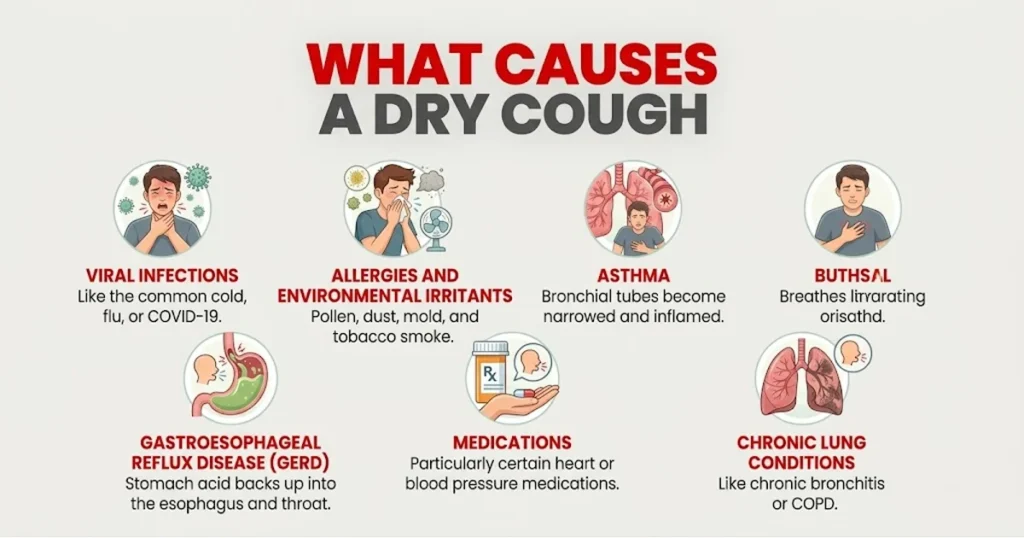
Dry coughs can arise from a variety of causes, ranging from minor irritants to serious medical conditions. Understanding these triggers helps in both prevention and treatment.
1. Viral Infections
Common colds, influenza, and other viral infections often begin with a dry cough. In many cases, the cough lingers even after other symptoms, like fever or congestion, have subsided. This post-viral cough may persist for weeks due to residual airway inflammation.
2. Allergies and Environmental Irritants
Exposure to allergens such as pollen, dust, mold, or pet dander can trigger a dry cough. Environmental irritants like cigarette smoke, pollution, and strong odors may also inflame the airways. People with seasonal allergies or sensitivity to irritants often experience a dry cough during flare-ups.
3. Asthma
Asthma can present as a dry, persistent cough, especially in children. Known as cough-variant asthma, it often occurs at night or after physical activity. The cough may be accompanied by wheezing or shortness of breath, indicating airway inflammation.
4. Gastroesophageal Reflux Disease (GERD)
Acid reflux can irritate the throat, leading to a chronic dry cough. This type of cough is often worse at night or after meals and may be accompanied by a sour taste in the mouth or heartburn. Treating the underlying reflux often improves the cough.
5. Medications
Certain medications, particularly ACE inhibitors used for blood pressure, can trigger a persistent dry cough. This side effect may appear weeks or months after starting the medication. Patients should consult their doctor before stopping any prescribed treatment.
6. Chronic Lung Conditions
Conditions like chronic bronchitis or interstitial lung disease may cause a dry cough. Persistent coughing in these cases requires professional evaluation to prevent complications and manage underlying disease.
How to Get Rid of a Dry Cough?
The approach to treating a dry cough depends on the underlying cause. Effective management combines lifestyle adjustments, home remedies, and medical interventions.
Home Remedies
For mild cases of a dry cough, simple home remedies can provide effective relief and help soothe throat irritation naturally.
- Hydration: Drinking warm fluids like herbal teas or water soothes throat irritation.
- Honey: A teaspoon of honey may reduce coughing frequency.
- Steam inhalation: Helps calm airway irritation and reduce throat dryness.
- Humidifiers: Adding moisture to indoor air prevents throat dryness.
Over-the-Counter Medications
For persistent or bothersome dry coughs, over-the-counter medications can help ease symptoms and provide temporary relief.
- Cough suppressants: Contain dextromethorphan to reduce the cough reflex.
- Lozenges or throat sprays: Provide temporary relief from throat irritation.
Medical Treatments
For dry coughs caused by underlying medical conditions, targeted treatments prescribed by a healthcare professional can be highly effective.
- Asthma medications: Inhalers or corticosteroids reduce airway inflammation and help control cough-variant asthma.
- Acid reflux therapy: Proton pump inhibitors or lifestyle adjustments manage GERD-related cough and prevent throat irritation.
- Antihistamines: Help relieve coughs triggered by allergies by reducing inflammation and irritation in the airways.
- Review medications: Your doctor may adjust or switch medications, such as ACE inhibitors, if they are contributing to a persistent dry cough.
When a Cough Is Dangerous
Most dry coughs are usually mild and resolve on their own, but in some cases, it can signal a serious underlying problem that requires immediate attention. A cough that persists for more than three weeks, is accompanied by severe chest pain or shortness of breath, or produces blood or rust-colored sputum should never be ignored.
Additional warning signs include high fever, night sweats, unexplained weight loss, wheezing, or persistent changes in the voice. Recognizing these symptoms early is crucial, as they may indicate infections, chronic lung conditions, or other serious medical issues, and prompt medical intervention can prevent complications and protect long-term health.
When to Go to the ER for a Dry Cough
Immediate medical attention is necessary if a dry cough is accompanied by any of the following serious warning signs:
- Difficulty breathing or gasping for air: Struggling to breathe or feeling short of breath, especially if sudden or severe, can indicate a critical respiratory issue that requires urgent evaluation.
- Chest pain that radiates to the arm or jaw: This could be a sign of a cardiac problem, such as a heart attack, and should never be ignored. Prompt ER care can be life-saving.
- Severe, persistent cough that disrupts daily life: If coughing prevents you from sleeping, working, or performing normal activities, it may point to an underlying condition that needs immediate medical attention.
- Signs of infection, such as high fever, confusion, or blue lips: These symptoms suggest that the body is fighting a serious infection or that oxygen levels are dangerously low. Early intervention is critical.
- Sudden worsening of symptoms in patients with pre-existing heart or lung conditions: Individuals with asthma, COPD, heart disease, or other chronic illnesses are at higher risk of complications, and any sudden escalation in symptoms warrants an urgent visit.
In all these situations, seeking immediate care at a facility such as Neighbors Emergency Center ensures rapid assessment, accurate diagnosis, and timely treatment, potentially preventing life-threatening complications.
Key Takeaways
- A dry cough is non-productive and can range from mild irritation to a chronic, disruptive symptom.
- Common causes include viral infections, allergies, asthma, GERD, and certain medications.
- Home remedies, OTC treatments, and medical therapies help manage symptoms depending on the cause.
- Persistent coughs, severe symptoms, or breathing difficulties require prompt medical attention.
- Prevention involves avoiding triggers, staying hydrated, and managing chronic conditions.
FAQs
How to stop a dry cough
Stopping a dry cough depends on its cause. Home remedies like warm fluids, honey, steam inhalation, and throat lozenges can provide relief. Over-the-counter suppressants or medical treatment may be needed if the cough persists.
How to avoid a dry cough at night
A dry cough often worsens at night due to lying down or post-nasal drip. Elevating the head, using a humidifier, and avoiding irritants like smoke or dust can reduce nighttime coughing. Managing allergies or acid reflux also helps prevent nocturnal flare-ups.
How long does a dry cough last
The duration of a dry cough varies with its cause. Acute coughs from viral infections usually resolve within 1–3 weeks, while chronic coughs from conditions like asthma, GERD, or allergies may persist for months. Persistent or worsening coughs should be evaluated by a doctor.
Summary
A dry cough can be more than an annoyance; it signals irritation or underlying health issues. Understanding how it feels, its symptoms, causes, and treatments empowers you to manage it effectively. While most dry coughs are self-limiting, persistent, severe, or worsening cases require medical evaluation. By addressing triggers, using remedies, and seeking timely care, you can reduce discomfort and prevent complications.