

If you are dealing with burning urination, constant urge to pee, or lower abdominal discomfort, it can feel worrying and uncomfortable. Many people start wondering, Do Bladder Infections Heal on Their Own and hope the symptoms will simply go away without treatment. In some mild cases, the body may temporarily reduce symptoms, but most bladder infections (UTIs) require proper medical treatment to fully clear the bacteria.
What makes this condition concerning is that symptoms like painful urination, cloudy or strong-smelling urine, pelvic pressure, and frequent urination can worsen quickly if ignored. A bladder infection left untreated can spread to the kidneys, leading to more serious illness. If you notice fever, back pain, nausea, or blood in the urine, seek prompt care at our emergency room Baytown, TX, for urgent evaluation and treatment.
What Is A Bladder Infection?
A bladder infection (cystitis) is a urinary tract infection caused when bacteria enter the bladder and lead to inflammation. It causes burning urination, frequent urge to urinate, lower abdominal pain, and cloudy or foul-smelling urine. If untreated, it can spread to the kidneys and become more serious.
A PubMed study reports that Escherichia coli causes about 80% of uncomplicated community-acquired UTIs, while Staphylococcus saprophyticus causes 10% to 15%. This shows most bladder infections come from a few common bacteria, helping guide treatment.
Bladder Infection Symptoms That Are Dangerous
- Fever or chills.
- Pain in the lower back or side.
- Blood in urine (hematuria).
- Nausea or vomiting.
- Severe burning during urination.
- Strong or worsening pelvic pain.
- Symptoms lasting more than 48 hours.
These signs may indicate a urological emergency requiring prompt medical evaluation and treatment to prevent complications.
Also read: What Causes Kidney Infections
Can A Bladder Infection Heal Itself?
No. In most cases, a bladder infection does not fully heal on its own. While symptoms may sometimes seem to improve temporarily as the body fights the infection, the bacteria often remain in the urinary tract and can return or worsen. Without proper antibiotic treatment, there is also a risk that the infection spreads to the kidneys, leading to more serious complications.
What Happens If A Bladder Infection Is Left Untreated?
If a bladder infection is not treated, the bacteria can continue to multiply and the infection may worsen over time. It can spread from the bladder to the kidneys, leading to a more serious condition called pyelonephritis. This may cause high fever, back or side pain, nausea, and vomiting. In severe cases, untreated infections can enter the bloodstream and become life-threatening. Early treatment helps prevent complications and supports faster recovery.
What Causes Bladder Infections
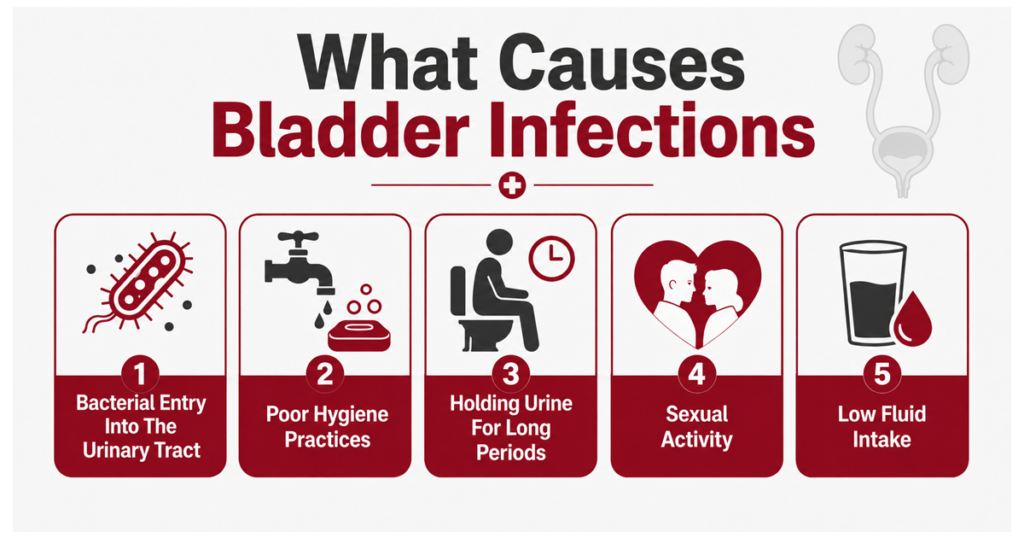
Bladder infections occur when bacteria enter the urinary tract and multiply in the bladder, leading to irritation and infection. This can happen due to several everyday factors that many people may not notice, making it a common condition. Understanding these triggers helps in both prevention and faster recovery.
- Bacterial Entry Into The Urinary Tract: Most infections begin when bacteria like E. coli enter through the urethra and reach the bladder, where they grow and cause infection.
- Poor Hygiene Practices: Improper wiping or poor genital hygiene can allow bacteria to spread toward the urinary tract.
- Holding Urine For Long Periods: Delaying urination gives bacteria more time to multiply in the bladder instead of being flushed out.
- Sexual Activity: Intercourse can introduce bacteria into the urinary tract, increasing infection risk, especially in women.
- Low Fluid Intake: Not drinking enough water reduces urine flow, making it harder to flush out bacteria naturally.
When To Go To The ER
A bladder infection usually improves with timely treatment, but in some cases it can become serious and require emergency care. If symptoms worsen quickly or show signs that the infection may have spread to the kidneys or bloodstream, do not wait for a clinic visit.
- Fever or chills.
- Severe pain in the lower back or side.
- Blood in urine.
- Nausea or vomiting.
- Confusion or extreme weakness.
- Rapidly worsening urinary symptoms.
If any of these symptoms occur, seek immediate care at our Baytown ER for prompt evaluation and treatment.
How Can You Treat A Bladder Infection
Treating a bladder infection focuses on reducing bacteria, relieving symptoms, and preventing complications. Most cases improve quickly with proper care, but delaying treatment can make the infection worse. A healthcare provider may suggest different options depending on severity and medical history.
- Antibiotic Therapy (Most Common Treatment): Most doctors recommend prescription antibiotics to kill the bacteria causing the infection. These are usually taken for a few days and help clear symptoms effectively.
- Over-The-Counter Pain Relief: Most doctors recommend OTC pain relievers like ibuprofen or acetaminophen to reduce pain, burning, and fever. These help with symptoms but do not cure the infection.
- Increased Fluid Intake: Drinking more water helps flush bacteria from the urinary tract and supports faster recovery.
- Urinary Alkalinizers: Some doctors recommend these to reduce urine acidity and ease burning during urination.
- Warm Compress Or Heating Pad: Heat applied to the lower abdomen can help reduce pain and pelvic pressure.
Bladder Infection Care At Neighbors Emergency Center
If you are wondering Do Bladder Infections Heal on Their Own, it is important to know that waiting for symptoms to resolve can be risky. At Neighbors Emergency Center, we provide fast evaluation and treatment for bladder infections, especially when burning urination, pelvic pain, or frequent urination becomes severe or persistent. Early care at our 24/7 emergency room helps prevent complications and supports quicker recovery.
At Neighbors Emergency Center, our emergency team focuses on quick diagnosis and effective treatment for bladder infections and related urinary symptoms. If you are experiencing worsening discomfort, fever, or signs of a spreading infection, our facility ensures timely medical attention to help relieve symptoms and prevent further health issues.
Key Takeaways
- Bladder infections are usually caused by bacteria entering the urinary tract and often require medical treatment.
- Most cases do not fully heal on their own and can worsen if ignored.
- Common symptoms include burning urination, frequent urge to urinate, pelvic pain, and cloudy urine.
- Untreated infections can spread to the kidneys and become serious or life-threatening.
- Early diagnosis and antibiotics are the most effective way to treat and prevent complications.
- Risk factors include poor hygiene, low fluid intake, holding urine, and sexual activity.
- Severe symptoms like fever, back pain, or blood in urine require urgent medical care.
Frequently Asked Questions
What Causes A Bladder Infection In Men?
Bladder infections in men happen when bacteria enter the urinary tract and multiply in the bladder. Risk factors include an enlarged prostate, urinary retention, kidney stones, catheter use, and structural urinary tract issues. A weakened immune system can also make infections more likely and harder to clear.
Is A Bladder Infection An STD?
No, a bladder infection is not a sexually transmitted disease. It is usually caused by bacteria, most commonly from the digestive tract, entering the urinary system. However, sexual activity can increase the risk by pushing bacteria closer to the urethra.
Will A Bladder Infection Cause Nausea?
Yes, nausea can occur in some cases, especially if the infection becomes more severe or spreads to the kidneys. It may also be accompanied by fever, vomiting, or back and side pain. These symptoms often require prompt medical attention.
Can A Bladder Infection Affect Your Period?
A bladder infection does not directly change the menstrual cycle. However, it can cause pelvic discomfort that may feel similar to period cramps. In some cases, illness and stress from infection may slightly affect cycle timing.
Can a UTI Cause Nausea?
Yes, a UTI can cause nausea, especially if the infection becomes more severe or spreads to the kidneys. Nausea may occur along with fever, vomiting, back pain, or chills and should be evaluated promptly.