

Seeing someone suddenly become unresponsive or behave unusually can be frightening and confusing. Understanding the different types of seizures is important because they can affect awareness, movement, behavior, or sensations in different ways. Recognizing the warning signs can help individuals and families respond quickly and seek appropriate medical care.
Although some seizures are brief and resolve on their own, others can be life-threatening emergencies. A seizure lasting more than five minutes, repeated seizures without recovery, or breathing difficulties require immediate medical attention. Prompt evaluation at an emergency room in Livingston is important because seizures can sometimes be linked to serious underlying medical conditions.
What Is A Seizure?
A seizure is a sudden surge of abnormal electrical activity in the brain that temporarily affects how a person moves, behaves, feels, or remains aware. It can range from brief lapses in attention to more noticeable shaking or stiffness. The symptoms depend on which part of the brain is involved and how widely the electrical disturbance spreads, and some episodes may require seizure treatment emergency care.
According to the CDC, about 3.4 million people in the United States live with epilepsy, a condition in which recurrent seizures occur. Studies referenced by the CDC show that epilepsy affects roughly 1% of the U.S. population, highlighting that seizure disorders are more common than many people realize.
Seizure Types
Seizures are broadly categorized based on how and where they begin in the brain, and how much of the brain is affected during an episode. Understanding these categories helps clinicians identify the underlying cause and choose the right treatment approach. While symptoms may look similar externally, the brain activity involved can vary significantly. This is why proper medical evaluation is essential rather than self-diagnosis.
Types Of Seizures In Adults
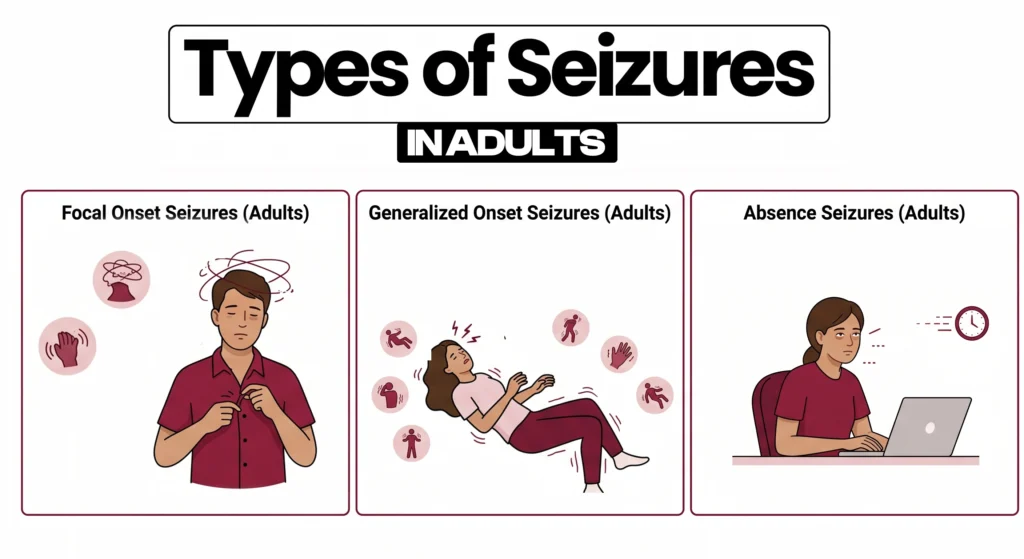
In adults, seizures may present differently depending on brain health, age-related conditions, or underlying neurological disorders. Some people may experience warning signs before a seizure, while others may have sudden onset without notice. Adults are also more likely to develop seizures due to stroke, head injury, brain tumors, or metabolic issues. Because symptoms can overlap with other conditions, medical assessment at an emergency room near me is important for accurate diagnosis.
Focal Onset Seizures (Adults)
Focal onset seizures begin in one specific area of the brain and may affect awareness, movement, or sensations. In adults, they are often linked to structural brain issues such as stroke, trauma, or scarring. Symptoms can include unusual sensations, involuntary movements, or altered awareness. These seizures may stay localized or spread to involve larger areas of the brain.
Generalized Onset Seizures (Adults)
Generalized onset seizures involve both sides of the brain from the beginning of the episode. They often cause loss of consciousness or full-body symptoms such as stiffening or jerking. Adults may experience confusion or fatigue afterward as the brain recovers. These seizures are commonly associated with genetic factors or widespread brain dysfunction.
Absence Seizures (Adults)
Absence seizures are brief episodes of reduced awareness that may appear as staring spells. In adults, they are less common but can still occur, sometimes being mistaken for daydreaming or inattention. These episodes usually last only a few seconds and resolve quickly. They may interfere with daily activities if they occur frequently.
Types Of Seizures In Children
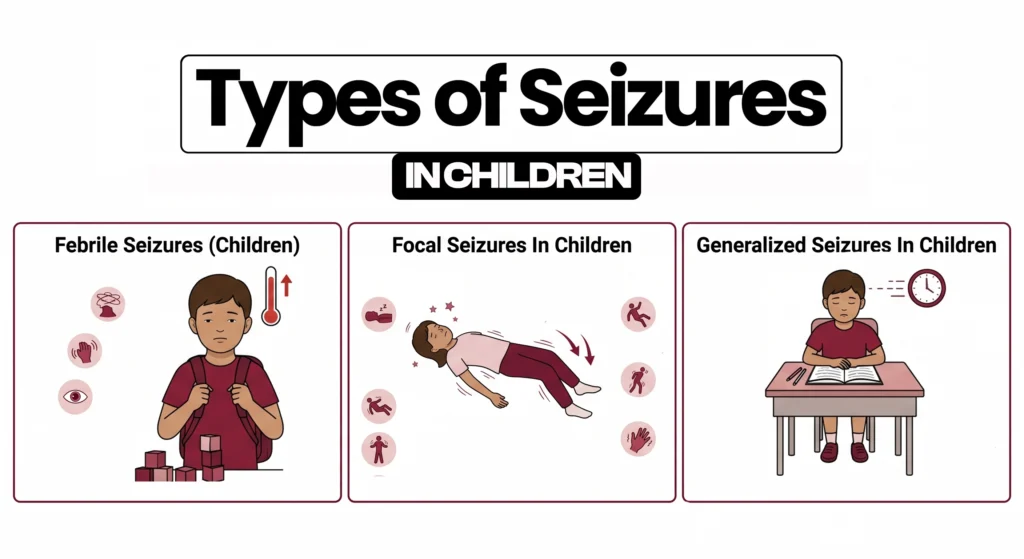
Seizures in children can appear differently compared to adults because their brains are still developing. Some seizures may be subtle and go unnoticed by parents or teachers. Common triggers include fever, infections, or genetic factors affecting brain activity. Early recognition is important to prevent complications and support healthy brain development.
Febrile Seizures (Children)
Febrile seizures are triggered by a sudden spike in body temperature, usually due to infection. They are most common in children between 6 months and 5 years of age. Although frightening, they are often short and do not usually cause long-term brain damage. However, medical evaluation is still important after the first episode.
Focal Seizures In Children
Focal seizures in children start in one area of the brain and may cause twitching, sensory changes, or behavioral arrest. Depending on the brain region affected, symptoms can vary widely. Some children remain aware, while others may seem confused or unresponsive. These seizures may indicate an underlying neurological condition that requires investigation.
Generalized Seizures In Children
Generalized seizures in children affect both sides of the brain and often involve stiffening, jerking, or loss of awareness. They may occur suddenly and can be triggered by fever, genetic conditions, or metabolic imbalances. After the seizure, children may feel tired, confused, or sleepy. Proper diagnosis helps guide long-term treatment and management.
When To Go To The ER
Most seizures stop on their own within a few minutes, but some situations require immediate emergency medical care. A seizure can become dangerous if it lasts too long, happens repeatedly, affects breathing, or occurs with serious symptoms. Seeking urgent ER care with short ER wait time can help prevent complications and identify the underlying cause.
- The seizure lasts longer than 5 minutes or does not stop on its own.
- Another seizure happens soon after the first one without the person fully recovering.
- The person has trouble breathing, turns blue, or does not regain consciousness after the seizure.
- The seizure happens for the first time and the cause is unknown.
- The person is injured during the seizure, such as hitting their head or having a serious fall.
- The seizure occurs during pregnancy or in someone with a serious medical condition.
- The seizure happens in water, causing a risk of drowning or breathing problems.
- The person remains confused, unusually sleepy, or has changes in behavior for a long time after the seizure.
How To Treat Seizures
Treating seizures requires proper medical evaluation to understand the cause, type, and severity before starting any plan. Many people feel distressed after an episode, but timely care can greatly reduce future risks and complications. Management focuses on controlling abnormal brain activity and preventing recurrence through tailored medical support.
- Anti-Seizure Medications: These help control abnormal electrical activity in the brain. Most doctors recommend drugs like levetiracetam or valproate based on individual needs to reduce seizure frequency.
- Emergency Rescue Medications: Used to stop ongoing or prolonged seizures quickly. Most doctors recommend benzodiazepines such as lorazepam or diazepam in urgent care settings.
- Ketogenic Diet Therapy: A supervised high-fat, low-carb diet that may help reduce seizures, especially in children. It supports brain energy balance in drug-resistant cases.
- Vagus Nerve Stimulation (VNS): A device implanted to send mild electrical signals to the brain. It may reduce seizure frequency when medications are not fully effective.
- Epilepsy Surgery: Considered in severe cases where seizures originate from one brain area. It is only recommended after detailed neurological testing.
- Lifestyle Control: Proper sleep, stress management, and avoiding triggers like alcohol or flashing lights can help reduce seizure risk. These are used alongside medical treatment.
Seizure Care At Neighbors Emergency Center
If you or a loved one experiences a seizure, especially a prolonged seizure, repeated episodes, or symptoms that feel unusual or severe, seeking immediate medical care is important. Fast evaluation can help identify the cause, manage symptoms, and reduce the risk of serious complications. At Neighbors Emergency Center, the medical team provides prompt assessment and treatment for seizure-related concerns with timely care when you need it most.
Understanding the different types of seizures can help you recognize warning signs and know when emergency support is needed. Neighbors Emergency Center is equipped to evaluate seizure symptoms, perform necessary testing, and guide patients toward the appropriate next steps for treatment and follow-up care.
Key Takeaways
- Seizures happen due to sudden abnormal electrical activity in the brain and can affect movement, awareness, behavior, or sensations.
- The main seizure types are classified based on where they begin in the brain and how they affect the body.
- Seizures can occur differently in adults and children, with causes and symptoms varying by age.
- Emergency care is needed if a seizure lasts longer than 5 minutes, repeats without recovery, or causes breathing problems.
- Treatment options may include medications, lifestyle changes, procedures, and other therapies based on the person’s condition.
- Recognizing seizure warning signs early can help prevent complications and ensure timely medical care.
Frequently Asked Questions
What Causes Seizures?
Seizures can happen due to several factors, including epilepsy, brain injuries, strokes, infections, tumors, genetic conditions, fever, low blood sugar, or certain medications. Sometimes, doctors may not find a clear cause even after testing.
What Does A Seizure Feel Like?
The experience of a seizure depends on the type and part of the brain involved. Some people may feel unusual sensations, confusion, sudden fear, or a strange feeling before a seizure, while others may experience shaking, loss of awareness, or temporary unconsciousness.
What To Do If Someone Has A Seizure?
Keep the person safe by moving nearby objects away and helping them lie on their side if possible. Do not hold them down or put anything in their mouth. Seek emergency help if the seizure lasts more than 5 minutes, repeats, or the person has breathing problems.