
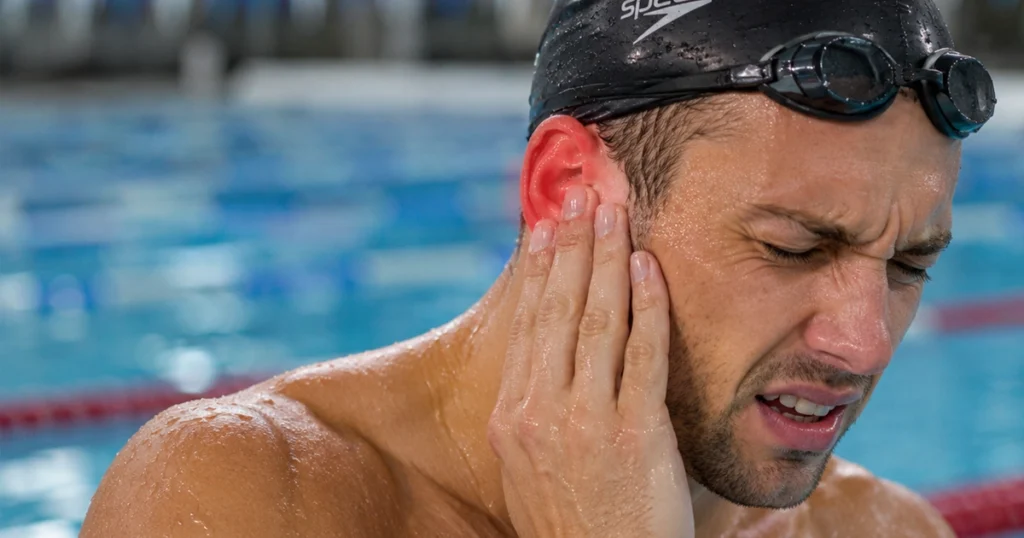
Watching your child come home from the pool complaining about ear discomfort or dealing with ear pain after a weekend of swimming can be frustrating and concerning. Many people try to ignore the irritation at first, but Swimmer’s Ear (Outer Ear Infections) can quickly interfere with daily activities and make even simple tasks uncomfortable.
What may seem like a minor ear problem can sometimes worsen rapidly, leading to severe pain, swelling, drainage, or hearing changes. Recognizing when symptoms become more serious is important. Seek prompt care at our emergency room, Crosby, TX, to prevent complications and receive timely treatment.
What Is Swimmer’s Ear?
Swimmer’s Ear, medically known as otitis externa, is an infection or inflammation of the outer ear canal. It often develops when moisture becomes trapped in the ear, allowing bacteria to grow. Although commonly linked to swimming, it can also occur after bathing, sweating, or irritation of the ear canal. Prompt treatment can help prevent worsening pain and complications.
Study Insight: A peer-reviewed study published in the NIH’s PubMed Central (PMC) reported that approximately 10% of people experience otitis externa (swimmer’s ear) at some point in their lifetime, highlighting how common this condition is worldwide.
Also read: Ear Infections in Babies and Children
What Causes Swimmer’s Ear?
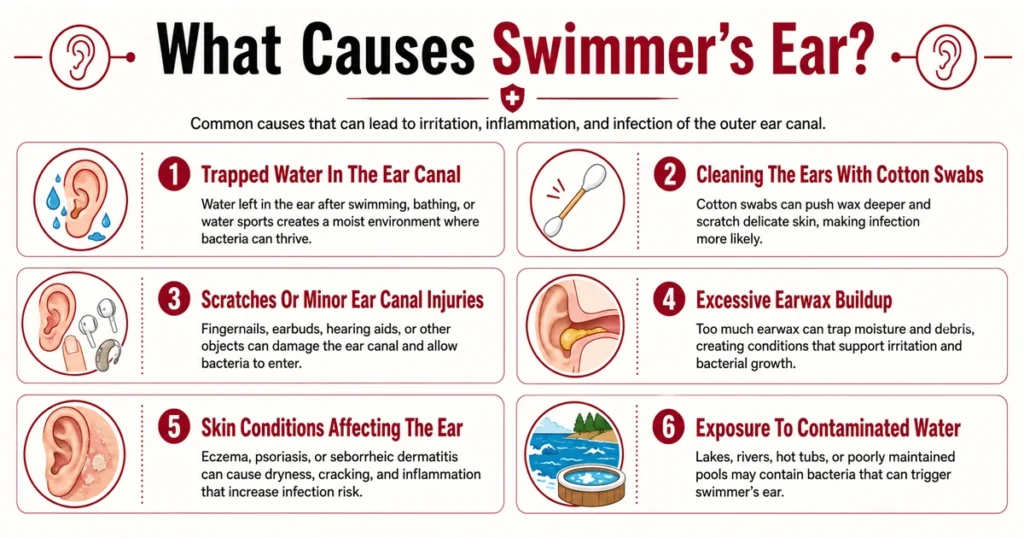
If you are dealing with ear pain, itching, or discomfort after water exposure, it is natural to wonder why it happened. A swimmer’s ear can affect both children and adults, and many cases develop from everyday activities rather than a single obvious event. Understanding the most common causes can help you recognize risk factors early and take steps to protect your ears from future infections.
1. Trapped Water In The Ear Canal
Water that remains in the ear canal after swimming, bathing, or water sports can create a moist environment where bacteria thrive. The outer ear canal is designed to stay relatively dry, and prolonged moisture can weaken its natural protective barrier. This makes it easier for infection to develop and cause inflammation.
Treatment
- Gently keep the ear dry while healing.
- Use doctor-recommended ear-drying drops if appropriate.
- Antibiotic ear drops prescribed by a doctor may be needed for infection.
- Avoid swimming until symptoms improve.
2. Cleaning The Ears With Cotton Swabs
Many people use cotton swabs to clean their ears, but this can push wax deeper into the canal and damage delicate skin. Even small scratches can provide an entry point for bacteria. Frequent cleaning may also remove protective earwax that helps prevent infection.
Treatment
- Stop inserting cotton swabs or objects into the ear.
- Allow natural earwax to protect the ear canal.
- Antibiotic or anti-inflammatory ear drops prescribed by a doctor may be recommended.
- Seek medical evaluation if pain or swelling develops.
3. Scratches Or Minor Ear Canal Injuries
The skin lining the ear canal is very thin and can be injured by fingernails, earbuds, hearing aids, or other objects. Even minor trauma can break the skin barrier and increase the risk of infection. Bacteria can then enter the damaged area and trigger inflammation.
Treatment
- Avoid further irritation to the ear.
- Keep the ear clean and dry.
- Antibiotic ear drops prescribed by a doctor may be necessary.
- Pain-relief medication recommended by a doctor may help reduce discomfort.
4. Excessive Earwax Buildup
Although earwax protects the ear canal, excessive buildup can trap moisture and debris. This can create conditions that support bacterial growth and irritation. Impacted wax may also make it harder for the ear to dry properly after water exposure.
Treatment
- Professional earwax removal performed by a healthcare provider.
- Avoid attempting deep ear cleaning at home.
- Doctor-recommended ear drops may help soften wax when appropriate.
- Follow preventive ear care instructions after treatment.
5. Skin Conditions Affecting The Ear
Certain skin disorders, such as eczema, psoriasis, or seborrheic dermatitis, can affect the ear canal. These conditions may cause dryness, cracking, itching, and inflammation, making the skin more vulnerable to infection. Repeated irritation can increase the likelihood of a swimmer’s ear.
Treatment
- Manage the underlying skin condition.
- Medicated ear drops prescribed by a doctor may reduce inflammation.
- Keep the ear canal dry and avoid scratching.
- Follow a treatment plan recommended by a healthcare provider.
6. Exposure To Contaminated Water
Swimming in water with high levels of bacteria can increase the risk of developing a swimmer’s ear. Lakes, rivers, hot tubs, and poorly maintained pools may contain microorganisms that can enter the ear canal. The risk becomes greater when the ear canal is already irritated or damaged.
Treatment
- Avoid further exposure to potentially contaminated water.
- Keep the affected ear dry.
- Antibiotic ear drops prescribed by a doctor may be required.
- Seek medical evaluation if symptoms worsen or drainage develops.
When To Go To The ER
While many cases of swimmer’s ear improve with prompt treatment, some symptoms may indicate a more serious infection or complication that requires immediate medical attention. Do not ignore worsening pain, spreading infection, or symptoms that affect your hearing or overall health.
- Severe ear pain that becomes intense or unbearable.
- Significant swelling that blocks the ear canal.
- Pus, bloody drainage, or foul-smelling discharge from the ear.
- Sudden hearing loss or noticeable hearing changes.
- High fever or chills.
- Redness or swelling spreads to the outer ear, face, or neck.
- Severe dizziness, balance problems, or vertigo.
- Symptoms that continue to worsen despite treatment.
- Severe pain when touching or moving the outer ear.
- Swimmer’s ear symptoms in people with diabetes or weakened immune systems.
If you experience severe ear pain, drainage, or worsening symptoms, do not delay seeking care. Our earache emergency room provides prompt evaluation and treatment to help relieve discomfort and prevent complications.
Home Remedies For Swimmer’s Ear
Mild swimmer’s ear symptoms may improve with simple home care measures that help keep the ear dry and reduce irritation. However, home remedies should not replace medical treatment if you have severe pain, drainage, fever, hearing loss, or worsening symptoms.
- Keep The Ear Dry: Avoid swimming and protect the ear while showering or bathing. Keeping moisture out of the ear canal can help reduce irritation and support the healing process.
- Use A Warm Compress: Place a warm (not hot) washcloth against the affected ear for 10 to 15 minutes at a time. This may help ease discomfort and reduce the sensation of pressure.
- Avoid Putting Objects In The Ear: Do not use cotton swabs, fingers, or other objects to clean the ear canal. Additional irritation can worsen inflammation and delay recovery.
- Sleep With The Affected Ear Facing Up: Resting with the affected ear elevated may encourage drainage and reduce pressure within the ear canal. This can also improve comfort while sleeping.
- Use Over-The-Counter Pain Relievers: Nonprescription pain medications may help relieve mild ear pain and inflammation. Use them according to the package directions or as recommended by a healthcare provider.
- Allow The Ear To Air Dry: After bathing, gently dry the outer ear with a towel and allow the ear to dry naturally. Avoid using hairpins, cotton swabs, or other objects inside the ear canal.
If symptoms do not improve with home care or you develop severe pain, drainage, or hearing changes, seek medical evaluation promptly. Visit an emergency room near me for proper diagnosis and treatment to prevent the infection from worsening.
Swimmer’s Ear Care At Neighbors Emergency Center
Recognizing ear pain early is important because mild irritation can quickly develop into a more painful infection. Swimmer’s Ear (Outer Ear Infections) may cause swelling, drainage, hearing changes, and increasing discomfort if treatment is delayed. Our 24/7 emergency room provides prompt evaluation and care to help manage symptoms and prevent complications.
At Neighbors Emergency Center, patients receive prompt evaluation and treatment for swimmer’s ear symptoms. Our medical team works to relieve pain, treat infection, and help prevent complications so you can recover as quickly and safely as possible.
Key Takeaways
- Swimmer’s ear is an infection or inflammation of the outer ear canal that often develops when moisture becomes trapped in the ear.
- Common causes include trapped water, ear canal injuries, cotton swab use, excessive earwax, skin conditions, and exposure to contaminated water.
- Symptoms may include ear pain, itching, redness, swelling, drainage, and temporary hearing changes.
- Keeping the ears dry and avoiding objects inside the ear can help reduce the risk of infection.
- Mild cases may improve with home care, but worsening symptoms require medical evaluation.
- Severe pain, fever, spreading redness, significant swelling, or hearing loss are signs that emergency care may be needed.
- Early diagnosis and treatment can help relieve symptoms faster and prevent complications.
- Neighbors Emergency Center provides prompt evaluation and treatment for patients experiencing swimmer’s ear symptoms.
Frequently Answered Questions
How Long Does Swimmer’s Ear Last?
Most cases of swimmer’s ear start improving within a few days after proper treatment and usually clear within 7 to 10 days. Severe infections or delayed care may take longer to heal and require additional medical attention.
What Is The Best Antibiotic For Swimmer’s Ear?
Antibiotic ear drops prescribed by a healthcare provider are commonly used to treat bacterial swimmer’s ear. The right medication depends on the severity of the infection and the individual’s condition.
How Long Does Swimmer’s Ear Last Without Treatment?
Without treatment, a swimmer’s ear may continue for weeks and symptoms can become more severe over time. Delayed care may increase the risk of worsening pain, swelling, drainage, hearing problems, or complications.
How To Prevent Swimmer’s Ear?
You can reduce the risk of a swimmer’s ear by keeping your ears dry after water exposure, avoiding cotton swabs or objects inside the ear canal, and maintaining clean earbuds or hearing devices. These steps help protect the ear canal from irritation and infection.
Do Ear Infections Go Away On Their Own?
Some mild ear infections may improve without treatment, but many require medical care to prevent worsening pain, hearing problems, or complications. If symptoms are severe, persistent, or worsening, seek medical evaluation promptly.