
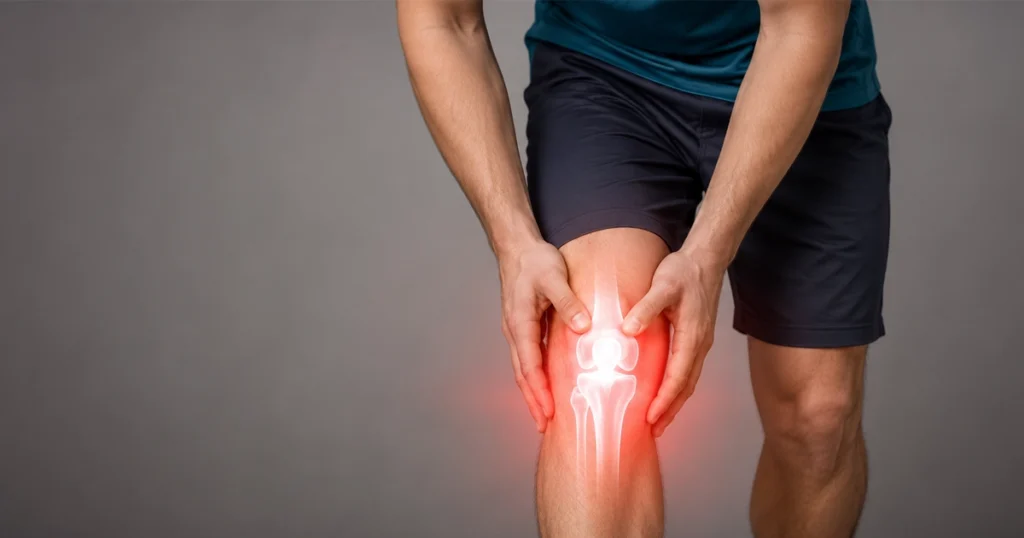
Knee pain can make walking, climbing stairs, or standing up uncomfortable. If your knee hurts, swells, or feels like it catches when you move, you may have a meniscus tear. The meniscus is a piece of cartilage that cushions and stabilizes the knee, and a tear can affect movement and cause ongoing pain.
Some meniscus tears heal with proper care, while others require prompt medical attention. Severe pain, swelling, a locked knee, or difficulty putting weight on the leg should never be ignored. Visit our Lubbock emergency room for timely evaluation and treatment to help prevent further knee damage and support a faster recovery.
Dangerous Meniscus Tear Symptoms You Should Never Ignore
A meniscus tear can range from mild to severe, but certain symptoms may indicate significant damage that requires prompt medical evaluation. According to an NIH review, MRI detects medial meniscus tears with up to 93% sensitivity, making early assessment important when serious symptoms are present.
- Severe knee pain that does not improve with rest.
- Rapid swelling after a knee injury.
- A popping sensation at the time of injury.
- Knee locking or getting stuck in one position.
- Difficulty fully bending or straightening the knee.
- Feeling that the knee is giving way or unstable.
- Inability to bear weight on the affected leg.
- Persistent clicking or catching during movement.
- Tenderness along the joint line.
- Redness, warmth, or increasing swelling, especially with fever, which may indicate a more serious condition requiring emergency care.
If you experience these warning signs, timely evaluation can help prevent further joint damage and improve recovery. Our knee pain treatment provides proper assessment and care to address symptoms, restore mobility, and support healing.
Types Of Meniscus Tears
Meniscus tears can vary in their shape, location, and severity. Each type affects the knee differently and may require a different treatment approach. Identifying the type of tear helps guide the best treatment and recovery plan.
- Radial Tear: Starts at the inner edge of the meniscus and extends outward. It is one of the most common types and can reduce the knee’s ability to absorb shock.
- Horizontal Tear: Runs parallel to the meniscus, separating it into upper and lower sections. It is commonly linked to age-related wear.
- Longitudinal Tear: Also called a vertical tear, it runs along the length of the meniscus and may be repairable if treated early.
- Bucket Handle Tear: A large tear where part of the meniscus flips inward, often causing the knee to lock.
- Flap Tear: Creates a loose piece of cartilage that can cause pain, clicking, and catching during movement.
- Complex Tear: Combines multiple tear patterns and is often associated with age-related degeneration.
- Root Tear: Occurs where the meniscus attaches to the bone and can quickly lead to joint damage if untreated.
.
What Causes A Meniscus Tear?
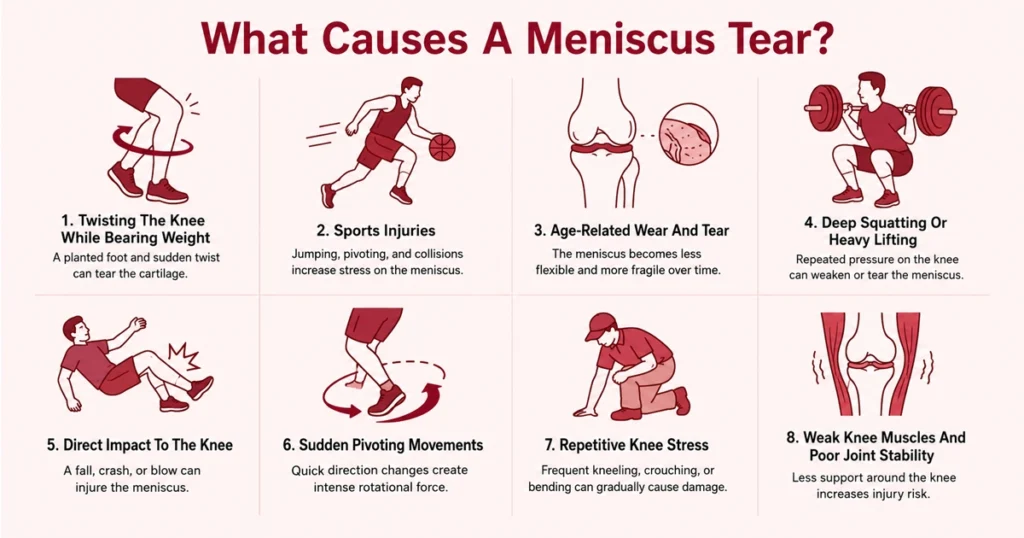
A meniscus tear can happen suddenly during an injury or develop gradually over time as the cartilage weakens. Understanding the underlying cause is important because it helps determine the most appropriate treatment and lowers the risk of future knee problems.
Twisting The Knee While Bearing Weight
A sudden twist of the knee while your foot remains firmly planted is one of the most common causes of a meniscus tear. This often happens during sports or while quickly changing direction. The twisting force places excessive stress on the cartilage, causing it to tear. The injury may occur immediately or worsen if activity continues.
Treatment
- Rest and avoid activities that worsen pain.
- Apply ice and elevate the knee to reduce swelling.
- Wear a knee brace if recommended by the doctor.
- Physical therapy may be prescribed by the doctor.
- Arthroscopic surgery may be recommended by the doctor for severe tears.
Sports Injuries
High-impact sports such as football, basketball, soccer, and tennis involve frequent jumping, pivoting, and sudden stops. These movements place repeated stress on the meniscus, increasing the risk of tearing. Athletes are especially vulnerable during rapid changes in direction or collisions.
Treatment
- Stop playing until evaluated by a healthcare provider.
- Ice and compression can help reduce swelling.
- Physical therapy may be prescribed by the doctor.
- Anti-inflammatory medication may be prescribed by the doctor.
- Surgery may be recommended by the doctor if the tear is unstable.
Age-Related Wear And Tear
As people age, the meniscus gradually loses flexibility and becomes more fragile. Everyday activities such as kneeling, squatting, or standing up from a chair can cause a degenerative tear. These tears often develop without a major injury and may worsen over time if left untreated.
Treatment
- Reduce activities that strain the knee.
- Maintain a healthy body weight.
- Physical therapy may be prescribed by the doctor.
- Pain-relieving or anti-inflammatory medication may be prescribed by the doctor.
- Surgery may be recommended by the doctor if symptoms persist.
Deep Squatting Or Heavy Lifting
Repeated deep squatting or lifting heavy objects increases pressure on the knee joint and meniscus. Over time, this stress can weaken the cartilage or trigger a tear, especially in people with existing joint wear. Proper lifting techniques can help reduce the risk.
Treatment
- Avoid deep squatting until the knee improves.
- Rest and apply ice for swelling.
- Use supportive knee braces if recommended by the doctor.
- Physical therapy may be prescribed by the doctor.
- Surgical repair may be recommended by the doctor for significant tears.
Direct Impact To The Knee
A forceful blow to the knee during a fall, motor vehicle accident, or sports collision can damage the meniscus. The injury may occur along with ligament or bone injuries, making prompt medical evaluation important. Severe trauma can lead to immediate pain and swelling.
Treatment
- Seek medical evaluation after a significant knee injury.
- Ice and elevation can reduce swelling.
- Pain medication may be prescribed by the doctor.
- Imaging tests may be recommended by the doctor.
- Surgery may be recommended by the doctor for complex injuries.
Sudden Pivoting Movements
Quick pivoting while running or changing direction places intense rotational force on the knee. If the foot stays planted, the meniscus can tear as the knee rotates. This mechanism is common in both athletes and active adults.
Treatment
- Avoid twisting movements during recovery.
- Follow the RICE method in the early stages.
- Physical therapy may be prescribed by the doctor.
- Knee bracing may be recommended by the doctor.
- Arthroscopic surgery may be recommended by the doctor if needed.
Repetitive Knee Stress
Jobs or activities that require frequent kneeling, crouching, or repetitive bending can gradually damage the meniscus. Continuous stress weakens the cartilage, making it more likely to tear even during routine movements. Early treatment helps prevent further joint damage.
Treatment
- Modify repetitive activities when possible.
- Take regular breaks to reduce knee strain.
- Physical therapy may be prescribed by the doctor.
- Anti-inflammatory medication may be prescribed by the doctor.
- Surgery may be recommended by the doctor if conservative care fails.
Weak Knee Muscles And Poor Joint Stability
Weak muscles around the knee provide less support during movement, increasing stress on the meniscus. Poor balance and joint instability can also raise the risk of injury during daily activities or exercise. Strengthening the surrounding muscles helps improve knee stability.
Treatment
- Perform strengthening exercises prescribed by the doctor or physical therapist.
- Avoid activities that trigger pain.
- Wear supportive braces if recommended by the doctor.
- Physical therapy may be prescribed by the doctor.
- Surgical treatment may be recommended by the doctor if instability is associated with severe meniscus damage.
Meniscus Tear Recovery Time
The recovery time for a meniscus tear depends on the type of tear, its severity, and whether treatment is nonsurgical or surgical. Following your doctor’s recommendations and completing rehabilitation can help you recover safely and lower the risk of reinjury.
- Minor Meniscus Tear: Usually heals within 4 to 8 weeks with rest, activity modification, and physical therapy prescribed by the doctor.
- Moderate Meniscus Tear: Recovery typically takes 6 to 12 weeks, depending on the extent of the injury and healing progress.
- Meniscus Repair Surgery: Most people recover in 3 to 6 months, as the repaired cartilage needs time to heal properly.
- Partial Meniscectomy: Recovery generally takes 4 to 8 weeks, although returning to strenuous activities may take longer.
- Return To Daily Activities: Many people can resume light daily activities within 2 to 6 weeks, depending on pain, swelling, and knee function.
- Return To Sports: Athletes are often cleared to return in 3 to 6 months, once strength, flexibility, and knee stability have fully recovered and the doctor approves.
When To Go To The ER
While some meniscus tears can be treated with rest and follow-up care, certain symptoms may signal a serious knee injury that requires immediate medical attention. Do not delay emergency care if severe pain, loss of function, or signs of a more serious condition develop.
- Severe knee pain that makes it impossible to stand or walk.
- Inability to bear weight on the injured leg.
- A locked knee that cannot fully bend or straighten.
- Rapid or severe swelling after the injury.
- A visible knee deformity or suspected fracture.
- A popping injury followed by immediate instability.
- Numbness, coldness, or discoloration in the lower leg or foot.
If you notice any of these serious symptoms, do not delay medical evaluation. Visit an emergency room near me for prompt assessment and treatment to protect your knee and prevent further complications.
Meniscus Tear Care At Neighbors Emergency Center
A painful knee injury should never be ignored, especially if you cannot bear weight, your knee locks, or swelling develops quickly. Our 24/7 emergency room provides prompt medical evaluation to identify meniscus tears, relieve pain, and rule out more serious injuries such as fractures or ligament damage.
At Neighbors Emergency Center, our experienced emergency team is available 24/7 to evaluate sudden knee injuries using advanced diagnostic imaging and a thorough physical examination. We provide fast pain management, stabilize your injury, and help determine the next steps in your treatment so you can begin recovery as quickly and safely as possible.
Frequently Asked Questions
What Does A Meniscus Tear Feel Like?
A meniscus tear often feels like a sharp pain along the knee joint, especially when twisting or squatting. Many people also experience swelling, stiffness, clicking, catching, or a feeling that the knee is locking or giving way.
When Is Meniscus Tear Surgery Needed?
Meniscus tear surgery may be recommended by the doctor if the tear is large, causes the knee to lock, leads to ongoing pain or instability, or does not improve with conservative treatment. The type of surgery depends on the location and severity of the tear.
Can A Meniscus Tear Heal On Its Own?
Some small meniscus tears, especially those in the outer part of the meniscus with a better blood supply, may heal with rest, physical therapy, and activity modification. However, larger or more complex tears often require evaluation and treatment by a healthcare provider.