

Yes, allergies make you exhausted, and the fatigue that comes with them goes far deeper than just feeling a little sleepy after spending time outdoors. When your immune system encounters an allergen like pollen, dust, or pet dander, it launches a full-scale defensive response that consumes significant energy and releases chemicals that directly affect how tired, foggy, and drained you feel for hours or even days at a time.
Allergy fatigue can be difficult to recognize because many people blame exhaustion on stress or poor sleep instead of ongoing immune activity. Understanding why allergies cause fatigue, recognizing related symptoms, and knowing when to seek care can help you manage the condition better. Our emergency room Pearland, Texas provides prompt evaluation for severe allergy-related symptoms.
What Is Allergy Fatigue?
Allergy fatigue is the persistent exhaustion that results directly from the body’s immune response to allergens, and it does not resolve simply with more rest or better sleep hygiene. According to the Texas Department of State Health Services, allergic conditions affect millions of Texans each year, and fatigue is one of the most underrecognized symptoms of ongoing allergic reactions. Unlike ordinary tiredness, allergy exhaustion is driven by active biological processes, including immune activation, chronic inflammation, and disrupted sleep patterns that can continue for days or weeks during allergy season without meaningful improvement on their own.
Why Do Allergies Make You Exhausted?
When the body detects an allergen, it triggers a cascade of biological reactions that drain energy in several ways at the same time. These mechanisms explain why allergy fatigue can feel so disproportionate even when other physical symptoms seem relatively mild.
- The immune system releases histamine and proteins called cytokines to fight allergens, and this inflammatory response consumes large amounts of energy that would otherwise fuel normal daily activity
- Chronic inflammation caused by repeated or prolonged allergen exposure has been directly linked to persistent fatigue and difficulty maintaining stable energy levels throughout the day
- Nasal congestion, postnasal drip, and sinus pressure make comfortable nighttime breathing difficult, disrupting the deep restorative sleep the body needs to recover from immune activity
- Older antihistamine medications cause significant drowsiness as a side effect that compounds the fatigue already produced by the allergic immune response itself
- Histamine also affects blood vessel dilation in ways that contribute to low energy, mental heaviness, and a consistent sense of physical and cognitive sluggishness
Proper allergy care can help reduce fatigue by managing inflammation, controlling symptoms, and addressing triggers that affect your daily energy levels.
What Are the Symptoms of Allergy Exhaustion?
Allergy-related exhaustion presents differently from ordinary tiredness, often combining physical and cognitive symptoms that worsen with continued allergen exposure. Recognizing these signs is the first step toward identifying and addressing the actual cause.
- Persistent fatigue that does not improve despite adequate sleep or rest and that worsens during high pollen seasons
- Brain fog and difficulty concentrating make it harder to focus at work, school, or during routine daily tasks
- Itchy, watery, or swollen eyes that cause ongoing discomfort and interrupt nighttime sleep quality
- Nasal congestion and frequent sneezing make comfortable breathing difficult and contribute to poor sleep
- Sinus headaches driven by inflammation and pressure that build gradually and worsen with allergen exposure
- Irritability and low mood that accompany the physical exhaustion make daily interactions more difficult than they should be
- A general sense of heaviness or resistance that makes even light physical activity feel more demanding than usual
Who Is Most at Risk for Allergy-Related Fatigue?
While anyone with allergies can experience fatigue, certain groups are significantly more likely to develop severe and persistent exhaustion from their allergic reactions throughout the year.
- People with seasonal allergic rhinitis, also known as hay fever, face continuous high-level allergen exposure during peak seasons that keeps the immune system activated and draining energy for weeks at a time
- Individuals with multiple overlapping allergies to pollen, dust mites, mold, and pet dander experience a higher cumulative immune load that produces more profound and sustained fatigue
- Children with unmanaged allergies often show exhaustion through irritability, poor school performance, and reduced interest in physical play and activity
- Adults who also experience shortness of breath or wheezing during allergy season face compounding fatigue as breathing difficulty further reduces sleep quality
- People relying on sedating antihistamines as their primary treatment experience medication-induced drowsiness on top of immune-driven fatigue, making the exhaustion significantly worse
If allergy symptoms become severe or you experience breathing problems, swelling, or signs of a serious reaction, visit the emergency room near me for immediate evaluation.
How to Treat Allergy Exhaustion at Home?
Mild to moderate allergy fatigue can be managed at home through a combination of allergen avoidance and targeted symptom relief. The goal is to reduce the immune response and its secondary effects on sleep and daily energy levels.
- Switch to non-sedating antihistamines if older formulations are adding medication-induced drowsiness to the fatigue already being caused by the immune response
- Keep windows closed on high pollen count days and use air purifiers with HEPA filtration to reduce airborne allergens inside your living and sleeping spaces
- Shower and change clothes after time outdoors to remove pollen from hair and skin before it enters your bedroom and disrupts your sleep environment
- Use nasal saline rinses to reduce congestion and postnasal drip that interfere with comfortable nighttime breathing and sleep quality
- Maintain a consistent sleep routine and keep the bedroom cool and allergen-free to give your body the best conditions to recover from immune activity each night
How to Prevent Allergy-Related Fatigue?
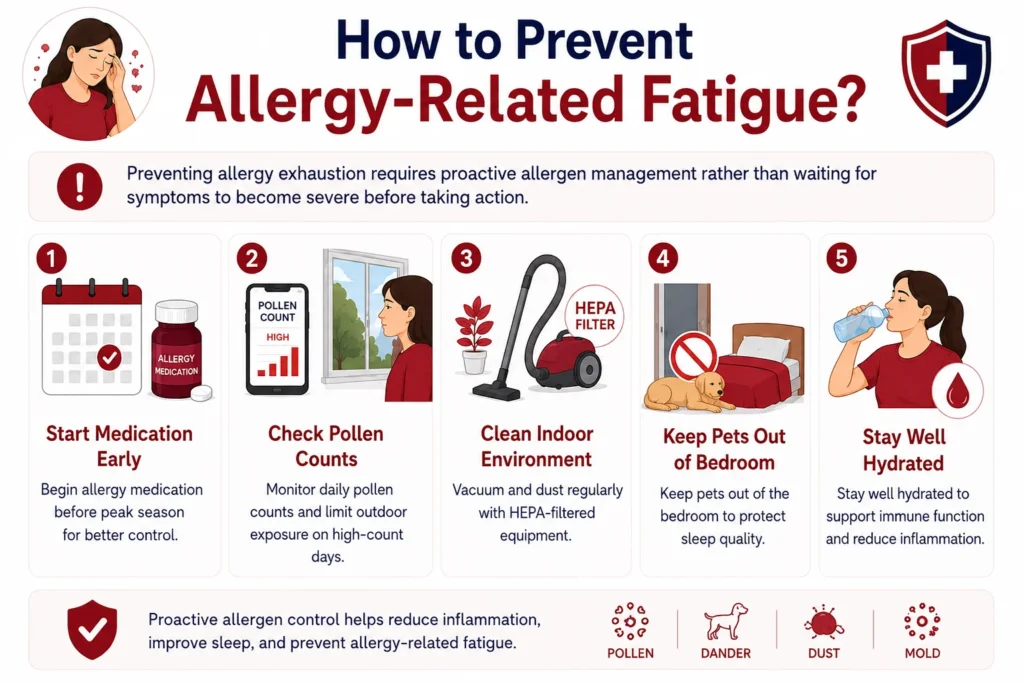
Preventing allergy exhaustion requires proactive allergen management rather than waiting for symptoms to become severe before taking action.
- Begin allergy medication before peak season starts so that histamine levels and inflammation are already controlled when airborne allergen counts begin to rise
- Monitor daily pollen counts through local weather services and limit outdoor exposure on high-count days to reduce the allergen load your immune system is processing
- Vacuum and dust regularly using HEPA-filtered equipment to minimize indoor allergen accumulation that sustains continuous immune activation at home
- Keep pets out of the bedroom if animal dander is a trigger, as overnight allergen exposure directly undermines the sleep quality needed to prevent fatigue
- Stay well hydrated throughout allergy season, as adequate hydration supports healthy immune function and helps the body process and clear inflammatory byproducts more efficiently
If your allergies are also leading to a sore throat or repeated sinus infections, these are signals that allergen exposure is overwhelming your defenses and that a more structured treatment plan is warranted.
When to Go to the ER for Allergy Exhaustion?
Most allergy fatigue can be managed at home, but certain symptoms indicate that the situation has progressed beyond standard allergy management and requires immediate emergency evaluation. Visit Exceptional Emergency Centers right away if you or someone in your care is experiencing any of the following.
- Severe difficulty breathing or wheezing that does not respond to standard allergy or asthma medication within a reasonable time
- Swelling of the face, lips, tongue, or throat, which may signal a serious allergic reaction requiring emergency treatment
- Fatigue so extreme that basic daily functioning is no longer possible and does not respond to rest, medication, or allergen avoidance
- Sudden drop in blood pressure, rapid or irregular heartbeat, or loss of consciousness occurring alongside allergy symptoms
- High fever above 102 degrees Fahrenheit, developing alongside allergy symptoms, which may indicate a secondary bacterial infection requiring separate treatment
- Dangerous nasal blockage or breathing difficulty at night that is worsening rather than stabilizing with home treatment
- Rapidly worsening symptoms in children that are not responding to age-appropriate allergy medications given at home
Allergy Exhaustion Care at Neighbors Emergency Center
When allergy fatigue escalates into severe breathing difficulty, a major allergic reaction, or symptoms you cannot manage at home, Exceptional Emergency Centers are here to help at our Texas locations. With ER wait times of just 18 minutes, our experienced medical team provides immediate evaluation, IV antihistamines, corticosteroids, and breathing support for patients experiencing serious allergy-related symptoms. Our emergency team delivers fast, effective care to help stabilize symptoms and prevent complications.
If you want to better understand what causes allergies and how to identify your specific triggers, our team can guide you in the right direction. Do not wait for symptoms to become unmanageable before seeking care. Visit Neighbors Emergency Center today for expert, around-the-clock treatment that addresses your allergy symptoms and helps restore your energy.