
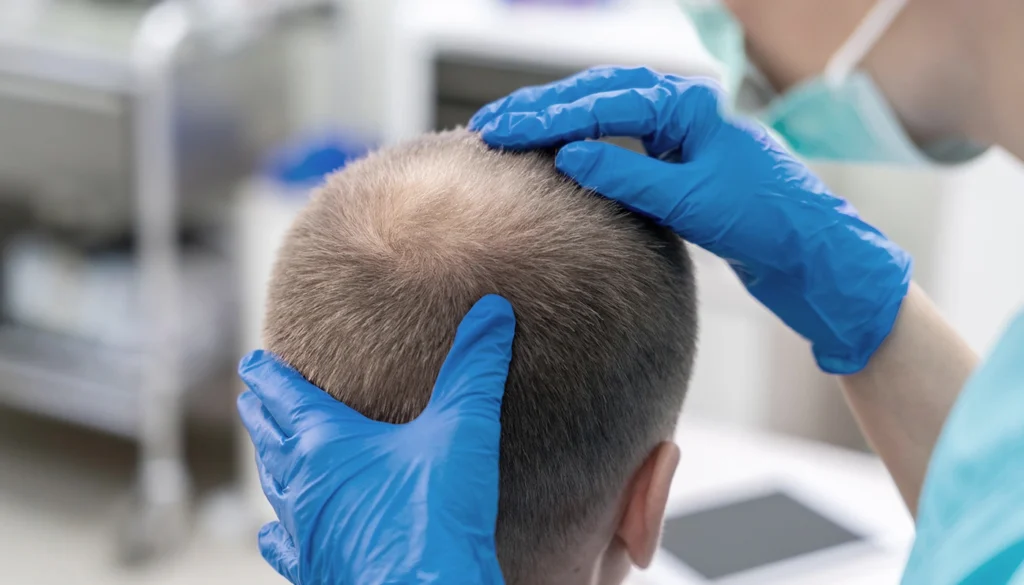
Noticing more hair in your brush, a widening part, or a receding hairline can be unsettling, especially when you are unsure why it is happening. Hair loss can affect your confidence and may look different from person to person.
While some hair shedding is normal, sudden, rapid, or patchy hair loss deserves attention. If your hair loss occurs with scalp pain, redness, swelling, sores, or other concerning symptoms, timely medical evaluation can help identify the problem before it progresses. If you need urgent evaluation, visit our emergency room in Livingston for prompt medical care.
What Does Balding Look Like?
Balding can appear differently depending on its underlying cause. Common signs include gradual thinning, a widening part, a thinner ponytail, a receding hairline, or a bald spot that slowly becomes larger. Alopecia areata may instead cause sudden, smooth, round patches of hair loss. In women, a widening center part is often an early sign of female pattern hair loss.
Causes Of Balding
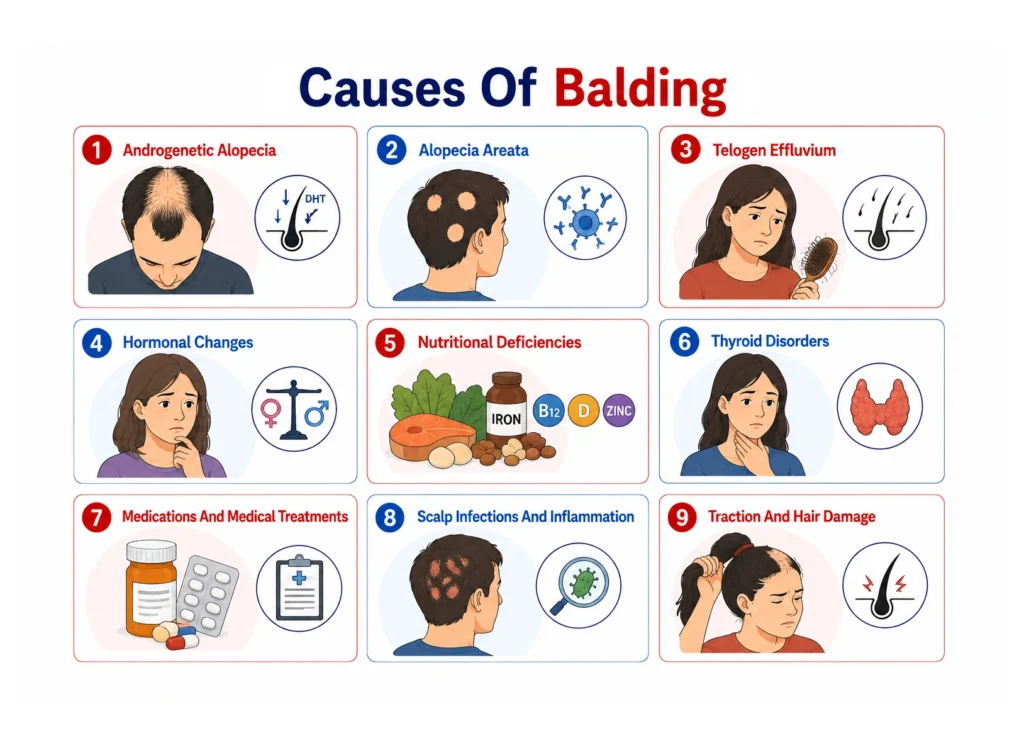
Hair loss can be frustrating, particularly when it develops gradually and you cannot identify what is causing the change. Balding is not always simply a result of aging, and different conditions can affect the hair-growth cycle or damage the follicles. Identifying the underlying cause is important because some forms of hair loss are temporary or treatable, while others can become permanent without appropriate care.
Androgenetic Alopecia
Androgenetic alopecia, or pattern hair loss, is one of the most common causes of gradual balding. In men, it often causes a receding hairline and crown thinning, while women typically develop diffuse thinning and a widening part.
Alopecia Areata
Alopecia areata is an autoimmune condition in which the immune system attacks hair follicles. It commonly causes sudden, smooth, round patches of hair loss on the scalp, beard, eyebrows, or other body areas.
Telogen Effluvium
Telogen effluvium causes excessive shedding when many hairs enter the resting phase of the growth cycle at once. It can occur after severe illness, major stress, surgery, childbirth, or significant weight loss and is often temporary.
Hormonal Changes
Hormonal changes can disrupt the hair-growth cycle and cause increased shedding or thinning. Pregnancy, postpartum changes, menopause, thyroid disorders, and conditions such as PCOS can contribute to noticeable hair loss.
Nutritional Deficiencies
Nutritional deficiencies can interfere with normal hair growth and contribute to excessive shedding. Low iron, inadequate protein intake, and certain vitamin or mineral deficiencies may increase the risk, particularly with restrictive diets or poor nutrition.
Thyroid Disorders
Both an underactive and overactive thyroid can affect the normal hair-growth cycle. Hair may become thinner, drier, or more fragile, and treating the underlying thyroid disorder may help reduce associated hair loss.
Medications And Medical Treatments
Some medications can cause hair shedding or thinning by disrupting the hair-growth cycle. Chemotherapy is a well-known example, but other medications may also contribute, so suspected medication-related hair loss should be discussed with a healthcare provider.
Scalp Infections And Inflammation
Fungal infections and inflammatory scalp conditions can interfere with hair growth and cause areas of hair loss. Scaling, itching, redness, tenderness, crusting, or broken hairs should be evaluated because some conditions can damage hair follicles.
Traction And Hair Damage
Repeated tension from tight hairstyles, braids, extensions, or weaves can cause traction alopecia, particularly around the hairline and temples. Excessive heat, chemical treatments, and aggressive brushing can also cause breakage that makes hair appear thinner.
Can Women Go Bald?
Yes, women can experience severe hair loss and, in some cases, extensive baldness, although complete baldness is uncommon. Female pattern hair loss usually causes gradual thinning over the crown and a widening center part rather than the typical receding hairline seen in men.
A 2026 review published in PubMed reports that androgenetic alopecia affects nearly 50% of women during their lifetime, making it one of the most prevalent chronic forms of hair loss in women.
- Female Pattern Hair Loss: Gradual thinning usually develops over the top of the scalp, with the center part becoming increasingly noticeable. Without treatment, thinning can become more widespread.
- Alopecia Areata: This autoimmune condition can cause sudden, smooth patches of hair loss. In more extensive forms, it can affect most or all of the scalp hair.
- Hormonal Changes: Pregnancy, postpartum changes, menopause, thyroid disorders, and hormonal conditions such as PCOS can contribute to increased shedding or thinning.
- Nutritional Deficiencies: Inadequate nutrition or certain deficiencies can interfere with normal hair growth and contribute to excessive shedding, particularly when dietary intake is restricted.
- Scarring Alopecia: Some inflammatory scalp conditions destroy hair follicles and can cause permanent hair loss. Early diagnosis and treatment may help prevent further follicle damage.
- Medical Treatments: Certain treatments, particularly chemotherapy, can cause substantial hair loss. Hair may regrow after treatment, although recovery varies between individuals.
- Telogen Effluvium: Major physical or emotional stressors can cause substantial temporary shedding, sometimes making the scalp noticeably more visible.
- Traction Alopecia: Persistent pulling from tight hairstyles can damage follicles, especially around the temples and hairline. Long-term traction can result in permanent hair loss.
When Should You Go To The ER?
Balding itself is rarely an emergency, but sudden hair loss with severe scalp or other concerning symptoms may require immediate medical attention.
- Sudden, severe scalp pain or swelling.
- Fever with redness, pus, or spreading scalp swelling.
- Severe allergic symptoms, such as trouble breathing or facial swelling.
- Hair loss after a serious head injury.
- Fainting, confusion, severe dizziness, or weakness.
If you’re worried about serious or rapidly worsening symptoms, don’t wait to get help. Seek immediate care at the nearest emergency room for prompt evaluation and support.
Treatment For Balding
Treatment for balding depends on its cause, the pattern of hair loss, and whether the hair follicles are still healthy. Early treatment may help slow further loss and preserve existing hair, while conditions such as nutritional deficiencies, thyroid problems, or scalp infections require treatment of the underlying cause. A dermatologist can determine the most appropriate option.
- Minoxidil: Topical minoxidil can help slow pattern hair loss and promote hair growth in some people.
- Prescription Medications: Doctors may prescribe medicines such as finasteride for certain men or other treatments based on the cause and individual risks.
- Corticosteroids: Steroid injections or topical corticosteroids may be used for some forms of alopecia areata.
- Treating Underlying Conditions: Correcting iron deficiency, thyroid disorders, hormonal problems, or scalp infections may reduce hair loss.
- Hair Transplantation: Hair transplantation can provide a longer-term option for some people with permanent pattern hair loss.
- Low-Level Light Therapy: Certain FDA-cleared light devices may help stimulate hair growth in some people with pattern hair loss.
- Scalp Care And Hair Protection: Avoiding tight hairstyles, excessive heat, and harsh chemical treatments can reduce additional hair and follicle damage.
How Do You Prevent Balding?
Not all balding can be prevented, especially hereditary hair loss, but early care may help slow progression and protect existing hair.
- Avoid Tight Hairstyles: Limit braids, extensions, ponytails, and styles that pull on the roots.
- Eat A Balanced Diet: Get enough protein, iron, vitamins, and minerals through a nutritious diet.
- Limit Hair Damage: Reduce excessive heat, chemical treatments, harsh brushing, and frequent bleaching.
- Treat Health Conditions: Manage thyroid problems, nutritional deficiencies, and hormonal conditions that may affect hair growth.
- Start Treatment Early: Treatments such as minoxidil may help slow pattern hair loss when started early.
- See A Dermatologist: Early evaluation can identify the cause and help prevent further hair loss.
Neighbors Emergency Center For Severe Hair Loss Symptoms
If you or your loved one develops sudden hair loss along with severe scalp pain, swelling, redness, signs of infection, or symptoms following a significant head injury, do not wait to seek medical attention. Our experienced emergency physicians are available in our 24/7 emergency rooms to evaluate concerning symptoms and provide prompt medical care when needed.
Whether you need urgent evaluation for a scalp infection, severe inflammation, an allergic reaction, or complications following an injury, Neighbors Emergency Center is here to provide compassionate, timely emergency care when symptoms become severe.
Key Takeaways
- Balding can appear as a receding hairline, widening part, crown thinning, or patchy hair loss.
- Pattern hair loss is common, but autoimmune conditions, hormones, nutrition, medications, and scalp problems can also cause hair loss.
- Not all balding can be prevented, but early treatment may slow progression and protect existing hair.
- Sudden, patchy, or rapidly worsening hair loss should be evaluated by a healthcare professional.
- Severe scalp pain, swelling, infection symptoms, or hair loss after a serious head injury may require emergency care.
Frequently Asked Questions About Balding
When Do Men Start Balding?
Men can start balding at different ages, and there is no single age when it begins. For some, signs of male pattern hair loss may appear in the late teens or 20s, while others do not notice significant thinning until later in life.
Do Hats Cause Balding?
No, wearing hats does not normally cause balding. Regular hat use does not damage hair follicles or cause male or female pattern hair loss, although very tight headwear that repeatedly pulls on the hair could contribute to traction-related hair loss.
Can Dry Scalp Cause Balding?
A dry scalp alone does not usually cause permanent balding. However, severe dryness can cause itching and scratching, which may lead to hair breakage or temporary shedding, while an underlying scalp condition may sometimes contribute to hair loss.