

It can be frustrating when dry, irritated eyes make it harder to focus on your phone, computer, or the people around you. If your vision also starts to look hazy or out of focus, you may naturally wonder whether the two symptoms are connected.
In many cases, they can be. Dryness can interfere with the smooth tear film covering the eye, temporarily affecting the way light is focused and causing blurry or fluctuating vision. While this may improve with blinking or treating the dryness, blurred vision that is sudden, severe, persistent, or accompanied by eye pain or vision loss needs prompt medical attention. If you are in Pasadena, our ER Pasadena TX is available for urgent evaluation when vision changes occur.
How Does Dry Eye Cause Blurry Vision?
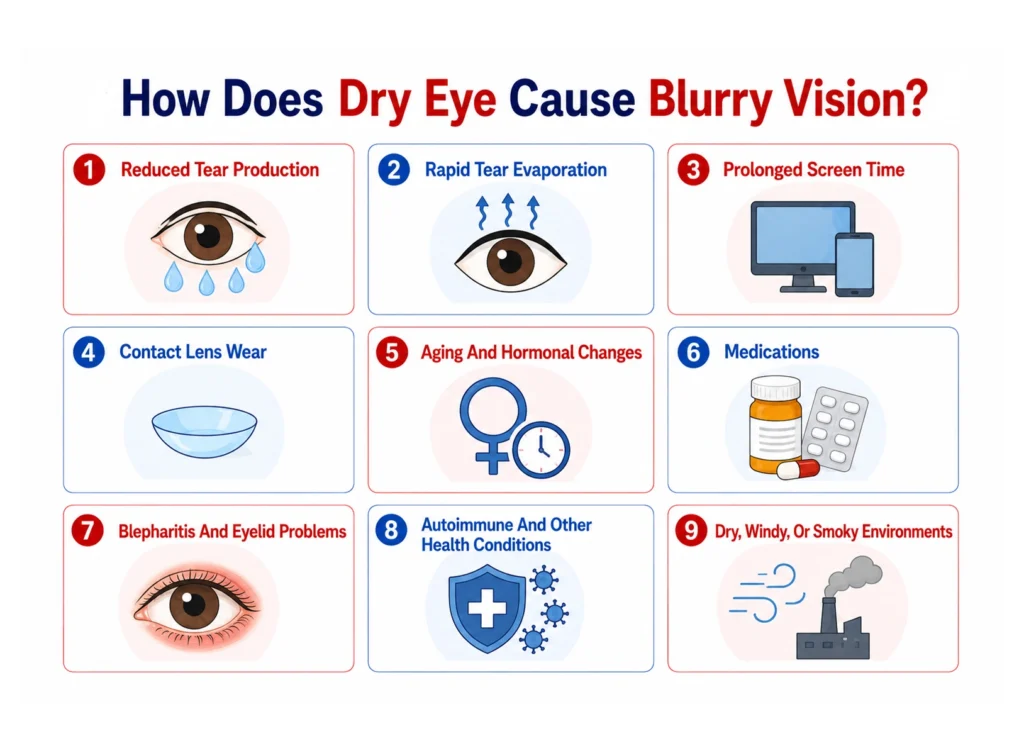
It can be frustrating when your eyes feel dry, and your vision suddenly seems hazy, especially while reading, driving, or using a screen. The tear film covering the eye helps create a smooth optical surface for clear vision. When that tear film becomes unstable, the surface of the eye can become uneven, causing vision to fluctuate or appear blurry.
Reduced Tear Production
When the eyes do not produce enough tears, the cornea may not remain adequately lubricated. This can make the tear film unstable and cause burning, irritation, and intermittent blurry vision. Reduced tear production becomes more common with age and can also occur with certain medical conditions.
Rapid Tear Evaporation
Tears can evaporate too quickly when the protective outer oily layer of the tear film does not function properly. As the tear film breaks apart between blinks, the eye’s surface becomes less smooth and vision may become hazy or fluctuate. This type of dry eye can worsen in dry, windy, or air-conditioned environments.
Prolonged Screen Time
Spending long periods looking at computers, phones, or tablets can reduce how often you blink. Fewer complete blinks allow tears to evaporate and leave parts of the eye’s surface less protected. As dryness increases, you may notice eye fatigue, irritation, and temporary blurred or fluctuating vision.
Contact Lens Wear
Contact lenses can contribute to dry eye by affecting the normal tear film covering the surface of the eye. Wearing lenses for extended periods may increase dryness, discomfort, and fluctuating vision. Persistent blurry vision while wearing contacts should be evaluated rather than ignored, particularly if there is pain or redness.
Aging And Hormonal Changes
The eyes may produce fewer or less effective tears as you get older, increasing the likelihood of dry eye symptoms. Hormonal changes can also affect tear production and the stability of the tear film. When lubrication becomes inadequate, people may experience burning, gritty sensations, eye fatigue, and intermittent blurry vision.
Medications
Some medicines can contribute to dry eye by reducing tear production or affecting the tear film. Examples include certain antihistamines, antidepressants, blood pressure medicines, diuretics, and other medications. If blurred vision develops along with persistent dryness after starting a medicine, speak with a healthcare professional rather than stopping the medication on your own.
Blepharitis And Eyelid Problems
Inflammation of the eyelids, known as blepharitis, can interfere with the glands that contribute oils to the tear film. Without an adequate oily layer, tears may evaporate more quickly and leave the eye’s surface unstable. This can cause dryness, irritation, redness, and fluctuating or blurry vision.
Autoimmune And Other Health Conditions
Certain health conditions, including Sjögren syndrome, lupus, thyroid disorders, and diabetes, can be associated with dry eye. Some conditions affect the glands responsible for tear production, while others can affect the ocular surface or tear-film function. When dryness and recurring blurred vision persist, identifying an underlying condition may be important for effective treatment.
Dry, Windy, Or Smoky Environments
Exposure to wind, smoke, low humidity, or constantly moving air can cause tears to evaporate faster. This can leave the eye’s surface inadequately lubricated and make dryness and visual fluctuations more noticeable. Symptoms may become particularly bothersome when spending time outdoors in windy conditions or around fans and air conditioning.
What Does Dry Eye Blurred Vision Feel Like?
Dry eye-related blurred vision often feels hazy, fluctuating, or temporarily out of focus, rather than like a constant loss of sharpness. You may notice your vision becoming clearer after blinking and then blurry again after staring at a screen or reading for a while. Some people also experience eye fatigue, glare, light sensitivity, or a gritty sensation along with the visual changes.
In the PROOF natural history study, 81% of people with dry eyes reported intermittent blurred vision, showing how commonly this symptom can affect daily vision.
When To Go To The ER
Mild blurriness that improves with blinking may occur with dry eye, but sudden or severe vision changes should never be ignored. Serious eye conditions can cause similar symptoms and may require immediate treatment to protect your vision.
Seek emergency care if you experience:
- Sudden vision loss or major changes in eyesight.
- Severe or worsening eye pain.
- Sudden flashes or many new floaters.
- A curtain or shadow across your vision.
- Severe eye redness with blurred vision.
- An eye injury or foreign object in the eye.
- Eye pain and blurred vision with nausea or vomiting.
If you experience vision changes, search for an ER near me and get prompt medical evaluation.
How To Treat Blurred Vision From Dry Eyes
It can be frustrating when dry eyes make your vision fluctuate or interfere with reading, driving, or screen use. Treatment aims to restore moisture, stabilize the tear film, and address factors worsening dryness. The best approach depends on the severity and underlying cause of your symptoms.
- Artificial Tears: Lubricating eye drops can relieve mild dryness and improve temporary blurry vision.
- Warm Compresses: Warm compresses can help unblock oil glands and improve tear-film stability.
- Screen Breaks: Blink regularly and take breaks from screens to reduce tear evaporation.
- Humidifier: Adding moisture to dry indoor air can help reduce eye dryness and irritation.
- Avoid Irritants: Limit exposure to smoke, wind, and direct air from fans or air conditioning.
- Prescription Eye Drops: Moderate or severe cases may require prescription drops such as cyclosporine or lifitegrast.
- Punctal Plugs: An eye doctor may use tiny plugs to slow tear drainage and keep the eyes moist longer.
- Treat Underlying Conditions: Managing eyelid problems, medication-related dryness, or other contributing conditions can improve symptoms.
Neighbors Emergency Center For Dry Eye And Blurred Vision Care
If you or your loved one develops sudden or severe blurred vision, intense eye pain, significant redness, sudden vision loss, or other concerning eye symptoms, do not wait to seek medical attention. Our experienced emergency physicians are available 24/7 to evaluate urgent symptoms and determine whether immediate treatment is needed.
Whether you need urgent evaluation for sudden vision changes, a painful eye condition, an eye injury, or other concerning symptoms, our 24/7 emergency room, Neighbors Emergency Center, is here to provide compassionate, timely emergency care. Our ER wait time is 12 minutes, helping you receive prompt attention when urgent symptoms arise.
Key Takeaways
- Dry eyes can cause temporary or fluctuating blurred vision when the tear film becomes unstable.
- Blurry vision may improve after blinking or using lubricating eye drops.
- Screen time, aging, medications, contact lenses, and environmental conditions can contribute to dry eyes.
- Persistent or worsening blurred vision should be evaluated to rule out other eye conditions.
- Sudden vision loss, severe eye pain, flashes, floaters, or a curtain-like shadow require urgent medical attention.
Frequently Asked Questions
How Long Does Blurred Vision From Dry Eyes Last?
Blurred vision from dry eyes may improve within minutes or hours once the eyes are adequately lubricated. Persistent or worsening blurry vision should be evaluated by an eye care professional.
Can Dry Eyes Cause Sudden Blurry Vision?
Dry eyes can cause sudden episodes of blurry vision, particularly when the eyes become very dry. However, sudden or severe vision loss should be treated as an emergency because it may have another cause.
Can Dehydration Cause Dry Eyes And Blurred Vision?
Yes. Dehydration can reduce the body’s available fluids and may contribute to dry, irritated eyes and temporary blurry vision. Drinking enough fluids can help support normal tear production.