

When norovirus hits, the sudden vomiting, watery diarrhea, nausea, and stomach cramps can leave you wondering how long does norovirus last and when you’ll finally feel normal again. The illness can be intense, especially when repeated fluid loss leaves you weak and exhausted.
So, how long does norovirus last? Most people recover within 1–3 days, although some symptoms may linger longer. If you cannot keep fluids down, have severe dehydration, bloody diarrhea, confusion, or worsening weakness, visit our Pearland ER promptly; severe symptoms should never be ignored.
What Is Norovirus?
Norovirus is a highly contagious virus that causes acute gastroenteritis, leading to sudden nausea, vomiting, watery diarrhea, stomach cramps, and sometimes fever or headache. It spreads easily through contaminated food, water, surfaces, and close contact with an infected person. A large systematic review found that norovirus was responsible for about 18% of acute gastroenteritis cases worldwide, highlighting how common it is.
Dangerous Norovirus Symptoms And Their Timeline
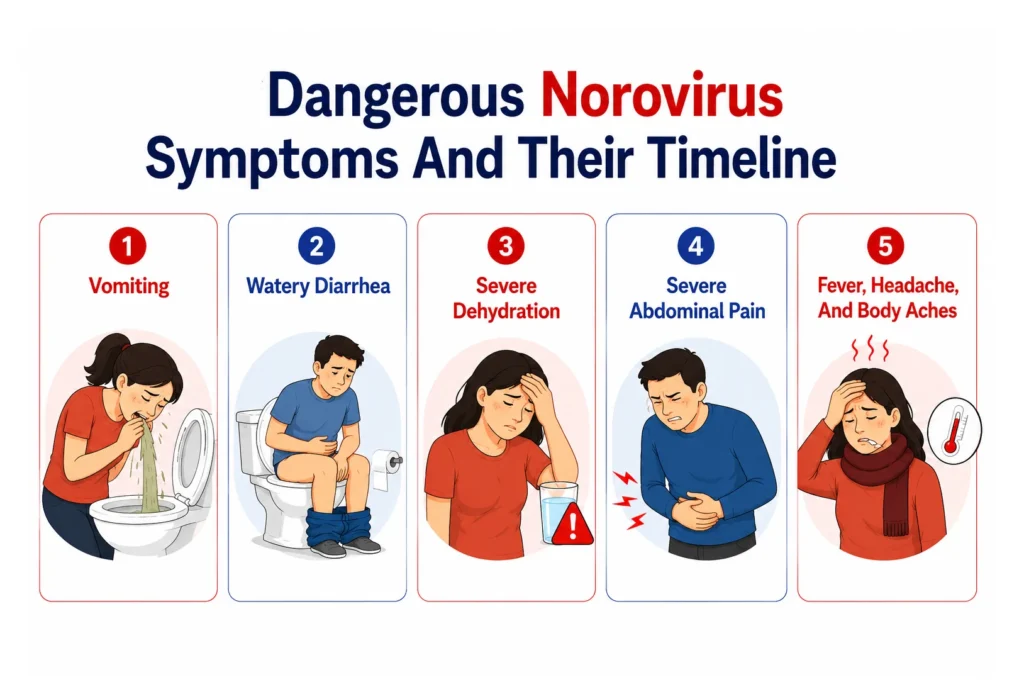
Norovirus often causes a short but intense illness, and most healthy people recover without complications. However, repeated vomiting and diarrhea can cause substantial fluid and electrolyte loss, making dehydration the main concern. If symptoms become unusually severe, persist beyond the expected recovery period, or make it difficult to drink fluids, medical evaluation may be necessary.
Vomiting
Vomiting is one of the hallmark symptoms of norovirus and can begin suddenly, sometimes with repeated episodes over a short period. It commonly occurs during the first 1–2 days of illness and may make it difficult to replace lost fluids. Persistent vomiting is concerning when you cannot keep even small amounts of fluid down or begin developing signs of dehydration.
Watery Diarrhea
Norovirus commonly causes sudden, watery, non-bloody diarrhea, which can occur several times during the acute illness. Diarrhea generally improves within 1–3 days, although it may last longer in some people, particularly young children, older adults, or those with weakened immune systems. Frequent diarrhea can rapidly increase fluid and electrolyte loss, so worsening weakness or reduced urination should not be ignored.
Severe Dehydration
Dehydration can develop when vomiting and diarrhea cause the body to lose more fluid than it can replace. Warning signs include very little urination, dry mouth, dizziness when standing, unusual sleepiness, weakness, or confusion. Mild dehydration may improve with oral rehydration fluids, but severe dehydration can require IV fluids and emergency medical treatment.
Severe Abdominal Pain
Norovirus can cause stomach pain and abdominal cramping, particularly while vomiting and diarrhea are active. These symptoms generally improve as the infection resolves over the next few days. However, severe, persistent, localized, or worsening abdominal pain is not typical of an uncomplicated case and should be medically evaluated to rule out other serious causes.
Fever, Headache, And Body Aches
Some people with norovirus develop low-grade fever, headache, chills, or body aches along with gastrointestinal symptoms. These symptoms usually occur during the acute phase and improve as the infection resolves, typically within several days. A high or persistent fever, particularly when accompanied by severe weakness, confusion, bloody diarrhea, or worsening abdominal pain, warrants prompt medical attention.
Is Norovirus Contagious?
Yes, norovirus is highly contagious and can spread through tiny particles of vomit or stool, contaminated food or water, and contaminated surfaces. People can spread the virus before they realize they are sick and are most contagious while experiencing symptoms and during the first few days after recovery. Norovirus can also continue to be shed in stool for 2 weeks or more after symptoms improve, which means transmission can still occur even after a person feels better.
How Long Is Norovirus Contagious?
If you or someone in your household has norovirus, it is understandable to worry about when the infection can still spread to others. Because norovirus is extremely contagious, transmission can occur easily through vomit, stool, contaminated food, or surfaces, even when the illness seems to be improving. Knowing the contagious period is especially important for protecting children, older adults, and people with weakened immune systems.
- During Symptoms: People are most contagious while they have norovirus symptoms, particularly when vomiting or experiencing diarrhea.
- After Symptoms Improve: Norovirus can still spread during the first few days after a person feels better, so recovery does not immediately eliminate the risk of transmission.
- After Recovery: The virus may continue to be shed in stool for 2 weeks or more after symptoms disappear, although the level of infectiousness can vary.
- Before Symptoms: Norovirus can be present in vomit or stool before a person realizes they are sick, allowing transmission to occur before symptoms become obvious.
When To Go To The ER For Norovirus
Most cases improve within a few days, but severe vomiting and diarrhea can lead to dangerous dehydration. Seek emergency care if symptoms become severe or you cannot maintain enough fluids.
- Severe dehydration: Very little urination, dry mouth, dizziness, extreme weakness, or confusion.
- Persistent vomiting: You cannot keep fluids down or continue vomiting repeatedly.
- Bloody diarrhea: Blood or black, tarry stools require prompt medical evaluation.
- Severe abdominal pain: Intense or worsening stomach pain should not be ignored.
- Fainting or confusion: These may indicate severe dehydration or another serious complication.
If you’re feeling weak, dizzy, or unable to keep fluids down, don’t try to push through it alone. When you’re worried that your symptoms are becoming serious, finding the closest emergency room to me can help you get evaluated and treated without unnecessary delay.
How Is Norovirus Treated?
If you’re feeling drained from repeated vomiting and diarrhea, it is understandable to want relief as quickly as possible. There is no specific antiviral medicine that cures norovirus, so care focuses on supporting your body while the infection runs its course. The main priorities are replacing lost fluids and electrolytes, maintaining nutrition, and managing severe symptoms when necessary.
Oral Rehydration
Oral rehydration is the most important treatment for preventing dehydration caused by vomiting and diarrhea. Oral rehydration solutions contain water and electrolytes in appropriate amounts to replace what your body loses. Taking small, frequent sips may be easier when nausea is present.
Intravenous Fluids
Severe dehydration may require IV fluids when vomiting or diarrhea makes drinking enough fluids difficult. Medical professionals can give fluids and electrolytes directly through a vein while monitoring your condition. This treatment may be especially important when there is very little urination, severe dizziness, confusion, or significant weakness.
Anti-Nausea Medicines
A healthcare professional may recommend an anti-nausea or antiemetic medicine when vomiting is making it difficult to drink enough fluids. Controlling severe nausea and vomiting can help you tolerate oral rehydration more effectively. These medicines should be selected based on age, symptoms, and other health considerations.
Medicines For Diarrhea
Some adults with acute watery diarrhea may benefit from medicines such as loperamide or bismuth subsalicylate for symptom relief. These medicines should not replace fluid and electrolyte replacement and are not appropriate in every situation. Antidiarrheal medicines should be avoided when diarrhea is accompanied by blood or certain types of fever, and children should not receive them without appropriate medical guidance.
Maintaining Nutrition
Once you can tolerate food, continuing an appropriate diet helps maintain energy while your body recovers. You generally do not need to fast or follow an extremely restrictive diet during norovirus illness. Eating small amounts as tolerated while continuing to replace fluids can support recovery and help prevent additional weakness.
Here’s a version tailored to norovirus, while keeping the same structure, urgency, and compassionate tone:
Neighbors Emergency Center For Norovirus Care
If you or your loved one develops severe norovirus symptoms such as persistent vomiting, severe diarrhea, dehydration, confusion, fainting, or worsening weakness, do not wait to seek medical attention. Our experienced emergency physicians are available 24/7 to evaluate concerning symptoms, provide diagnostic testing when needed, and deliver prompt supportive treatment.
Whether you need IV fluids for severe dehydration, medication to control persistent vomiting, or urgent evaluation for complications, our 24/7 emergency room, Neighbors Emergency Center, is here to provide compassionate, timely emergency care when norovirus symptoms become severe.
Key Takeaways
- Most cases are short-lived: Norovirus symptoms typically improve within 1–3 days, although recovery can take longer in some people.
- Vomiting and diarrhea are common: These symptoms can cause significant fluid and electrolyte loss, increasing the risk of dehydration.
- Norovirus spreads easily: You can transmit the virus through vomit, stool, contaminated food, water, and surfaces.
- Supportive care is important: Replacing fluids and electrolytes is the main focus of treatment, while severe cases may require IV fluids or medical care.
- Know when to seek emergency care: Severe dehydration, persistent vomiting, bloody diarrhea, confusion, fainting, or severe abdominal pain require prompt medical evaluation.
Frequently Asked Questions
How Long Does Norovirus Live On Surfaces?
Norovirus can remain on contaminated surfaces for days to weeks, depending on the surface and environmental conditions. CDC evidence indicates that norovirus may persist in a dried state at room temperature for up to 21–28 days, although the amount of infectious virus can decline over time.
How Does Norovirus Spread?
Norovirus spreads when tiny particles of infected vomit or stool enter another person’s mouth, often through direct contact, contaminated food or water, or contaminated surfaces. It can spread very easily because only a small number of viral particles may be enough to cause infection.