
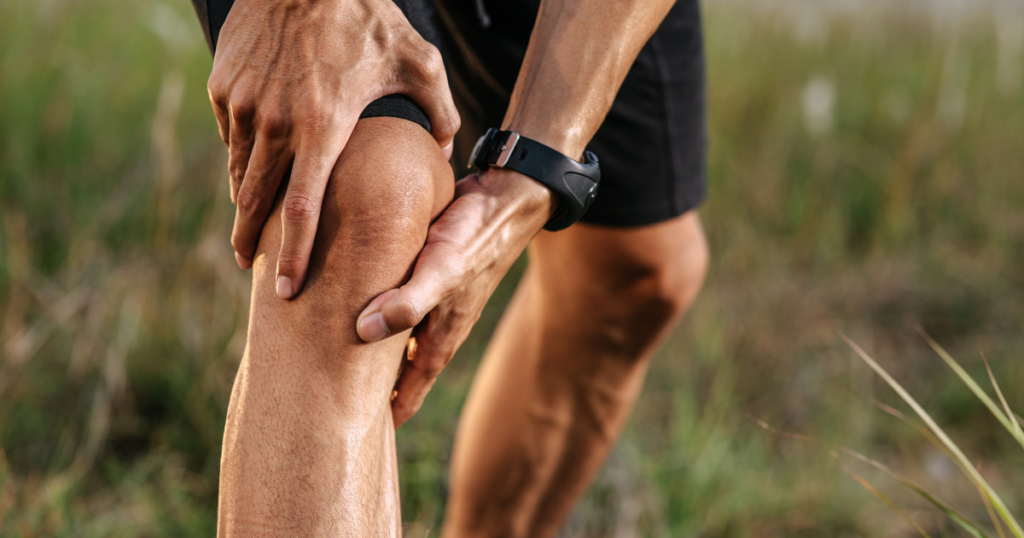
Knee pain is one of the most common musculoskeletal complaints in the United States, affecting millions of adults each year. According to the National Institute of Arthritis and Musculoskeletal and Skin Diseases (NIAMS), it is a leading reason people seek medical care for joint discomfort, especially with aging or physical activity.Understanding what causes knee pain is important because it can result from injuries, arthritis, mechanical issues, infections, or long-term wear and tear. For individuals experiencing sudden or severe symptoms, seeking care at an Amarillo emergency room may be essential for prompt diagnosis, treatment, and prevention of further complications.
Injuries
Knee injuries are one of the most frequent causes of knee pain, especially when pain appears suddenly after physical activity, trauma, or awkward movement.
According to the National Institute of Arthritis and Musculoskeletal and Skin Diseases (NIAMS), knee injuries commonly affect ligaments, cartilage, tendons, and surrounding soft tissues, often leading to swelling, instability, and reduced mobility.
These injuries are particularly common in sports, falls, and high-impact activities, but can also occur during everyday movements.
1. ACL Injury
An ACL (anterior cruciate ligament) injury happens when the ligament that stabilizes the knee joint tears either partially or completely. It is especially common in sports that involve sudden stops, jumping, or quick direction changes, such as basketball, soccer, and skiing.
People often report a popping sound at the time of injury, followed by swelling, pain, and a feeling that the knee may “give out.” Severe ACL injuries often require medical imaging and structured rehabilitation for recovery.
Read more: Sports Injury Prevention
2. Fractures
Knee fractures involve breaks in one or more bones around the knee joint, including the patella (kneecap), femur, or tibia. These injuries usually result from high-impact trauma such as falls, motor vehicle accidents, or direct blows.
However, individuals with conditions like osteoporosis may experience fractures even from minor stress or simple missteps. Symptoms typically include intense pain, swelling, inability to bear weight, and visible deformity in severe cases.
3. Torn Meniscus
The meniscus is a rubber-like cartilage that cushions and stabilizes the knee joint. A torn meniscus often occurs when the knee is forcefully twisted or rotated while bearing weight. This injury is common in athletes but can also affect older adults due to cartilage degeneration.
Symptoms include pain along the joint line, swelling, stiffness, and a locking or catching sensation in the knee. According to MedlinePlus (U.S. National Library of Medicine), meniscus tears are among the most common knee injuries in adults.
4. Knee Bursitis
Knee bursitis occurs when the small fluid-filled sacs (bursae) that cushion the knee joint become inflamed. This condition can develop due to repetitive pressure, prolonged kneeling, infection, or direct trauma.
It often leads to noticeable swelling in front of or above the kneecap, tenderness, and discomfort during movement. In many cases, bursitis improves with rest, ice, and anti-inflammatory care, but persistent cases may require medical evaluation.
5. Patellar Tendinitis
Patellar tendinitis, commonly known as “jumper’s knee,” involves inflammation of the tendon that connects the kneecap to the shinbone. It is frequently seen in athletes involved in jumping or running sports, including basketball, volleyball, and track activities.
Overuse and repetitive strain are the main causes. Symptoms typically include pain below the kneecap that worsens with activity, stiffness after exercise, and tenderness when pressing the area.
Mechanical Problems
Mechanical issues are another important category when understanding what causes knee pain, especially when discomfort develops gradually or keeps returning during movement.
Unlike sudden traumatic injuries, mechanical problems are usually related to how the knee joint functions, aligns, or bears weight over time.
1. Loose Body
A “loose body” in the knee refers to small fragments of bone or cartilage that break off and float within the joint space. These fragments may develop after an injury or due to long-term joint degeneration.
When these loose pieces get trapped between moving parts of the knee, they can cause sudden locking, catching sensations, or a feeling that the knee is stuck during movement. This condition often leads to intermittent pain and may worsen over time if the fragment continues to interfere with normal joint motion.
2. Iliotibial Band Syndrome
Iliotibial band syndrome (ITBS) occurs when the thick band of connective tissue running from the hip to the outer knee becomes tight or inflamed. This band can begin to rub against the outer part of the thighbone during repetitive activities like running or cycling, leading to irritation and pain.
It is especially common in long-distance runners, cyclists, and individuals who suddenly increase their activity levels. The pain typically worsens during exercise and improves with rest, but persistent cases may require physical therapy to correct muscle imbalance and improve flexibility.
3. Dislocated Kneecap
A dislocated kneecap, or patellar dislocation, occurs when the patella shifts out of its normal alignment, usually toward the outside of the knee. This condition often results in sudden, intense pain, visible deformity, swelling, and difficulty straightening or moving the leg.
In some cases, the kneecap may slip back into place on its own, but the surrounding ligaments can remain stretched or damaged, increasing the risk of future dislocations. Individuals with weak thigh muscles or structural alignment issues are at higher risk.
4. Hip or Foot Pain
Pain originating in the hip or foot can indirectly lead to knee problems due to changes in walking patterns. When a person alters their gait to avoid discomfort in another joint, it increases uneven stress on the knee.
Over time, this compensation can strain muscles, ligaments, and cartilage, contributing to chronic knee pain. This type of referred or secondary pain is often overlooked but plays a significant role in explaining ongoing knee discomfort without a direct knee injury.
Types of Arthritis
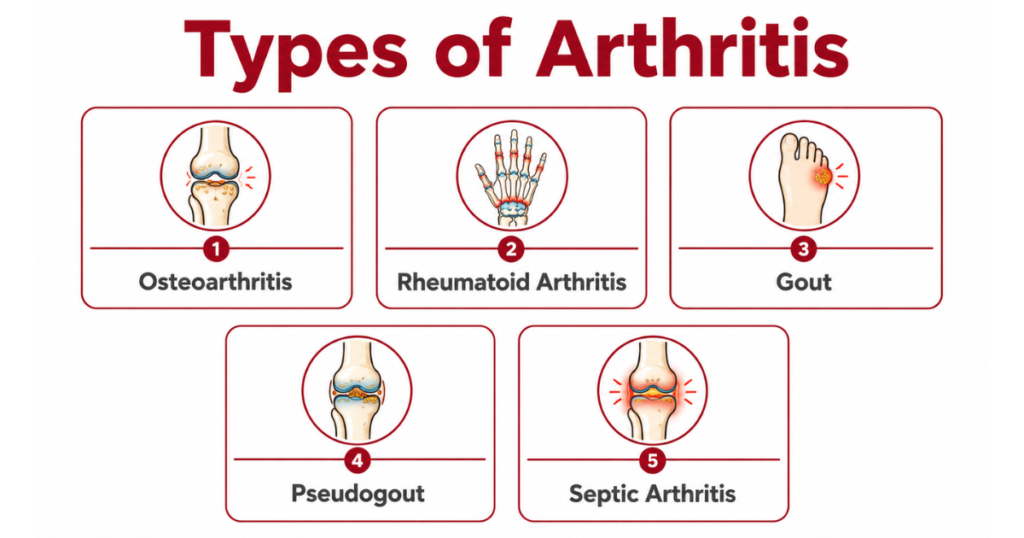
Arthritis is one of the most important causes of knee pain, especially when the discomfort is long-term, progressive, or accompanied by stiffness and swelling.
According to the Centers for Disease Control and Prevention (CDC), arthritis affects millions of adults in the United States and is a leading cause of disability, with knee joints being among the most commonly affected areas due to their constant weight-bearing function.
Unlike injuries that happen suddenly, arthritis-related knee pain typically develops gradually and worsens over time if not properly managed.
1. Osteoarthritis
Osteoarthritis is the most common form of arthritis affecting the knee and is primarily a degenerative “wear-and-tear” condition. Over time, the protective cartilage that cushions the ends of bones gradually breaks down, leading to bone-on-bone friction.
This results in pain, stiffness, reduced flexibility, and swelling. It often worsens with age, repetitive joint use, or excess body weight. According to the National Institute of Arthritis and Musculoskeletal and Skin Diseases (NIAMS), osteoarthritis is one of the leading causes of chronic joint pain in adults.
Read Related: What Causes Joint Pain All Over the Body
2. Rheumatoid Arthritis
Rheumatoid arthritis is an autoimmune disease where the immune system mistakenly attacks the lining of the joints, causing chronic inflammation. Unlike osteoarthritis, it commonly affects both knees symmetrically. Over time, untreated rheumatoid arthritis can lead to joint deformity and significant mobility issues. Early diagnosis is critical to slowing disease progression and preserving joint function.
3. Gout
Gout is a type of inflammatory arthritis caused by the buildup of uric acid crystals in the joint space. Although it most commonly affects the big toe, the knee can also be involved. Gout attacks often occur suddenly and are extremely painful, with symptoms including intense swelling, redness, warmth, and tenderness. According to NIH resources, high uric acid levels in the blood (hyperuricemia) are a key risk factor for gout flare-ups.
4. Pseudogout
Pseudogout is similar in appearance to gout but is caused by calcium pyrophosphate crystal deposits in the joint fluid. These crystal deposits trigger sudden inflammation, leading to pain, swelling, and stiffness in the knee.
Episodes may come and go, and the condition is more common in older adults. Because symptoms closely resemble gout, proper medical testing is often required for accurate diagnosis.
5. Septic Arthritis
Septic arthritis is a serious joint infection caused by bacteria or other pathogens entering the knee. It leads to sudden severe pain, swelling, redness, and often fever. Because it can quickly damage joint cartilage, it is considered a medical emergency requiring immediate treatment, usually with antibiotics and drainage.If symptoms appear suddenly with fever and intense knee swelling, seek immediate medical attention. Prompt knee pain treatment is critical to prevent permanent joint damage and reduce the risk of serious complications.
What Can Cause Knee Pain Without Injury?
Knee pain does not always start with a fall, twist, or direct impact. In many cases, it develops slowly over time due to internal joint changes, inflammation, or muscle imbalance. These causes are often overlooked because there is no obvious injury, but they can still lead to significant discomfort and reduced mobility.
Common causes include:
- Arthritis and age-related wear
- Bursitis or tendon inflammation
- Muscle weakness around the knee
- Poor posture or walking mechanics
- Overuse from repetitive activity
How to Treat Knee Pain
Effective knee pain treatment depends on the underlying cause, severity of symptoms, and how long the condition has been present. Since knee pain can vary from injury to arthritis or mechanical issues, treatment is usually tailored to reduce pain, restore movement, and prevent further joint damage.
Treatment options are generally divided into conservative care, medical therapy, and surgical intervention when necessary.
1. Home Care and Initial Management
- Rest, ice, compression, and elevation (RICE): Helps reduce swelling and pain, especially after minor injuries or flare-ups.
- Activity modification: Avoiding high-impact movements prevents further stress on the knee joint.
- Over-the-counter pain relief: Medications like NSAIDs may help reduce inflammation and discomfort in mild cases.
2. Medications and Therapy
- Prescription medications: Doctors may prescribe drugs to manage inflammation or treat underlying conditions like rheumatoid arthritis or gout.
- Physical therapy: Strengthening the muscles around the knee improves stability and reduces joint strain. It also helps correct movement patterns that may be worsening pain.
- Flexibility and balance training: Improves joint control and reduces risk of reinjury, especially in active individuals.
- Support devices: Knee braces or arch supports may help redistribute pressure and improve alignment in conditions like osteoarthritis.
3. Injections for Knee Pain Relief
- Corticosteroid injections: Reduce inflammation and provide short-term relief during arthritis flare-ups, though results vary.
- Hyaluronic acid injections: Improve joint lubrication and may ease stiffness and pain for several months in some patients.
- Platelet-rich plasma (PRP): Uses concentrated growth factors from the patient’s blood to potentially reduce inflammation and support healing in selected cases.
4. Surgical Treatments
- Arthroscopic surgery: A minimally invasive procedure used to repair cartilage, remove loose bodies, or treat ligament damage.
- Partial knee replacement: Replaces only the damaged portion of the knee for quicker recovery compared to full replacement.
- Total knee replacement: Recommended for advanced joint damage where all surfaces of the knee are replaced with an artificial joint.
- Osteotomy: A bone realignment procedure that helps reduce pressure on the damaged side of the knee and may delay replacement surgery.
When to Go to the ER
Knee pain can often be managed with rest, ice, and over-the-counter pain relievers. However, some symptoms may indicate a serious injury or medical condition that requires immediate medical evaluation.
If you experience any of the following warning signs, search for a hospital near me and seek care right away:
- Severe swelling or sudden, intense pain
- Inability to bear weight on the affected leg
- Visible deformity after an injury
- Fever accompanied by joint redness or warmth (which may indicate an infection)
These symptoms may require prompt assessment at a 24/7 emergency room. Early treatment can help prevent complications, reduce the risk of long-term joint damage, and support a better recovery.
Find Knee Pain Relief with Neighbors Emergency Center
Ongoing knee pain should never be ignored, especially if it interferes with daily activities or worsens over time. Identifying what causes knee pain early allows for more effective treatment and prevents long-term joint damage.
For patients seeking trusted emergency and urgent care services in Texas, Neighbors Emergency Center provides high-quality medical care with board-certified and board-eligible physicians. Their team is equipped to diagnose and treat a wide range of joint and injury-related conditions with speed and accuracy. Learn more or find a nearby location on our website.
Key Takeaways
- Knee pain may result from injuries, arthritis, or joint problems.
- ACL tears, fractures, and meniscus injuries are common causes.
- Arthritis often causes long-term knee pain and stiffness.
- Pain without injury can come from overuse or inflammation.
- Treatment includes rest, therapy, medication, or surgery.
- Severe pain, swelling, or fever may need emergency care.
- Early diagnosis can prevent long-term damage.
FAQs
How to Get Rid of Knee Pain Fast?
Fast relief from knee pain usually involves rest, ice, compression, elevation (RICE), and over-the-counter NSAIDs as part of knee pain treatment, depending on what causes knee pain.
Why Do My Knees Pain?
Knees may hurt due to injuries, arthritis, overuse, or mechanical issues, which are among the most common underlying causes of knee pain.
What Is the Best Painkiller for Knee Pain?
As recommended in clinical guidance, NSAIDs such as ibuprofen or naproxen are commonly used in knee pain treatment because they help reduce pain and inflammation. However, they should only be taken after consulting a doctor.
What Causes Pain Behind the Knee?
Pain behind the knee is often linked to conditions such as a meniscus injury, Baker’s cyst, or ligament strain, which are common underlying causes of knee discomfort.