

Many people notice discomfort, fatigue, or unusual changes in their body and immediately start worrying about What Causes Kidney Infections without having a clear understanding of what is happening internally. This uncertainty can be stressful, especially when symptoms interfere with normal daily activities and don’t seem to improve on their own. It often leads to confusion and concern about whether the condition may be something serious.
Kidney infections should always be taken seriously, as they can worsen quickly if not addressed in time. When warning signs like fever, back or side pain, and urinary changes appear, seeking care early at our emergency room Baytown, TX, can help prevent complications and ensure timely treatment.
Signs Of Kidney Infections That You Shouldn’t Ignore
- High fever with chills.
- Pain in the lower back, side, or groin.
- Frequent, urgent, or painful urination.
- Cloudy, foul-smelling, or blood-tinged urine.
- Nausea or vomiting.
- General weakness or fatigue.
- Burning sensation while passing urine.
If these symptoms become severe or develop suddenly, they may indicate a urological emergency that requires immediate medical evaluation and treatment.
Kidney Infection Causes In Women
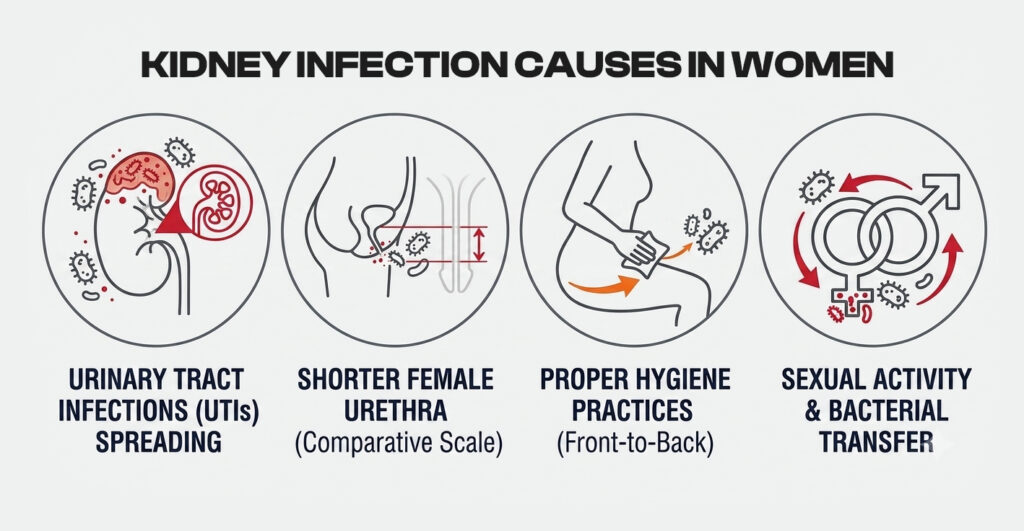
Many women experience discomfort or sudden urinary changes and start worrying about what might be happening in their bodies. Kidney infections in women are relatively common and can develop quickly if early signs are overlooked. According to a clinical review by the National Center for Biotechnology Information (NCBI), about 20%–30% of untreated lower urinary tract infections may ascend to the kidneys and cause pyelonephritis.
1. Urinary Tract Infection Spreading Upward
A common reason for kidney infections in women is a lower urinary tract infection that is not treated in time. Bacteria from the bladder can travel upward through the ureters and reach the kidneys. This progression often happens when early UTI symptoms are ignored or improperly managed. Prompt treatment of bladder infections is essential to prevent this upward spread.
2. Shorter Female Urethra
Women are at higher risk due to having a shorter urethra compared to men, which allows bacteria easier access to the bladder. This anatomical difference increases the likelihood of infection reaching the urinary tract more quickly. As a result, bacteria do not need to travel far to cause infection. This makes women more vulnerable to urinary and kidney infections.
3. Improper Hygiene Practices
Inadequate or incorrect hygiene practices can introduce bacteria into the urinary tract. Wiping incorrectly or poor genital hygiene may allow bacteria from the anal area to reach the urethra. This increases the risk of urinary infections that may eventually affect the kidneys. Proper hygiene habits play a key role in prevention.
4. Sexual Activity
Sexual activity can sometimes introduce bacteria into the urinary tract in women. This is why some women experience urinary infections more frequently after intercourse. If bacteria are not flushed out through urination, they may multiply and spread. This can increase the risk of kidney involvement if left untreated.
Kidney Infection Causes In Men
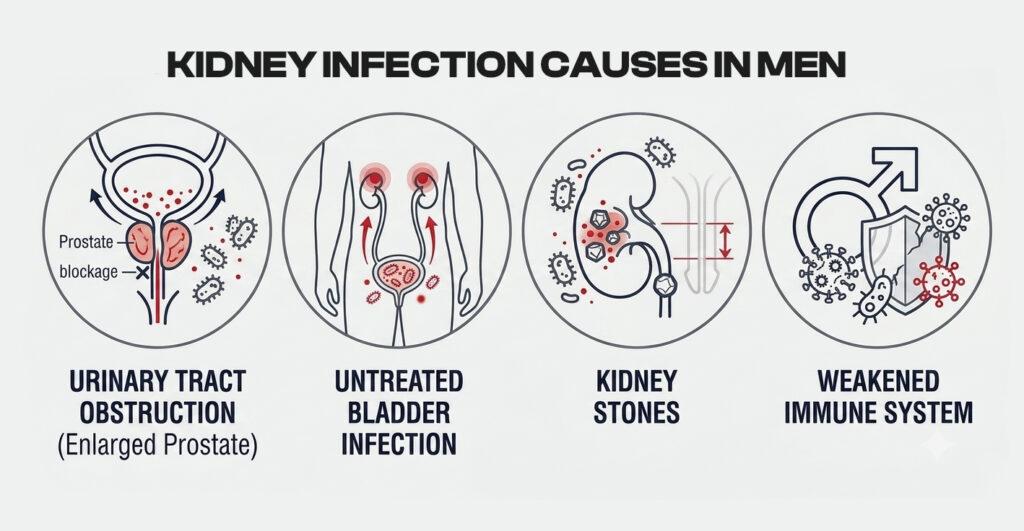
Kidney infections in men are less common than in women, but when they occur, they can still lead to serious discomfort and complications if not treated early. Symptoms may develop gradually and are sometimes linked with underlying urinary issues that make infection more likely. Many men delay seeking care, which can allow the infection to worsen over time.
1. Urinary Tract Obstruction (Enlarged Prostate)
One of the most common contributors in men is urinary tract obstruction caused by an enlarged prostate. This condition can block or slow urine flow, allowing bacteria to grow and spread in the urinary system. When urine is not fully emptied, it creates a favorable environment for infection. Over time, this can increase the risk of bacteria reaching the kidneys.
2. Untreated Bladder Infection
A bladder infection that is not treated properly can move upward and affect the kidneys in men. Bacteria may spread from the lower urinary tract if early symptoms are ignored or antibiotics are not completed. This progression can lead to more severe infection involving kidney tissue. Early treatment of UTIs is essential to prevent complications.
3. Kidney Stones
Kidney stones can increase the risk of infection by blocking urine flow and creating irritation in the urinary tract. This blockage allows bacteria to multiply more easily, leading to infection. The presence of stones can also make it harder for the body to clear bacteria naturally. In some cases, infected stones may worsen the severity of kidney infection.
Also read: Are kidney stones an emergency?
4. Weakened Immune System
Men with weakened immune systems are more vulnerable to kidney infections because the body has a reduced ability to fight bacteria. Conditions such as diabetes or long-term illness can increase this risk. When immunity is low, infections can spread more quickly through the urinary tract. This makes early diagnosis and care especially important in at-risk individuals.
How To Test For Kidney Infection
Diagnosing a kidney infection involves checking symptoms and confirming infection through lab and imaging tests. Doctors use these tests to identify bacteria, assess severity, and detect any complications. Early testing helps ensure proper treatment and prevents the infection from worsening.
- Urine Test (Urinalysis and Culture): Detects bacteria, white blood cells, and blood in urine. A culture identifies the exact bacteria for targeted antibiotics. It is the primary diagnostic test.
- Blood Test: Checks infection severity and kidney function. Elevated white blood cells may indicate a stronger infection. It helps assess the overall body response.
- Imaging Tests (Ultrasound or CT Scan): Used in severe or unclear cases. Detects stones, swelling, or blockages in the kidneys. Helps identify complications.
- Blood Culture Test: Finds bacteria in the bloodstream. Indicates a serious infection that may need urgent care. Guides stronger treatment.
- VCUG Test: Checks urine flow and detects backward urine movement. Mainly used in recurrent infections. Helps find structural urinary issues.
When To Go To The ER
A kidney infection can become serious quickly if symptoms worsen or spread beyond the urinary tract. Knowing when to seek emergency care is important to prevent complications like sepsis or kidney damage. If symptoms are severe or not improving with treatment, immediate medical attention at the ER is necessary.
- High fever with chills.
- Severe pain in the back, side, or abdomen.
- Persistent vomiting or inability to keep fluids down.
- Confusion or dizziness.
- Blood in urine.
- Rapid heartbeat or feeling extremely weak.
These symptoms may indicate a more serious infection requiring prompt evaluation and treatment at our Baytown ER to help prevent complications.
Kidney Infection Treatment
Kidney infection treatment aims to quickly clear the infection, relieve symptoms, and prevent complications. Because the condition can worsen rapidly, timely medical care is essential. Proper treatment helps protect kidney function and supports a faster recovery while reducing the risk of serious outcomes.
- Antibiotics (First-Line Treatment): Most doctors recommend antibiotics as the main treatment. Oral antibiotics are used for mild cases, while severe infections may need IV antibiotics in hospital. They directly target and kill the infection-causing bacteria.
- Pain Relief Medications: Most doctors recommend medicines like acetaminophen to reduce fever and pain. These help ease back pain, body aches, and discomfort. They support symptom relief but do not treat the infection itself.
- Hospital Care and IV Fluids: Severe cases may require hospitalisation for IV antibiotics and fluids. This ensures faster treatment and prevents dehydration. It is used when symptoms are intense or oral medication isn’t enough.
- Hydration and Rest: Drinking fluids helps flush bacteria from the urinary tract. Most doctors recommend good hydration and rest during recovery. This supports healing alongside medical treatment.
Kidney Infection Care At Neighbors Emergency Center
Understanding What Causes Kidney Infections is important, but timely medical attention matters most when symptoms begin to appear. Kidney infections can worsen quickly if left untreated and may lead to serious complications. Seeking prompt care at a 24/7 emergency room helps reduce risks, supports faster recovery, and ensures timely treatment when it matters most.
At Neighbors Emergency Center, our emergency physicians provide rapid evaluation and treatment for kidney infection symptoms like fever, back pain, and urinary discomfort. If you are concerned about What Causes Kidney Infections or worsening signs, our team ensures prompt diagnosis and effective care. This helps prevent complications and supports safe recovery.
Key Takeaways
- Kidney infections are serious conditions that require early diagnosis and prompt medical treatment.
- They often start as bladder infections and can spread to the kidneys if ignored.
- Symptoms may include fever, back or side pain, painful urination, and fatigue.
- Women are generally at higher risk due to anatomical and lifestyle factors.
- Men may develop kidney infections due to urinary blockages or prostate issues.
- Diagnosis includes urine tests, blood tests, imaging, and sometimes advanced evaluations.
- Treatment usually involves antibiotics, pain relief, hydration, and in severe cases, hospital care.
- Emergency care is needed if symptoms become severe or complications are suspected.
FAQs
How Fast Can A Kidney Infection Become Life-Threatening?
It can become serious within 24–72 hours if it spreads to the blood and causes sepsis. This is a medical emergency. Early treatment lowers the risk.
What Does A Kidney Infection Feel Like?
It may cause back or side pain, fever, chills, and burning during urination. Some people also feel nausea or fatigue. Symptoms can worsen quickly.
How Do I Know If I Have A Kidney Infection?
Common signs include fever, back pain, frequent urination, and cloudy or painful urination. Doctors confirm it with urine and blood tests.
Can Kidney Stones Cause A Bladder Infection?
Yes, kidney stones can block urine flow and trap bacteria. This may lead to bladder infection and sometimes kidney infection.