
If you have AFib, seeing your heart rate suddenly race can be frightening, especially when you are unsure whether the number on your monitor is dangerous. A resting heart rate around 150 beats per minute (bpm) or higher with AFib can require urgent medical evaluation, particularly when it persists or causes symptoms.
But the number alone does not determine how dangerous AFib is. Chest pain, severe shortness of breath, fainting, confusion, severe dizziness, or stroke symptoms can signal a medical emergency even if your heart rate is lower. If concerning symptoms develop, our emergency room in Livingston is available to provide prompt evaluation; do not wait when AFib symptoms suddenly become severe or worsen.
What Is A Normal Heart Rate With AFib?
A typical resting heart rate for adults is 60–100 beats per minute (bpm), but AFib can make the pulse fast and irregular because the heart’s electrical activity becomes disorganized. For many people with AFib, treatment aims to keep the resting heart rate below about 100–110 bpm, although the appropriate target varies based on symptoms and overall health. Medications such as beta blockers, diltiazem, verapamil, and digoxin may also slow the heart rate.
However, heart rate alone does not determine how dangerous AFib is. The severity of symptoms, blood pressure, heart function, underlying heart conditions, and risk of blood clots and stroke also matter. Chest pain, severe shortness of breath, fainting, confusion, or severe dizziness require urgent medical attention regardless of the heart rate reading.
What Heart Rate Is Dangerous With AFib?
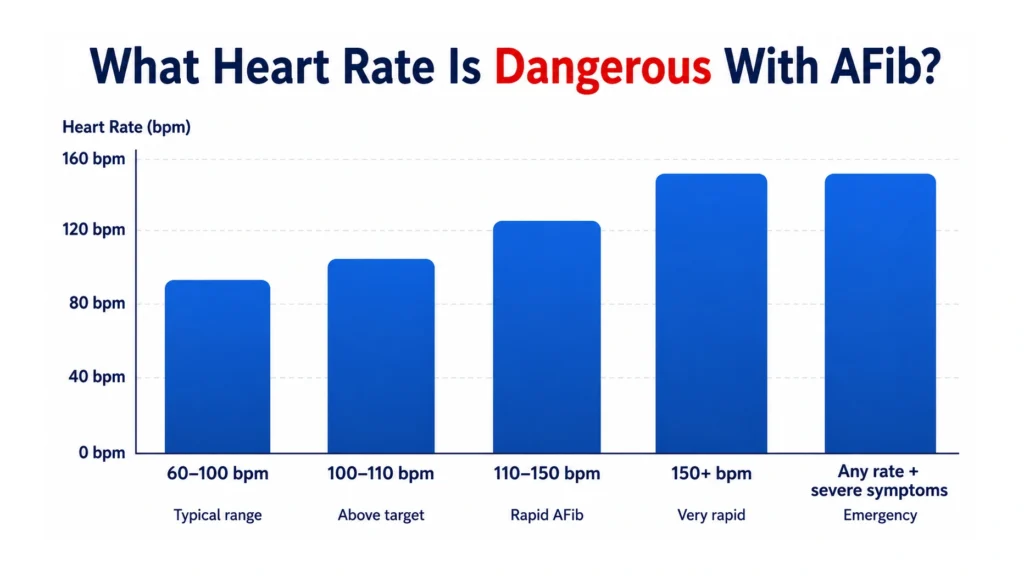
A dangerous heart rate with AFib depends on more than the number itself. A persistent resting rate above 100–110 bpm may indicate inadequate rate control, while rates around 150 bpm or higher can be more concerning. However, serious symptoms can make any heart rate an emergency.
| Heart Rate | What It May Mean | What To Do |
| 60–100 bpm | Typical resting range; AFib may still cause an irregular pulse. | Monitor and follow your treatment plan. |
| 100–110 bpm | May be above the usual AFib rate-control target. | Contact your healthcare provider if persistent. |
| 110–150 bpm | May indicate rapid AFib or poor rate control. | Seek prompt medical advice, especially with symptoms. |
| 150+ bpm | Very rapid resting rate that can be concerning. | Seek urgent medical evaluation. |
| Any rate + severe symptoms | Chest pain, severe shortness of breath, fainting, or confusion. | Seek emergency care immediately. |
Dangerous Symptoms Of A High Heart Rate With AFib
A high heart rate with AFib becomes more concerning when it causes symptoms that suggest the heart is not pumping blood effectively. Chest pain, severe shortness of breath, fainting, severe dizziness, confusion, or extreme weakness can require emergency care.
A 2024 PubMed study found that among recorded symptomatic events in patients with atrial arrhythmias, 42% involved palpitations, 16% shortness of breath, 13% tiredness, and 12% dizziness, showing that symptoms can vary considerably.
- Chest pain, pressure, or tightness.
- Severe or worsening shortness of breath.
- Fainting or feeling like you may pass out.
- Severe dizziness or sudden weakness.
- Confusion or difficulty staying alert.
- A racing, pounding, or fluttering heartbeat.
- Extreme fatigue that develops suddenly.
- Signs of stroke, such as facial drooping, arm weakness, or difficulty speaking.
If you have AFib symptoms, search for an ER near me and seek emergency medical care without delay.
What Can Cause A Fast Heart Rate During AFib?
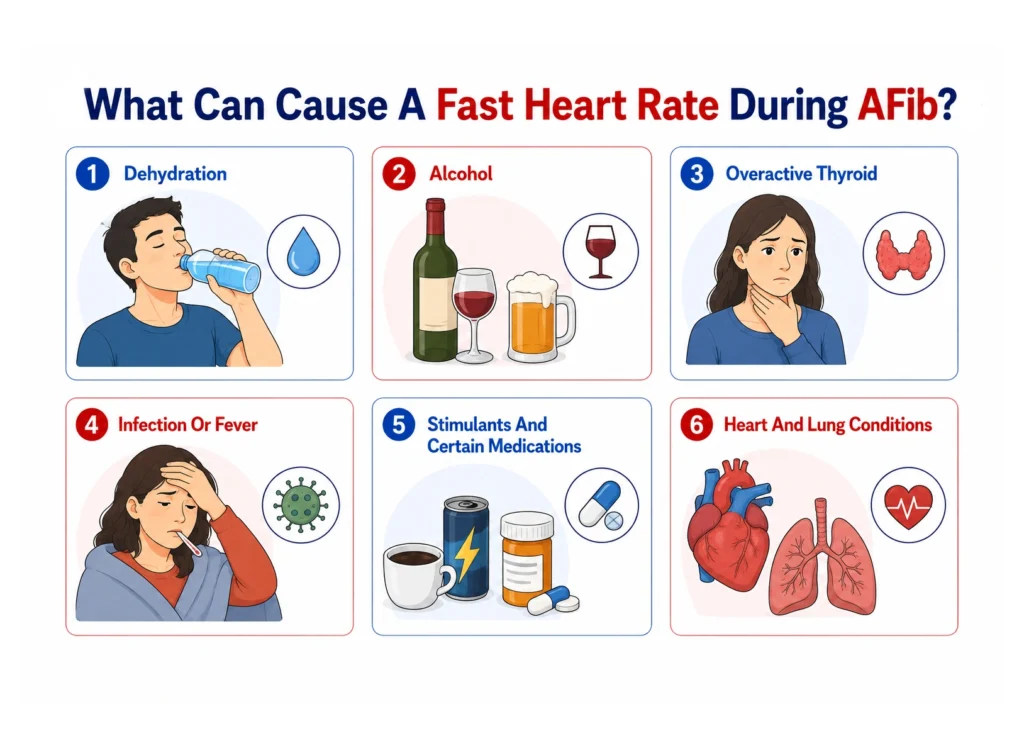
A fast heart rate during AFib can be unsettling, especially when it happens suddenly or feels stronger than your usual episodes. AFib already causes an irregular rhythm, and certain health conditions, physical stress, or triggers can make the heart beat even faster. Identifying what may be driving the increase can help guide appropriate treatment and reduce the risk of complications.
Dehydration
Not having enough fluid in the body can affect blood volume and make the heart work harder to maintain circulation. Dehydration can also disturb electrolyte levels, which are important for normal electrical activity in the heart. This may contribute to a faster heart rate or trigger worsening AFib symptoms.
Alcohol
Alcohol can trigger or worsen AFib, particularly after heavier drinking. It may affect the heart’s electrical activity and contribute to changes in the autonomic nervous system that promote an irregular or rapid rhythm. If alcohol consistently precedes your episodes, avoiding it may help reduce AFib events.
Overactive Thyroid
Hyperthyroidism causes excess thyroid hormone to circulate through the body, increasing sensitivity to adrenaline and stimulating the heart. This can raise the heart rate and increase the likelihood of AFib. Treating the thyroid disorder can help improve heart-rate control and reduce AFib recurrence.
Infection Or Fever
An infection or fever can place additional stress on the body and increase the heart rate as the body responds to illness. Respiratory infections, pneumonia, and severe infections such as sepsis can also precipitate AFib. A new rapid heart rate during an illness should be taken seriously, particularly when accompanied by breathing problems or weakness.
Stimulants And Certain Medications
Caffeine, nicotine, recreational stimulants, and some medicines can increase sympathetic activity and raise heart rate in susceptible people. However, caffeine does not consistently trigger AFib in everyone, and current guidelines do not recommend routine caffeine avoidance unless it worsens symptoms for an individual. Review medications and supplements with your healthcare professional before making changes.
Heart And Lung Conditions
Underlying conditions such as heart failure, coronary heart disease, heart valve disease, lung disease, or pulmonary embolism can place additional stress on the heart and contribute to rapid AFib. These conditions may require prompt evaluation because treating the underlying problem is an important part of controlling the heart rate.
When To Go To The ER For A Dangerous Heart Rate With AFib
A fast heart rate with AFib may sometimes be managed with prescribed treatment, but certain symptoms can signal a serious emergency. Do not wait for your heart rate to slow if you develop severe or sudden symptoms.
- Chest pain, pressure, or tightness.
- Severe shortness of breath or trouble breathing.
- Fainting or feeling like you may pass out.
- Severe dizziness, confusion, or sudden weakness.
- Stroke signs such as facial drooping, arm weakness, or trouble speaking.
- A persistent resting heart rate around 150 bpm or higher, especially with symptoms.
How Is A Dangerous Heart Rate With AFib Treated?
A dangerously fast heart rate with AFib needs treatment based on your heart rate, symptoms, blood pressure, heart function, and underlying health. Some people need medicines to control their rate, while others may need treatment to restore a normal rhythm. Severe or unstable symptoms require immediate emergency care.
- Heart-Rate Medicines: Most doctors recommend beta blockers or medicines such as diltiazem or verapamil to slow the heart rate when appropriate.
- Blood Thinners: Most doctors recommend anticoagulants for people with sufficient stroke risk. They help prevent blood clots but do not slow the heart rate.
- Electrical Cardioversion: Doctors may use a controlled electrical shock to restore a normal heart rhythm when cardioversion is appropriate.
- Catheter Ablation: This procedure targets abnormal electrical signals in the heart and may be recommended when AFib continues despite medication or causes significant symptoms.
- Treating Underlying Causes: Managing conditions such as thyroid problems, high blood pressure, infection, or heart disease can improve AFib control.
- Lifestyle Measures: Limiting alcohol, avoiding smoking, maintaining a healthy weight, exercising appropriately, and following a heart-healthy diet may reduce AFib episodes.
- Over-The-Counter Medicines: There is no safe OTC medicine that treats a dangerously fast AFib rate. Most doctors recommend discussing OTC medicines and supplements with a healthcare professional before using them.
Neighbors Emergency Center For Dangerous Heart Rate With AFib
If you or your loved one develops a dangerously fast heart rate with AFib, especially with chest pain, severe shortness of breath, fainting, confusion, or severe dizziness, do not wait to seek medical attention. Our experienced emergency physicians are available 24/7 to evaluate concerning symptoms and provide prompt medical care when needed.
Whether you need urgent evaluation for a rapid heart rate, abnormal heart rhythm, or serious AFib symptoms, Neighbors Emergency Center is here to provide compassionate, timely emergency care. With an 18-minute ER wait time, our team is ready to help when urgent symptoms cannot wait.
Key Takeaways
- A resting heart rate above 100–110 bpm may indicate poor AFib rate control, while 150+ bpm can be more concerning.
- AFib can cause a rapid, irregular, or unpredictable heartbeat.
- Chest pain, severe shortness of breath, fainting, confusion, or stroke symptoms require immediate emergency care.
- Treatment may include heart-rate medicines, blood thinners, cardioversion, or catheter ablation, depending on the situation.
- There is no over-the-counter medicine that safely treats a dangerously fast AFib heart rate.
Frequently Asked Questions
Can You Have AFib With A Normal Heart Rate?
Yes. You can have AFib even when your heart rate is within the normal 60–100 beats per minute range. AFib is defined by an irregular heart rhythm, not simply by having a fast heart rate. Medications can also control the ventricular rate while AFib continues. An ECG is needed to confirm AFib, and intermittent episodes may require longer-term heart monitoring.
Can Dehydration Make AFib Heart Rate Higher?
Yes. Dehydration can contribute to a faster heart rate and may trigger or worsen AFib symptoms in some people. Replacing lost fluids may help, but persistent symptoms should be medically evaluated.
Can AFib Go Away On Its Own?
Some episodes of AFib can stop on their own, but recurring or prolonged episodes should be evaluated by a healthcare professional. Treatment may be needed to control the heart rhythm or reduce the risk of complications.